
After Liquidation: A Guide to Records, Tax Debts and Employee Entitlements
After liquidation, company records, tax debts and employee entitlements must still be dealt with through Australia’s formal insolvency system. The company may have stopped trading, but its directors, employees and creditors can still face important deadlines, information requests and financial decisions. The liquidation process allows an independent registered liquidator to take control of the company’s affairs, investigate its financial circumstances and distribute available funds. Understanding what happens when a company goes into liquidation can help you protect records, respond to the liquidator and identify issues that may require professional advice.
Liquidation in Australia and Its Purpose
Liquidation is the legal process used to wind up a company, sell or recover its assets, pay creditors where funds are available and bring the company’s business to an end. The liquidation of a company generally occurs because the company cannot pay its debts, although solvent companies can also enter liquidation when their members decide to close the business formally. When liquidation begins, the liquidator takes control of the company’s assets and financial records. The liquidator decides how assets should be protected or sold; reviews creditor claims and investigates the company’s financial history before the company is eventually deregistered.
Members voluntary liquidation applies to solvent companies, while insolvent liquidation applies when a company cannot pay its debts. Liquidation may begin through creditors voluntary liquidation, court liquidation, compulsory liquidation or, in limited cases, provisional liquidation following court approval.
Insolvent Liquidation
An insolvent liquidation applies when a company cannot pay its debts as they become due. This may occur after a period of financial difficulty, failed payment arrangements, unpaid debts, legal proceedings or a statutory demand that the company cannot satisfy. The two main forms are creditors voluntary liquidation and court liquidation. Creditors voluntary liquidation, often shortened to CVL, usually begins when company directors and shareholders resolve that the company should be wound up, while compulsory liquidation generally follows a court order.
Control of the Company After Liquidation Commences
Company directors usually lose control of the company when liquidation commences. They cannot continue selling assets, using company funds, entering new agreements or making decisions for the company unless the registered liquidator authorises them to assist. The liquidator may continue the company’s business for a limited period where trading could preserve value or support the sale of assets. The independent registered liquidator reviews the company’s affairs, sells assets, assesses creditor claims and investigates matters such as insolvent trading.
Company directors must provide records, passwords and explanations requested by the liquidator. They should also retain evidence of what they supplied and obtain advice about any issue that may expose them to personal liability.
Company Records After Liquidation
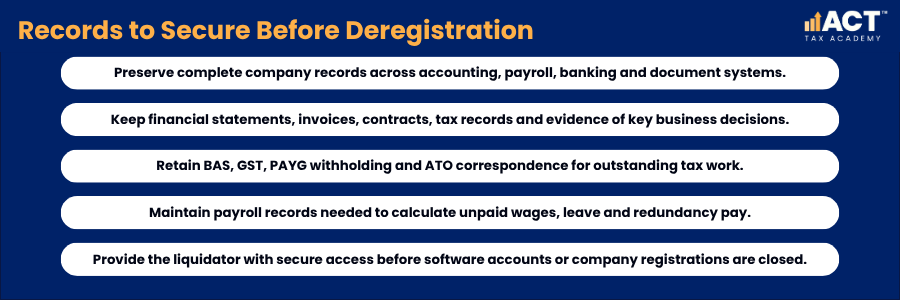
Complete company records allow the liquidator to understand the company’s financial position and complete the winding-up process efficiently. Records may be held in accounting software, payroll systems, cloud storage, banking platforms, email accounts, paper files or systems operated by an external bookkeeper. Former directors should preserve financial statements, bank information, invoices, contracts, payroll reports, tax documents, employee files, asset records and evidence of important business decisions. They should not delete records, cancel essential software access or dispose of files simply because the company’s business has closed.
Accounting and Tax Records
Accounting records help the liquidator confirm the company’s assets, outstanding debts, income, expenses and payments. These records may also show when the company began experiencing financial difficulty and whether it remained able to pay its debts. Tax records should include income tax returns, Business Activity Statements (BAS), Goods and Services Tax (GST) information, Pay As You Go (PAYG) withholding records and correspondence from the Australian Taxation Office (ATO). The liquidator may need these documents to complete outstanding lodgments, review company debts and deal with asset sales during liquidation.
Payroll and Employee Records
Payroll records are essential when calculating unpaid wages, leave balances, redundancy pay and other employee entitlements. Missing or inaccurate records can delay employee claims and make it harder to confirm what each worker is owed. Useful records include employment agreements, payslips, timesheets, rosters, leave reports, termination letters, superannuation information and records of commissions or allowances. Employees should also retain their own copies where they have lawful access to them.
Record Access After Deregistration
Access to records may become difficult after deregistration, particularly when accounting software or cloud subscriptions expire. Once deregistered, the company ceases to exist, and the ATO stops processing forms lodged for the company and enabling reporting such as Single Touch Payroll. Directors should therefore preserve secure copies and ensure the liquidator has the access needed to address outstanding lodgments and reporting before deregistration.
Tax Debts During the Liquidation Process
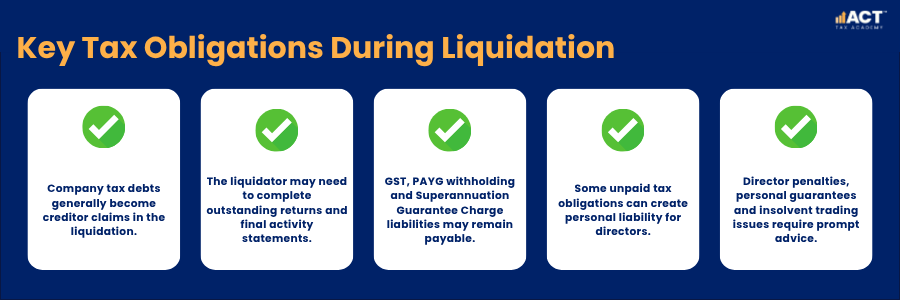
Tax debts owed by the company generally become creditor claims in the liquidation. The ATO may lodge creditor claims for income tax, GST, PAYG withholding, applicable interest and penalties, and any Superannuation Guarantee Charge arising from unpaid or late superannuation contributions. The company’s tax debts are not automatically transferred to its directors merely because the company goes into liquidation. However, some tax obligations can create personal liability where the law allows the ATO to recover specified amounts directly from directors.
Outstanding Lodgments and Final Tax Work
Liquidation does not always remove the company’s remaining reporting obligations. The liquidator may need to prepare outstanding returns, lodge final activity statements, account for asset disposals and resolve balances shown in the company’s tax accounts. These records help separate debts incurred before liquidation from obligations arising during the administration and support the correct treatment of GST, asset sales and director loan accounts.
Director Penalty Exposure
Directors can face personal liability for certain unpaid PAYG withholding, GST and superannuation-related amounts. The outcome can depend on when the company reported its obligations, when the director was appointed and whether the ATO issued a Director Penalty Notice. Liquidation does not necessarily cancel an existing director penalty. A director who receives an ATO notice should not assume that the registered liquidator will deal with it as an ordinary company debt, because the notice may relate to the director personally. Personal guarantees and findings of insolvent trading can also make directors personally liable for some outstanding debts, so affected directors should seek advice promptly.
Creditor Claims and Payment Priorities
The liquidator receives and assesses claims from the company’s creditors. Creditors may need to provide invoices, agreements, account statements, court documents or other evidence supporting the amount they say remains unpaid. Submitting a claim does not mean the creditor will be paid in full. The available return depends on the value recovered from selling assets, the rights of secured creditors, liquidator’s fees, liquidation costs and the legal order in which different claims are generally paid.
Secured Creditors
Secured creditors hold a security interest over particular company assets or, in some cases, a broader interest over company property. Depending on the security terms and applicable law, they may be entitled to take possession of secured assets or receive payment from the proceeds. The treatment of secured creditors can significantly affect the amount left for employee claims and unsecured creditors. The registered liquidator reviews the validity and priority of each security before distributing funds.
Priority Creditors
Employees are priority creditors for certain entitlements. This priority can apply to unpaid wages, leave amounts and eligible redundancy pay, although the exact treatment depends on the nature of the claim and the funds available. Priority does not guarantee payment. Where the company has insufficient assets, eligible employees may need to consider support through the Fair Entitlements Guarantee.

Unsecured Creditors
Unsecured creditors do not hold security over a specific company asset. This group commonly includes suppliers, contractors, landlords and customers who paid deposits for goods or services that were not supplied. Unsecured creditors are usually paid after liquidation expenses, secured claims against relevant assets and priority employee claims have been dealt with. In many insolvent liquidation cases, there may be little or no money left to pay other creditors.
Employee Entitlements After the Company Fails
Employees may be owed unpaid wages, annual leave, long service leave, payment instead of notice and redundancy pay when a company enters liquidation. The amount depends on the employee’s contract, award, enterprise agreement, length of service and employment history. The liquidator reviews the company’s payroll information and may send employees a calculation of their entitlements. Employees should compare this calculation with their own payslips, bank statements, leave records and employment documents.
Fair Entitlements Guarantee Support
The Fair Entitlements Guarantee is an Australian Government scheme that may assist eligible employees who lose their jobs because their employer enters liquidation or bankruptcy. It can cover specified unpaid employment entitlements when those amounts cannot be recovered from the employer. Eligibility conditions and payment limits apply, and not every person who worked for the company will qualify. Contractors and some people with a close relationship to the company may be treated differently from ordinary employees.
Unpaid Superannuation
The Fair Entitlements Guarantee does not cover unpaid Superannuation Guarantee amounts. Employees who believe their employer did not pay superannuation, paid it late or paid it to the wrong fund should compare their payslips with their fund records and report the issue through the ATO’s unpaid superannuation process. A payslip showing a superannuation amount does not confirm that the money reached the employee’s fund. Reliable payroll and payment records are therefore important for both the employee and the liquidator.
Employee Evidence and Claim Timing
Employees should provide information as early as possible if the liquidator’s records are incomplete or incorrect. A clear employment history can help confirm hours worked, leave balances, termination dates and payments already received. An effective Fair Entitlements Guarantee claim must generally be lodged within 12 months of the later of the date the employee’s employment ended or the date the employer entered liquidation or bankruptcy. Employees should apply promptly and keep copies of every claim, document and communication relating to their employee entitlements.
Alternatives Considered Before Liquidation
Liquidation is not the only formal process available to an insolvent company. Depending on the company’s financial circumstances, its directors may consider voluntary administration or small business restructuring before liquidation begins. These options have different requirements and objectives. They may allow the company to propose a plan to creditors, restructure its debts or preserve parts of the business, but they will not suit every company. Before liquidation begins, an insolvent company may consider voluntary administration, small business restructuring or another formal option. These processes may help restructure company debts or avoid liquidation altogether, but they are no longer available in the same way once liquidation commences.
Bankruptcy and Company Liquidation
Company liquidation and personal bankruptcy are separate legal processes. The Australian Securities and Investments Commission oversees company regulation and registered liquidators, while the Australian Financial Security Authority administers Australia’s personal insolvency system. A company can enter liquidation without its directors being declared bankrupt. A director may face bankruptcy separately where personal debts, guarantees or personal liability cannot be resolved.
The Effect on Directors Personally
Directors are not personally responsible for every company debt. However, guarantees, tax penalties, insolvent trading claims and other legal obligations can expose directors personally. This distinction is important because the company’s creditors may have rights against the company, the director or both. Early advice can help directors understand which claims belong in the liquidation, and which require a separate personal response. Directors should seek advice about personal liability, tax notices, personal guarantees and any legal proceedings directed at them.
Managing the Period After Liquidation Begins
Employees should confirm their contact details with the liquidator, review entitlement calculations and retain evidence of unpaid wages, leave, redundancy pay and superannuation. Creditors should provide complete evidence of their claims and keep their expectations aligned with the amount the liquidator is able to recover.

Reducing Delays and Disputes
Clear accounting records can reduce the time required to confirm company debts, sell assets and assess employee entitlements. They can also help the liquidator explain why the company failed and whether transactions require further investigation. Poor records often create additional work and may increase liquidation costs. A reliable bookkeeping system gives directors, employees and advisers clearer information when difficult financial decisions need to be made.
Build Practical Bookkeeping Skills
Accurate records support every stage of the liquidation process, from identifying the company’s assets and debts to calculating unpaid wages and responding to tax obligations. Practical bookkeeping systems give business owners clearer information, help employees establish their entitlements and allow advisers to act before financial difficulty becomes unmanageable. If you are ready to move from theory to practical application, the ACT Tax Academy Bookkeeping Online Course provides structured online training designed specifically for Australian small business owners and aspiring bookkeepers. You will learn how to set up and manage GST, prepare BAS, use Xero effectively, and implement compliant bookkeeping systems with confidence.