
SMSF Record-Keeping Requirements: Best Practices for Trustees
Self-Managed Super Fund (SMSF) record-keeping requirements are essential for SMSF trustees to manage investments and meet legal obligations in Australia. Keeping accurate records helps an SMSF trustee make informed decisions, maintain compliance with the Australian Taxation Office (ATO), and protect retirement savings. Managing your own super fund gives you more control but also brings strict rules and reporting requirements to ensure your fund is regulated and in line with superannuation laws.
What Are the Core SMSF Record-Keeping Requirements?
An SMSF trustee is required to keep financial statements, annual tax returns, and all trustee decisions related to SMSF investments for specific timeframes. Most records should be kept for at least five years, while trustee meeting minutes, trust deeds, and signed declarations must be stored for ten years. Clear records help all individual trustees, or those with a corporate trustee structure, remain personally liable for fund decisions and compliance.
A SMSF trustee should ensure:
- All fund assets and investment options are explained in accounting records
- Minutes are taken for every decision about the managed super fund SMSF
- The fund’s investment strategy and any changes are documented
Losing or not keeping these documents may lead to penalties, the risk of losing retirement savings, and even the fund’s disqualification.
Why Is Record-Keeping Critical for SMSF Trustees?
Keeping clear and complete records helps SMSF trustees manage their own superannuation, demonstrate compliance, and maintain access to retirement benefits without interruption. Documenting decisions gives peace of mind if the fund is reviewed, faces a relationship breakdown, or a member dies.
Without proper record-keeping, trustees may:
- Find it harder to access government compensation or lodge complaints with the Australian Financial Complaints Authority
- Be unable to prove investment decisions or valuation of fund assets in an audit
- Fail to meet legal requirements for superannuation industry best practice
Common SMSF record-keeping mistakes include missing signed statements, incomplete investment trends documentation, and outdated or mixed storage practices.
The Impact of Technology on SMSF Record-Keeping
Using digital solutions can make it easier to manage your own SMSF records and meet super fund compliance. Technology enables secure, cost-effective storage for legal and financial documents, while also making it simple to update details following changes to trustee structure or investment strategy.
Benefits of digital record-keeping for Self-Managed Super Funds include:
- Real-time updates and document retrieval for every trustee
- Safe cloud storage that reduces the risk of losing key investment records or fund assets
- Easier collaboration between the trustee and a licensed financial adviser, financial adviser, or other professional advice provider
Switching to digital makes it easier to access documents for annual audit processes and ongoing statutory reporting.
Common Mistakes Trustees Make—and How to Avoid Them
Many SMSF trustees fall into common traps, like not updating the trust deed after a trustee resigns or failing to keep records of limited recourse borrowing arrangement approvals. If you set up an SMSF, stay alert to typical errors:
- Missing or unsigned statements related to the fund’s investment choices or tax return
- Not separating permanent from annual documents
- Forgetting to update member or SMSF trustee lists with the ATO
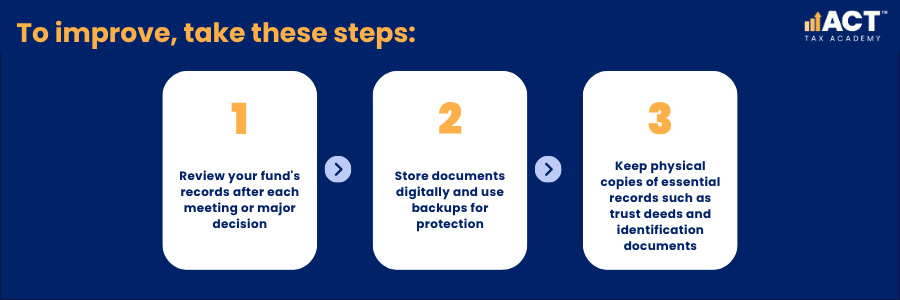
A proactive approach ensures your own SMSF remains compliant and ready for review by SMSF auditors or regulatory bodies.
How Long Should SMSF Records Be Kept?
The law requires keeping records relating to financial position, tax advice, and investment decisions for a minimum period—five years for most documents and ten years for permanent records like trustee declarations and meeting minutes. If your fund’s reporting requirements are not met, or records are lost, penalties may apply.
| Record Type | Minimum Retention | Purpose |
|---|---|---|
| Financial documents | 5 years | Annual audit and tax return |
| Trustee meeting minutes | 10 years | Compliance and legal review |
| Investment strategy | 5 years | Review and evidence |
| Trust deed & changes | 10 years | Regulatory obligations |
Regularly checking these records protects SMSF compliance and strengthens your fund’s ability to address challenges or disputes.
Strategies for Organising SMSF Records Effectively
Organised SMSF records allow for smoother audits and help prevent disputes if future questions about fund decisions arise. Trustees should develop systems that make it easy to separate annual from permanent records and ensure everything is up to date.
Consider working with third party financial firms or a financial adviser familiar with SMSF compliance—this can help trustees manage their super savings, understand strict rules, and get professional help for plan changes.
Penalties and Risks of Poor SMSF Record-Keeping
The risks of poor record-keeping can be significant. Trustees who don’t maintain required records may face fund disqualification, lose the benefits of a fund regulated by the ATO, or be unable to access their own super in retirement if compliance issues lead to penalties or legal action.
Specific risks include:
- Inability to lodge an annual audit or tax return on time
- Being flagged in public registers, which can prevent new contributions or fund rollovers
- Having to pay higher ongoing fees or facing scrutiny from SMSF auditors
Maintaining accurate records and seeking professional advice early reduces the risk of non-compliance and protects both fund assets and retirement benefits.
Real-World Examples of SMSF Record-Keeping Success and Failure
Getting SMSF record-keeping right can make a major difference. For instance, one super fund trustee who moved to a cloud-based solution was able to provide financial product advice more easily during the annual audit, resulting in fewer queries from SMSF auditors. Another instance involved an individual trustee whose failure to document investment options and major meetings led to penalties when their fund’s investment strategy couldn’t be verified during an ATO review.
Learnings for SMSF trustees:
- Good records back up every investment decision, strategy revision, and fund member change
- Keeping all trustees informed helps prevent confusion and supports clear fund administration
Ensuring Trustee Compliance Through Education and Professional Support
Staying up-to-date with superannuation laws, compliance changes, and reporting requirements is vital. New SMSF trustees should complete the required compliance training before setting up their fund and regularly seek guidance from a licensed financial adviser or other professional advice provider.
Strong connections with accountants or legal professionals can help you:
- Understand decisions about the appropriate trustee structure or changes in fund membership
- Adjust your SMSF investment strategy as regulations change
- Lodge complaints with the Australian Financial Complaints Authority, if needed
Professional advice ensures your SMSF is managed according to best practice, giving trustees and members the highest level of security and guidance for managing their own super savings.

Conclusion
Meticulous SMSF record-keeping sits at the heart of compliance and supports trustees in reaching their fund’s financial goals. By staying organised and up-to-date, SMSF trustees—including those with a corporate trustee or individual trusteeship—can avoid penalties and safeguard their own superannuation for years to come.
Trustees should regularly review processes, stay alert to changes in superannuation laws, and seek professional advice to enhance security and outcomes for their super fund. ACT Tax Academy is ready to help you assess your SMSF records and provide ongoing support for compliance, investment strategy, and day-to-day fund management.
Taking control of record-keeping protects fund assets and provides members with peace of mind about their retirement benefits and the future of their own SMSF.