
How to Stay Compliant with SMSF Reporting and Audit Obligations
How to stay compliant with Self-Managed Superannuation Fund reporting and audit obligations is a critical concern that affects every trustee operating in Australia’s complex superannuation landscape. Managing these requirements can feel overwhelming, especially when the consequences of non compliance include significant penalties, loss of tax concessions, and potential fund disqualification. With more than 650,000 self managed super funds operating across Australia and the Australian Taxation Office intensifying its compliance focus, understanding your responsibilities has never been more important.
Understanding Your Core SMSF Compliance Responsibilities
Every SMSF trustee carries significant responsibilities that extend well beyond making investment decisions. These obligations form the foundation of your fund’s compliance and determine whether you’ll maintain the valuable tax concessions that make self-managed superannuation funds attractive retirement planning vehicles.
The superannuation laws require trustees to exercise honesty, care, skill, and diligence in all fund matters. This means you’re responsible for decisions made by other trustees, even if you weren’t directly involved in making them. Your responsibilities encompass meeting the sole purpose test, developing your fund’s investment strategy, complying with investment restrictions, arranging annual audits, and maintaining accurate financial statements.
Annual Return Lodgement Requirements
Your super fund must lodge a Self-Managed Superannuation Fund Annual Return if it was either an SMSF on 30 June 2025 or wound up during the 2024-25 financial year. The lodgement deadlines vary significantly depending on your financial situation and whether you engage professional advice from a registered tax agent.
For new self managed super fund set up during the financial year, the first annual return must be lodged by 28 February of the following year when prepared by a financial adviser or tax agent. However, if your new fund is reviewed by the ATO at registration, your first year return due date becomes 31 October, even when prepared by professional services.
Existing managed super fund SMSF arrangements face different deadlines. If you lodge through a registered tax agent, most SMSFs have until 15 May to submit their returns. However, funds with outstanding prior year returns or those lodging independently must meet the 31 October deadline to comply with ATO requirements.
Mandatory Audit Requirements
The annual audit represents one of your most critical compliance obligations. Every self managed super must undergo both a financial audit and compliance audit by SMSF auditors, regardless of the fund’s activity level during the year. You must appoint your auditor at least 45 days before your annual return lodgement due date.
Your auditor examines your fund’s financial statements and assesses compliance with superannuation laws. They must provide you with an Independent Auditor’s Report and report certain contraventions to the Australian Taxation Office, even if you terminate their engagement or they don’t complete the audit. SMSF auditors must be ATO regulated SMSF professionals who understand the complex requirements for fund compliance.
Developing Effective Compliance Management Systems
Creating robust systems for managing your SMSF compliance obligations can prevent costly mistakes and reduce administrative stress. Effective compliance management requires structured approaches to record-keeping, deadline tracking, and regular reviews that serve your best interests.
Proper Record-Keeping
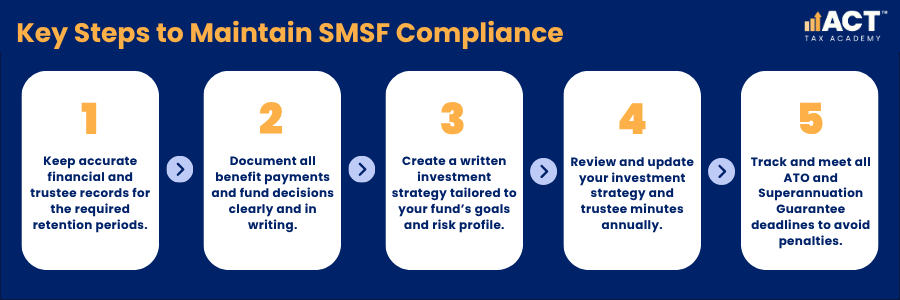
Maintaining accurate records forms the backbone of SMSF compliance. You must keep financial records for a minimum of five years, including accurate accounting records explaining all transactions involving money, annual operating statements, annual statements of financial position, and copies of all annual returns lodged with the ATO.
Documentation showing benefit payment decisions, including whether payments were pensions or lump sums and which accounts they came from, must be retained. You also need copies of transfer balance account reports and any other statements required by the Australian Taxation Office or other superannuation funds.
Certain records require longer retention periods. Minutes of trustee meetings, records of trustee changes, trustee declarations, and documented decisions must be kept for a minimum of ten years. Records must be kept in writing and in English, and electronic records must be verifiable through your electronic service address when the ATO website requires access.
Investment Strategy Documentation
Your investment strategy serves as your fund’s roadmap for making investment decisions that align with members’ retirement objectives. This document must be in writing and tailored specifically to your fund’s circumstances, considering your starting balance and potential benefits available through different investments.
The strategy should consider risk and likely returns, composition and diversity of investments, liquidity requirements, and insurance needs for each member. Whether you have a higher starting balance or lower starting balance, your strategy must explain how investments meet each member’s retirement objectives, considering factors such as age, employment status, and retirement planning needs.
Regular reviews are essential when you manage your own SMSF. You must review your investment strategy at least annually and document any changes in trustee meeting minutes. When you start making investments, the strategy forms part of your annual audit, and auditors may suggest modifications where investments involve complex assets or arrangements with third party financial firms.
Proactive Deadline Management
Successful SMSF trustees use systematic approaches to manage compliance deadlines while keeping ongoing costs under control. The supervisory levy of $518 covers both the setup year and following financial year for new self managed super fund setup arrangements. Payment deadlines typically fall on 1 December following the lodgement of your annual return.
Quarterly obligations include Superannuation Guarantee contributions for employee members, with deadlines falling on 28 January, 28 April, 28 July, and 28 October. Late contributions trigger Superannuation Guarantee Charge statements and financial penalties that can significantly impact your super savings.
Managing Audit Processes and Regulatory Relationships
Building positive relationships with your auditor and understanding regulatory expectations can significantly improve your compliance outcomes. Professional audit management involves preparation, communication, and prompt response to identified issues while ensuring your fund complies with all relevant requirements.
Preparing for Annual Audits
Effective audit preparation begins well before your auditor starts their work. You must provide auditors with a statement of financial position and operating statement for the previous financial year before they can commence reviewing how you hold assets and manage your fund’s affairs.
The ATO has identified specific focus areas for 2025 audits, including arrangements with related parties that might affect your tax file number obligations or compromise your fund’s tax concessions. Auditors scrutinise rental arrangements, discounted services, and loans on non-commercial terms that might indicate the fund doesn’t comply with arm’s length requirements.
Investment strategy compliance represents another priority area, with auditors checking whether investment decisions align with documented strategies. This includes reviewing whether you can assign assets appropriately and whether your trustee decisions serve members’ best interests rather than providing inappropriate benefits to related parties.
Understanding Contravention Reporting
When auditors identify contraventions, they must report certain breaches to the ATO through Auditor Contravention Reports. SMSF auditors must lodge these reports within 28 days of audit completion and provide Independent Auditor’s Reports to trustees within 28 days of receiving required documents.
As a trustee responsible for your fund’s operations, you should take immediate steps to rectify any identified contraventions. If contraventions remain unrectified when auditors lodge reports, the Australian Taxation Office will send correspondence that may include directions to rectify the issues or face penalties for non-compliance.
Penalty Framework and Consequences
The ATO employs a graduated approach to non-compliance, starting with education and escalating to more severe penalties for serious or continued breaches. Administrative penalties represent the most common enforcement action, with individual trustees personally liable for penalty amounts that cannot be paid using fund assets.
Different contraventions attract varying penalty amounts depending on their severity and impact on your fund’s compliance status. For example, failing to complete trustee declarations results in significant fines applied to each individual trustee, while more serious breaches can affect your legal ownership of fund assets.
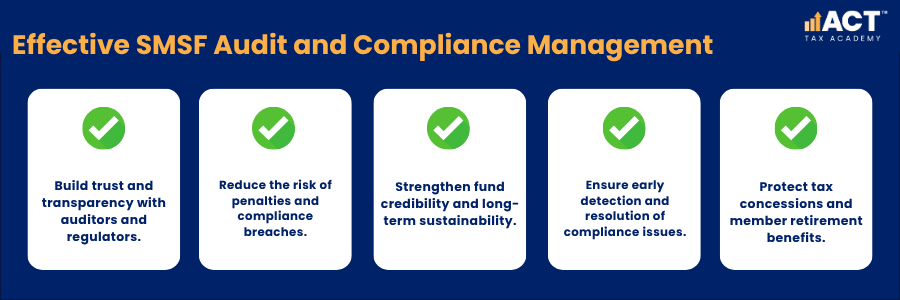
More serious consequences include trustee disqualification, fund wind-up requirements, and civil or criminal penalties. Non-compliant funds face taxation at the highest marginal rate until compliance is restored, effectively eliminating the tax concessions that make SMSF arrangements cost effective for retirement planning.
Building Long-Term Compliance Success
Maintaining SMSF compliance requires ongoing commitment and systematic approaches to fund management. Long-term success depends on staying informed about regulatory changes, engaging appropriate professional advice, and maintaining robust governance practices that protect your retirement benefits.
Professional Support Networks
While trustees retain responsibility for their funds, professional advice can significantly enhance compliance outcomes and help you plan effectively for retirement. Consider engaging registered tax agents for lodgement services, as they often provide extended deadlines and expert knowledge of complex requirements.
SMSF auditors must be independent from your fund and possess appropriate qualifications to assess whether your fund complies with superannuation laws. Early auditor engagement prevents last-minute rushes and ensures adequate time for addressing any identified issues before they impact your fund’s compliance status.
Some trustees benefit from ongoing relationships with SMSF specialists who provide administration, compliance monitoring, and strategic advice. A legal professional can assist with trust deed requirements and ensuring your bank account arrangements meet regulatory standards while maintaining appropriate separation from personal finances.
Staying Current with Regulatory Changes
The SMSF regulatory environment evolves continuously, with the ATO regularly updating rules and compliance expectations. Subscribe to updates through the ATO website and monitor their newsroom for changes that might affect your fund’s operations or your responsibilities as trustees.
Regulatory changes often affect reporting requirements, investment rules, and penalty frameworks. Staying informed helps you anticipate changes and adjust your compliance systems accordingly, ensuring your fund continues to provide the potential benefits and tax concessions that make self-managed superannuation an attractive option for building retirement wealth.

Conclusion
Effective SMSF compliance management requires systematic approaches to reporting, auditing, and record-keeping obligations that serve your fund members’ best interests. By understanding your trustee responsibilities, maintaining accurate documentation, and building strong relationships with professional advisers, you can protect your retirement savings while maximising the benefits of self-managed superannuation. Whether you operate with individual trustees or a corporate trustee structure, your compliance obligations remain the same, though a corporate trustee can provide additional benefits for succession planning and asset protection.
SMSF depending on your circumstances and financial situation, professional guidance can help you understand complex requirements while keeping costs under control. Consider whether a corporate trustee arrangement suits your fund’s needs, as this structure can simplify trustee changes and provide better continuity for your retirement planning. Are you confident that your current compliance systems adequately protect your SMSF’s future and your retirement security?