
Designing Low‑Risk Salary Sacrifice Policies: Setting Internal Rules to Avoid Surprise FBT Bills for Small Employers
Designing Low-Risk Salary Sacrifice Policies: Setting Internal Rules to Avoid Surprise FBT Bills for Small Employers starts with one simple rule: every salary sacrifice arrangement must be approved, documented, and checked before payroll changes are made. Without clear internal rules, a benefit that seems helpful for employees can leave the employer with an unexpected Fringe Benefits Tax (FBT) bill.
How Salary Sacrifice Changes Employee Pay and Employer Obligations
A salary sacrifice arrangement changes how part of an employee’s remuneration is received. Instead of receiving all income as salary or wages, the employee receives some benefits form of value, such as superannuation contributions, a car benefit, or certain work-related items. The arrangement must apply to future earnings, not salary the employee has already earned. This is why the agreement should be signed before the sacrificed salary is deducted from pre-tax salary or pre-tax income.
Pre-Tax Salary and After-Tax Pay
Pre-tax salary is the amount an employee earns before income tax is taken out. When salary is sacrificed, the employee may receive less income as cash wages, which can change their taxable income, tax income, take home pay, and after tax income. This does not always mean the employee will pay less tax overall. The final result depends on the benefit, the taxable value, the employee’s marginal tax rate, and whether FBT or additional tax applies.
Employer Contributions and Employee Contributions
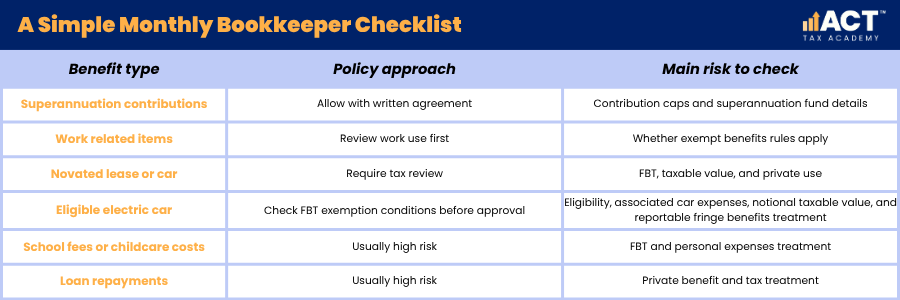
Salary sacrificed super contributions are employer contributions, even though they come from the employee’s agreed salary package. They are different from employee contributions made from after-tax pay, and they do not reduce or count towards the employer’s Superannuation Guarantee obligations. Employers should also explain contribution caps and check that salary sacrificed super contributions go to a complying super fund. If concessional contributions exceed the cap, the employee may face additional tax.
Setting Internal Rules for Common Benefits
A low-risk policy should explain which common benefits the employer offers and which benefits need approval before any agreement starts. Most employers should avoid open-ended sacrifice arrangements because they can create confusion about tax, payroll, and FBT. Common benefits may include extra super contributions, a novated lease, an eligible electric car, professional memberships, tools, laptops, or other work-related items. Higher-risk requests, such as school fees, childcare costs, loan repayments, expense payments, personal expenses, and other personal expenses, should be reviewed carefully before approval.
Why FBT Can Create Surprise Costs
FBT is a tax the employer may need to pay on certain fringe benefits provided to employees or their associates. A surprise tax bill can arise when the employer looks only at the cost of the benefit and forgets to check the FBT outcome. Fringe Benefits Tax is different from income tax paid by employees through payroll. Even if the employee receives less salary, the employer may still have to pay Fringe Benefits Tax if the benefit is taxable.
Taxable Value Matters
The taxable value is the amount used to calculate FBT on a fringe benefit. It may not be the same as the amount paid by the employer, especially where a car, novated lease, or other benefits are involved. Your policy should require a taxable value check before approving benefits provided under salary packaging. This helps the employer understand whether the arrangement creates real tax savings or simply moves the tax bill from the employee to the business.e work related percentage. You may need a reasonable method, such as reviewing bills or keeping a short usage diary.
Exempt Benefits Still Need Records
Some benefits may be exempt benefits if they meet specific conditions. For example, certain work-related items may be lower risk when they are mainly used for work and properly recorded. Small employers should not assume that every business-related expense is exempt. The policy should require invoices, employee declarations where relevant, and notes explaining why the benefit was approved.
Designing a Practical Salary Sacrifice Approval Process
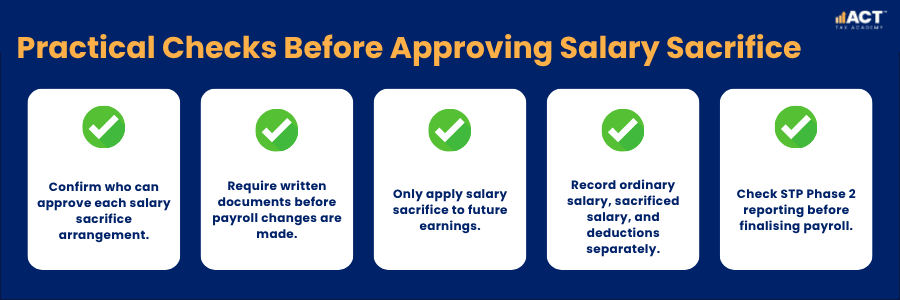
A practical approval process should be simple enough for a small employer to use consistently. It should cover who can approve a salary sacrifice arrangement, what documents are needed, and how payroll will record sacrificed salary. The process should also make it clear that employees cannot sacrifice salary for benefits after the income has already been earned. This protects the employer from backdated agreements and helps employees understand how their annual salary and remuneration package are being adjusted.
Keep Payroll Coding Clear
Payroll records should show the difference between ordinary salary, sacrificed salary, employer contributions, employee contributions, and any after-tax pay deductions. Under Single Touch Payroll (STP) Phase 2, employers must report salary sacrifice amounts separately and include pre-sacrificed income amounts, so incorrect coding can affect income reporting, super contributions, and tax return information. Clear coding also helps the employer review profit, expenses, and total remuneration packaging. It gives the business a better view of the true cost of benefits, not just the cash paid.
Protecting Employees from Unclear Tax Outcomes
A good policy should help employees understand that salary sacrifice does not automatically mean less tax. The arrangement may reduce taxable income in some cases, but the result depends on the type of benefit, FBT, marginal tax rate, and the employee’s personal circumstances. Employees should also know that reportable fringe benefits may affect government benefits, loan repayments, or other income-tested obligations. This does not mean salary sacrifice is unsuitable, but it does mean the employee should understand the possible impact before signing.
Explain Take Home Pay Clearly
Before an arrangement starts, the employer should show the employee how the sacrifice may affect take home pay. This should include the amount sacrificed, the benefit value, any employee contributions, and the expected after-tax income effect. For example, an employee who sacrifices salary into superannuation may receive less cash each pay cycle but increase superannuation savings. Another employee who packages a car may need a more detailed review because FBT and private use can change the final value.
Avoid Promising Tax Savings
Small employers should avoid promising tax savings or saying an employee will pay tax at a lower rate because of salary packaging. The safer approach is to explain the arrangement and recommend the employee seek personal advice if they are unsure. This is especially important for employees with multiple jobs, study debts, family tax matters, or other benefits. A policy that avoids broad promises helps protect both the employer and employees.

Build Practical Bookkeeping Skills
A low-risk salary sacrifice policy gives small employers a clear way to approve benefits, protect payroll records, and avoid surprise FBT costs. By setting rules for common benefits, taxable value checks, employee contributions, and annual reviews, your business can offer salary packaging with more confidence and fewer year-end surprises.
If you are ready to move from theory to practical application, the ACT Tax Academy Bookkeeping Online Course provides structured online training designed specifically for Australian small business owners and aspiring bookkeepers. You will learn how to set up and manage GST, prepare BAS, use Xero effectively, and implement compliant bookkeeping systems with confidence.