
Employee vs Contractor: Key Differences and Why It Matters for Australian Small Businesses
Understanding the difference between employee vs contractor is essential for Australian small businesses in 2025. Correctly determining whether a worker is an employee or independent contractor affects your pay obligations, superannuation, and workplace rights. Getting this right helps every business avoid costly mistakes and protects both workers and business owners.
Business owners need to understand how employee vs contractor rules apply to sole traders, labour hire agencies, and anyone proposing to perform work for their company. The Fair Work Act uses a relationship test to look at the real substance of work arrangements, not just what is written in a contract or how parties refer to each other. Assessing the practical reality means asking whether a person works for their own business, sets their own fees, and has more than one client, or whether they mainly do work for someone else’s business under their reasonable direction.
What Makes Someone an Employee Rather Than a Contractor?
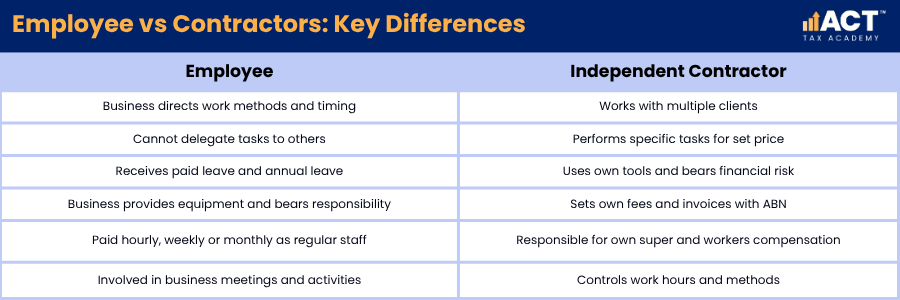
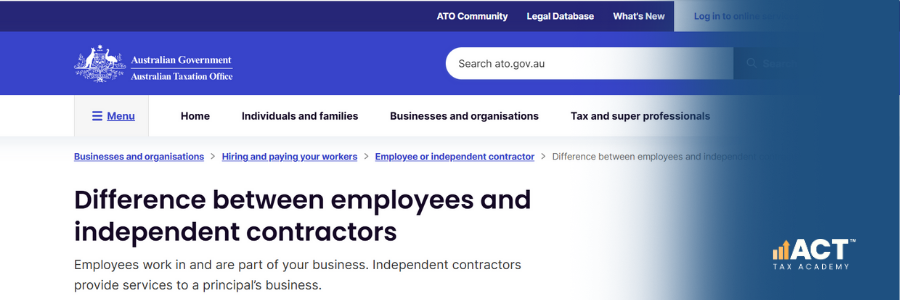
When hiring, it’s important to work out if a person is an employee or independent contractor. Employees work in a business under supervision, while a contractor runs their own business, provides services to several clients, and often decides how to perform work. The key differences are found in how the worker is responsible for their own taxes, super obligations, and the way work hours are set.
Employees usually follow a reasonable direction, use company tools, and get paid leave and annual leave entitlements. Contractors, on the other hand, invoice for specific tasks, set their own hours, use their own tools, and bear financial risk for costs arising from the job. The contract terms and the relationship test apply regardless of promotional activity or any label used by the employer.
The Financial Impact of Contractor Classification
Independent contractors often charge own fees higher than employees because they cover costs such as tax, insurance, and superannuation obligations. Only the real substance of the working relationship matters if later challenged, and seeking legal advice can help clarify if a person is a contractor. Contractors responsible for GST register with their own Australian Business Number and comply with all relevant obligations.
Employees have their PAYG tax, super, and workers compensation managed by the employer. Contractors take care of their own obligations, report income for the financial year, and pay tax themselves, unless the relationship test finds the person was acting as an employee. It’s important not to ignore the full picture or let contract terms hide the true nature of the arrangement, as this may lead to compliance checks or penalties.
When Contractors Must Receive Superannuation
Contractors must receive super contributions in specific situations. If the work arrangement is for labour—meaning the contract is mainly for the worker’s personal effort—and not for the supply of materials or equipment, the worker may be entitled to super, even when invoicing with their own Australian Business Number. These rules protect workers performing tasks that match employee entitlements.
Employers and labour hire agencies should assess all on hire arrangements using the new test, which applies from 26 August 2024. Regular reviews and legal advice help determine whether superannuation contributions are required for proposed contractors based on the work’s practical reality.
PAYG Withholding Requirements: Who Pays What?
For employees, the business must withhold PAYG tax from wages, cover super obligations, and arrange workers compensation. Employers need to register for PAYG before hiring employees and set up systems for workplace rights and correct payments. Contractors usually look after their own tax, but if they don’t provide an Australian Business Number, the business must withhold tax at the top rate.
Labour hire arrangements and voluntary agreements for contractors allow some flexibility in tax payments. Companies must check the particular task each worker performs to determine the right tax treatment. Asking for professional advice helps clarify any grey areas and ensures all parties meet their obligations.
The Real Cost of Misclassification
Misclassifying a worker as a contractor if they are actually an employee is called sham contracting. This mistake can bring penalties under the Fair Work Act, including fines and back payment of leave, super, and workers compensation. Recent updates mean that for each case of sham contracting, small businesses may face significant financial consequences.
Business also risks paying for missed employee entitlements and additional costs if the working relationship does not match the written contract. Regular compliance checking helps avoid adverse action and loss of reputational trust. In practice, the fair work commission reviews complaints on a case-by-case basis, looking at relationship test factors, contract terms, and the real substance of the work arrangement.
How Written Contracts Shape Legal Outcomes
A valid contract can clarify how services are to be provided and specify who is responsible for costs, hours and tools, but the content must reflect the practical reality. The new definition of employment after High Court decisions means courts focus on written agreements but will still examine how workers actually operate in a business. Strong contracts will define whether a person is truly their own boss, setting their own fees and taking on financial risk.
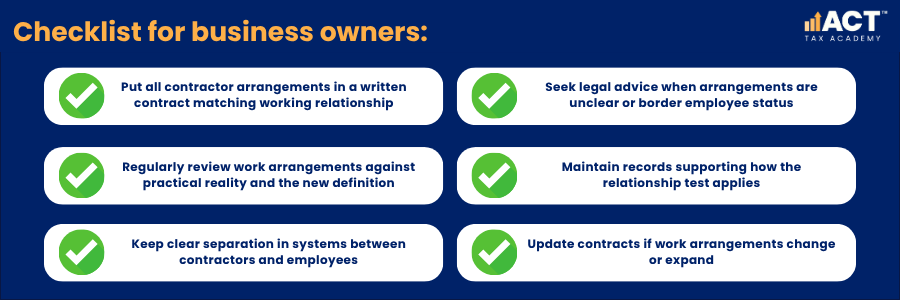
Generic templates are not enough. Contractors and businesses should seek legal advice and update contracts regularly to match actual work arrangements. Real substance and day-to-day arrangements matter: courts only accept contract terms if they reflect the practical reality of who controls the work, hours, and responsibility for risks.

Smart Strategies for Australian Small Businesses
Smart small businesses choose carefully between hiring employees versus contractors. Contractors suit projects needing a particular skill for a specific task, help manage seasonal demand, or fill gaps without the costs of permanent employment. Using independent contractors can provide access to multiple clients, flexible hours, and control over costs.
For ongoing roles crucial to business operations, hiring employees brings stability, workplace rights, and the ability to offer annual leave and paid benefits. Each hire impacts the business, so making informed decisions with proper contracts and checking for compliance with fair work guidelines makes a real difference.
Conclusion
Every business should treat worker classification as part of operational planning and risk management. Employee vs contractor classification underpins pay, employee entitlements, workers compensation, and tax responsibilities. Reviewing contracts, conducting regular audits and getting specialist legal advice help avoid sham contracting and protect business growth.
If unsure, get advice and document the decision-making process. Understanding the full picture and applying the relationship test is key to making decisions that match both day-to-day work arrangements and contract terms. Contractors help drive growth and flexibility, while employees offer stability and compliance. Matching the right approach to the business’s current needs and following updated Fair Work and ATO guidelines sets up Australian small businesses for lasting success.