
Avoiding ABN Errors That Can Trigger ATO Audits
Avoiding ABN Errors That Can Trigger ATO Audits is critical for keeping your business off the Australian Taxation Office (ATO) radar and maintaining smooth operations. Many business owners don’t realise that simple mistakes with their Australian Business Number (ABN) can lead to costly compliance reviews, penalties, and even full-scale audits that drain time and resources from growing their business.
What is ABN and Why ABN Mistakes Trigger ATO Attention
The Australian Taxation Office uses sophisticated data-matching technology and artificial intelligence to monitor over one billion transactions annually, making it easier than ever to spot inconsistencies in business records. Your Australian Business Number sits at the centre of all your business interactions with the ATO, from Business Activity Statements to Goods and Services Tax (GST) reporting and payroll data.
When errors occur with your ABN details or associated reporting, they create red flags in the ATO’s systems that can automatically trigger reviews or audits. The government’s approach in 2025 is increasingly data-driven, meaning even small discrepancies between your ABN registration information and other records can prompt investigation.
Why ABN Compliance Matters More Than Ever
Recent enforcement actions show the ATO is taking ABN-related violations seriously. Major operations have resulted in multiple prosecutions for ABN fraud, with individuals receiving jail sentences ranging from 17 months to 3 years for false ABN applications and fraudulent Business Activity Statements. While these are extreme cases, they highlight how seriously the ATO treats ABN compliance.
The ATO’s enhanced data-matching capabilities mean they can now cross-reference your ABN details with information from business bank accounts, payment platforms, and other financial institutions. This comprehensive approach makes it virtually impossible to hide discrepancies or errors for long.
Common ABN Data Matching Points
The ATO regularly matches your ABN registration against several external sources to verify accuracy. They compare your registered business address with Australia Post records, cross-check your business structure with the Australian Securities and Investments Commission data, and verify your financial transactions through banking partners.
Your business activities descriptions are also scrutinised against industry benchmarks, and any significant deviations from typical industry performance can trigger further investigation. This is why maintaining accurate, up-to-date ABN details is essential for staying compliant with your tax obligations.

Critical ABN Errors That Trigger Audits
Several specific ABN-related mistakes consistently appear on the ATO’s audit trigger list. Understanding these errors helps you avoid them and keeps your business operating smoothly without unwanted attention from tax authorities.
Incorrect or Outdated Business Details
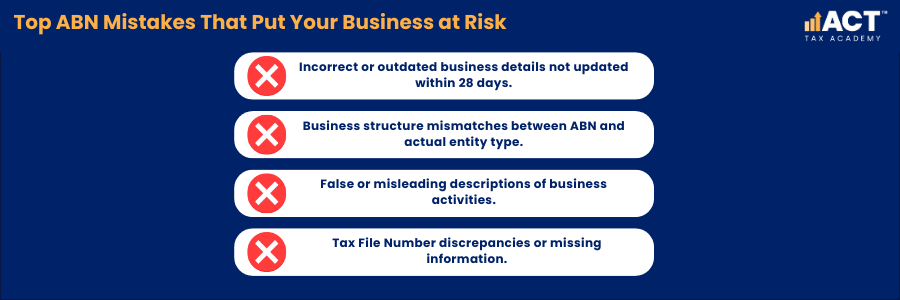
One of the most common triggers is failing to update your business details within the required 28-day timeframe when changes occur. This includes changes to your business address, business contact details, business structure, or business associates.
The Australian Business Register (ABR) relies on accurate information to communicate with businesses and other entities, and outdated details can signal to the ATO that your business may be inactive or non-compliant. When the ABR website attempts to contact you using incorrect details and mail is returned or emails bounce back, it raises immediate red flags about your business status.
Business Structure Mismatches
Many businesses struggle with correctly identifying their structure when they apply for an ABN or updating their details. Common mistakes include applying as sole traders when you have business partners, selecting the wrong entity type for companies or partnerships, or failing to update your structure when your business evolves.
Your ABN must match your actual business structure because GST registration and tax obligations differ significantly between sole traders, partnerships, companies, and trusts. Using the wrong structure can lead to incorrect GST reporting, missed obligations, and compliance issues that trigger ATO investigations.
False or Misleading Business Activities Descriptions
The ATO scrutinises business activities descriptions to determine if you’re genuinely operating an enterprise or if your activities constitute a hobby. Vague descriptions like “casual sales” or “personal project” can result in ABN applications being flagged for manual review or rejected entirely, potentially leading to a refusal number.
Recent fraud cases show the ATO is particularly vigilant about fake business descriptions, especially when combined with attempts to claim GST credits or obtain GST refunds. Providing inaccurate information about your business activities, even unintentionally, can be classified as making a false or misleading statement, which carries penalties under Australian law.
Tax File Number (TFN) Discrepancies
Incorrect or missing Tax File Number information is another common cause of ABN delays and compliance issues. The ATO uses your Tax File Number as a reference number to verify your identity and ensure your business registration aligns with existing tax records for tax purposes.
Even small errors like transposed digits or using a previously held ABN can cause your application to be flagged for manual review, potentially delaying your valid ABN approval and creating compliance gaps. These errors can also affect your ability to register for services like GST or Pay As You Go (PAYG) Withholding.
Smart Strategies to Protect Your Business
Implementing proactive measures to maintain ABN compliance helps prevent errors before they occur and keeps your business operating smoothly. These strategies focus on accuracy, timeliness, and maintaining clear documentation for all your business activities.
Regular ABN Health Checks
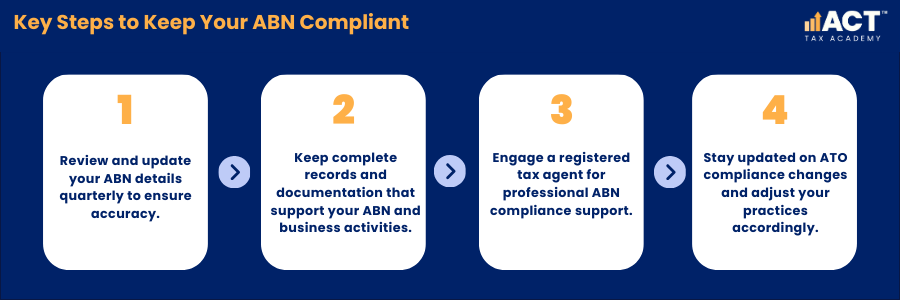
Schedule quarterly reviews of your ABN details to ensure all information remains current and accurate. Use the Australian Business Register website to verify your details match what the ATO has on file, and update any changes immediately rather than waiting until the last minute.
Check that your business address matches your actual operating location, verify your business contact details are current, and ensure your business activities description accurately reflects what you do. If you’ve moved, changed your business structure, or expanded into new activities, update these details promptly to avoid compliance issues.

Proper Documentation and Record Keeping
Maintain comprehensive records that support your ABN registration and business activities. Keep copies of all correspondence with the ATO, document any changes to your business structure or activities, and ensure your accounting records align with your ABN details for accurate income and expenses reporting.
Strong record-keeping practices not only support your ABN compliance but also provide evidence of legitimate business operations if the ATO does conduct a review. Store digital copies of important documents including invoices, receipts, and business bank account statements in secure, accessible locations and regularly back up your business records.
Professional Support and Guidance
Consider working with a registered tax agent to manage your ABN obligations and stay compliant with changing requirements. Tax professionals can help identify potential issues before they become problems and ensure your business structure and ABN registration remain aligned with your operational needs for carrying on your enterprise.
A tax agent can also help understand complex situations like business structure changes, GST registration requirements for entities claiming GST credits, and industry-specific compliance issues that may affect your ABN. Their expertise becomes particularly valuable during business transitions or when facing ATO enquiries about your regulatory obligations.
Staying Informed About Compliance Changes
The ATO regularly updates its compliance focus areas and enforcement priorities. Stay informed about these changes through official ATO communications, industry publications, and professional networks to ensure your business practices remain compliant with current requirements.
Not everyone needs an ABN, but if you do need an ABN for your business in Australia, understanding when changes affect your registration is crucial. Subscribe to ATO updates relevant to your industry, attend business compliance seminars, and regularly review ATO guidance documents that affect your business operations and profit reporting.
Conclusion
Protecting your business from ATO audits starts with getting your ABN details right and keeping them accurate through proper ABN registration processes. For companies, this includes ensuring your Australian Company Number (ACN) matches your ABN registration and that both remain current with any business structure changes. Small errors with your Australian Business Number or mismatches between your ACN and ABN can create big problems, from compliance reviews to full audits that cost time and money your business can’t afford to lose.
The key is being proactive rather than reactive when managing your business details and regulatory obligations. Regular reviews of your ABN details, prompt updates when business details change, and maintaining accurate records create a strong foundation for compliance. Companies should pay particular attention to keeping their Australian Company Number information consistent across all ATO registrations to avoid triggering data-matching alerts.