Compliance and Reporting Obligations for Corporate vs Individual Trustees
Taking care of compliance and reporting obligations for corporate vs individual trustees is one of the most important steps when you’re setting up and managing a trust in Australia. Choosing the right trustee structure—whether your trustee is a company or an individual—can impact everything from legal ownership to asset protection and ongoing costs. For business owners, families, and Self Managed Super Fund (SMSF) members, this decision shapes how you manage trust assets and ensures your financial future is looked after.
What Makes Trustee Structures So Important?
Understanding the differences between a corporate trustee and an individual trustee is essential for anyone who wants their trust administered smoothly, their personal and trust assets kept safe, and compliance kept stress-free.
Why the Right Trustee Structure Matters
Choosing the right trustee structure can feel daunting because it affects not only your current trust management but also asset protection, succession planning, and legal ownership over the long term. The trustee must manage the trust’s income, tax obligations, and distributions while acting in the best interests of its beneficiaries.
In many cases, corporate trustees offer better asset protection and are more efficient when handling succession planning, as the company remains the legal trustee—a separate legal entity with perpetual existence. This means that if directors or shareholders change, only company records need updating; trust assets stay protected and legal ownership doesn’t need to be transferred.
On the other hand, an individual trustee acts in their own right and personal assets may be exposed to trust debts or compliance issues. Complex succession planning can arise when the trustee changes, which can result in added paperwork, delays, and costs. Individual trustees are personally liable for the trust’s obligations, including debts and legal compliance—potentially putting their own property on the line.
How Each Structure Handles Assets and Responsibility
Both corporate and individual trustees take on legal compliance, manage trust property, and report financial statements as required by law. But the way they do it—and the risks involved—are very different.
Corporate trustee companies have at least one director and comply with company registration rules under the Corporations Act. Annual financial statements and regular updates are mandatory, and ongoing costs include corporate fees and compliance with company requirements. This structure suits anyone looking for professional management, long term reliability, and limited liability—directors generally aren’t personally liable for trust debts if they fulfil their duties properly.
Individual trustees don’t require company registration, meaning lower ongoing costs and simpler administration. However, their personal liability is higher if trust obligations aren’t met, and personal assets may be at risk if there’s a problem with trust debts.
Examining Compliance and Reporting Requirements
Let’s look at the specific responsibilities and reporting obligations that apply to both trustee structures—and what you can do to stay compliant and avoid unnecessary stress.
Company Trustee Compliance
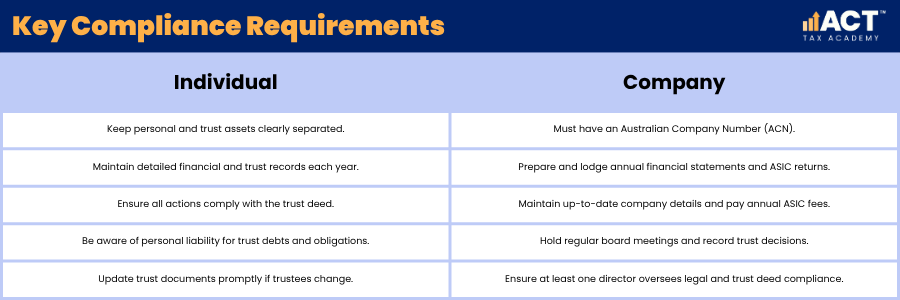
Corporate trustee companies are responsible for more formal compliance tasks. They must be registered with an Australian Company Number (ACN), maintain current company details, and prepare financial statements each year. At least one director must oversee ongoing legal compliance, including the preparation and submission of annual returns as well as meeting all requirements in the trust deed.
Annual reviews and ASIC fees are part of the ongoing costs for a corporate trustee. If the company acts as a special purpose trustee (for SMSF or certain family trusts), the fee may be reduced compared to a standard trading company. Compliance obligations include holding regular board meetings and keeping clear records of trust decisions, making reporting straightforward and accessible for fund members or beneficiaries.
A corporate trustee offers clear separation between personal and trust assets. Since the trustee is a company, legal title to trust property remains unchanged when directors or shareholders change—which supports simplified succession planning and ongoing continuity.
Individual Trustee Compliance
Individual trustees must focus on clear and separate management of personal and trust assets. Their compliance obligations include keeping detailed records, preparing financial statements, and ensuring all decisions and distributions comply with the trust deed. As the legal owner of trust assets in their capacity as trustee, they are personally liable for the trust’s debts.
Compliance is less formal but can be more complex if individual trustees need to be replaced. Personal liability remains a major concern—if debts or obligations aren’t met, individual trustee’s personal assets may be used to meet trust liabilities. This means choosing an individual or corporate trustee is a significant decision that shapes how your trust is managed for years to come.
Getting Your Trustee Structure Right
Choosing the right trustee structure requires balancing asset protection, ongoing costs, and your own situation—whether for a family trust, SMSF, or unit trust.
Liability and Asset Protection
A corporate trustee structure provides limited liability and better asset protection for directors compared to an individual trustee, whose own personal assets may be exposed if trust debts or obligations aren’t fulfilled. Both types must keep records and maintain compliance, but the risk profile is different.
Administration and Ongoing Costs
Professional management through a corporate trustee comes with higher ongoing fees, company registration rules, and annual compliance tasks. Individual trustee structures can be easier to set up but can lead to complex succession planning down the track, as trust assets need to be transferred and titles updated every time a new trustee is appointed.
Succession Planning and Continuity
Corporate trustee companies allow for perpetual existence. When directors or shareholders change, the company remains the trustee and legal owner of trust assets—helping avoid complex succession planning, especially with family members or fund members involved. Individual trustees need to transfer legal ownership whenever a trustee changes, which can be expensive and time-consuming.
Recognised by Lenders and Professionals
Many banks and lenders prefer corporate trustee arrangements because they allow for simplified succession, professional management, and defined asset protection. This can support future borrowing and investment goals for your family or business.

Strategies to Make Compliance Easier
Let’s dive into actionable steps you can take to keep everything compliant and your trust administration stress-free.
Clarifying Your Trust Deed
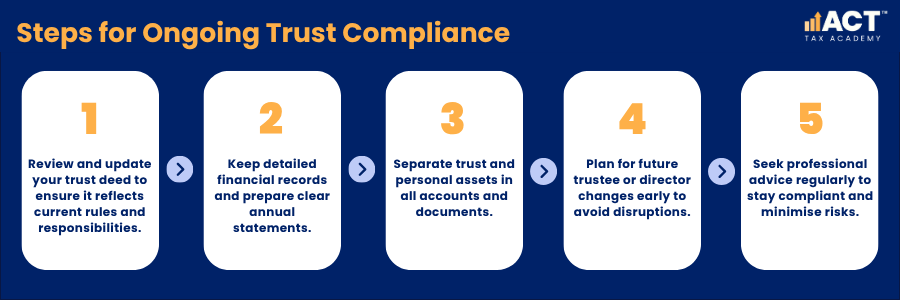
Your trust deed should make it clear what the trustee (company or individual) must do, what powers they have, and who can become a trustee in future. If you’re not sure if the trust deed is up to scratch, consider asking for professional advice—a well-drafted deed supports lasting compliance and easier reporting.
Keeping Records and Preparing Statements
Both individual and corporate trustees must keep financial statements, meeting minutes, and records of income, distributions, and decisions. Financial statements should show clear separation between personal and trust assets, regardless of the trustee structure chosen.
Staying Ahead on Succession Planning
For corporate trustee structures, updating directors or shareholders is simple and doesn’t affect legal ownership of trust assets. For individual trustees, any change in trustees means legal title must be transferred—a process that can be simplified if succession planning is considered early.
Seeking Professional Advice
Professional advice can help you weigh up the type of trust and trustee structure best suited to your needs, assess risks, review your trust deed, and provide guidance on compliance obligations, tax implications, and future planning.
Conclusion
Compliance and reporting for corporate vs individual trustees shape the management, risk profile, and succession of your trust. The trustee structure you choose—be it a corporate trustee company or an individual trustee operating in their own right—will affect long term costs, asset protection, and how easily your trust can adapt to changes in circumstances.
Our team at ACT Tax Academy is here to help with tailored advice, friendly support, and expertise in trust management. Reach out to us anytime to discuss your trust’s needs, compliance obligations, or potential changes—so you can plan for the future, reduce stress, and focus on what matters. If you’re ready to review your trust or examine a new trustee arrangement, take the first step towards reliable, long-term peace of mind today.