
WET Reporting Made Simple: Monthly and Quarterly Checklists for Small Wineries and Bottle Shops
WET Reporting Made Simple: Monthly and Quarterly Checklists for Small Wineries and Bottle Shops helps wine producers, wine manufacturers and bottle shops understand when Wine Equalisation Tax (WET) applies and how to report it correctly. WET is a tax on wine that is generally paid on the last wholesale sale in Australia, although it can also apply to imports, certain retail sales and own use. For small businesses in the wine industry, the challenge is often keeping sales, credits, stock movements and BAS records clear.
How WET Affects Wine Producers and Bottle Shops
WET affects wine manufacturers, wine producers, wholesalers and importers when they have assessable dealings with wine. It can apply to grape wine, including sparkling and some fortified wine, grape wine products such as wine cocktails, fruit wines and vegetable wines, cider and perry, mead and sake where the product meets the alcohol and product rules.
Bottle shops usually deal with WET differently because WET is often included in the price when purchasing wine from wholesalers and importers. In many cases, the retailer pays a WET inclusive price before making a retail sale to customers, but supplier invoices and sales records still need to be kept clearly.
When A Wholesale Sale Creates WET Payable
A wholesale sale is often the point where WET payable arises, especially when wine is sold to restaurants, bottle shops or other retailers. WET is generally paid on the last wholesale sale before the wine reaches the final consumer. For example, if a winery sells its own wholesale wine to a restaurant, that sale may create a WET liability. If restaurants pay a WET inclusive price, the winery still needs to calculate the WET amount and report WET payable correctly.
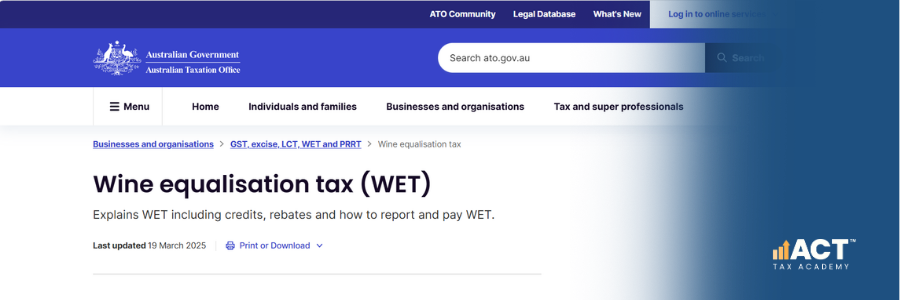
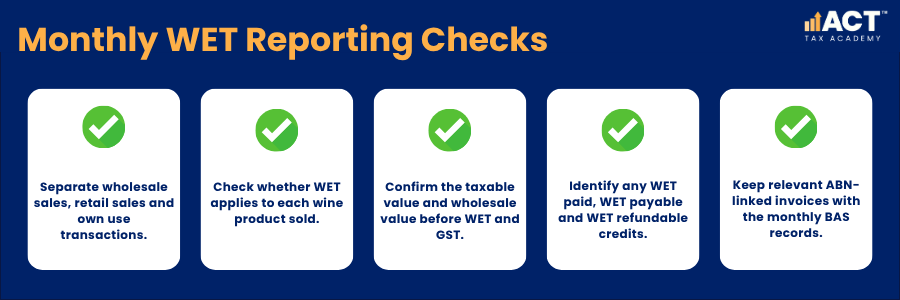
Monthly WET Checklist for Small Wine Businesses
A monthly checklist helps you keep WET calculated accurately before records become difficult to review. This is useful for businesses that report WET monthly or want cleaner records before the end of the tax period.
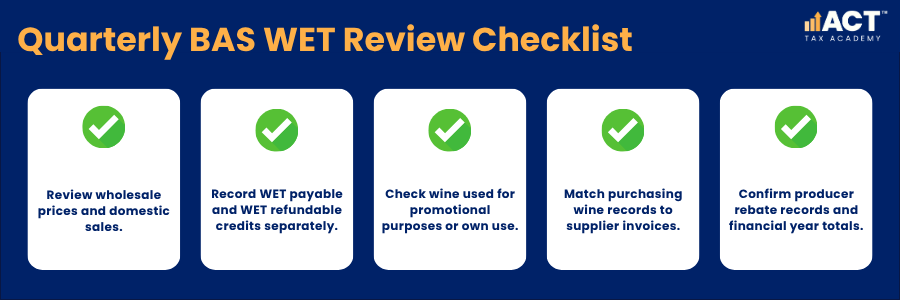
Quarterly WET Checklist for BAS Preparation
Quarterly WET reporting needs strong record-keeping because three months of sales, credits and supplier invoices can quickly build up. Even if your tax period is quarterly, reviewing WET monthly can make BAS preparation less stressful.
Producer Rebate Records Need Extra Care
Eligible wine producers may be entitled to claim a producer rebate in certain circumstances, but the claim must be supported by clear records. A business should not assume it is entitled to claim unless it meets the relevant producer, ownership, packaging, branding and assessable dealing requirements. Keep records showing the product, alcohol content, total volume, source product ownership and whether the wine is sold in eligible retail packaging.
Build Practical Bookkeeping Skills
WET reporting becomes easier when each wine sale, wholesale value, taxable value and WET amount is recorded clearly before BAS preparation begins. This includes checking whether WET tax applies to alcoholic beverages such as sparkling and fortified wine, other fruit wines and fortified fruit products, whether the wine making process supports the records, and whether a notional wholesale selling price is needed. Monthly and quarterly checklists also help small wineries, wine manufacturers and bottle shops track wine levied with WET, reduce mistakes and confirm when the producer rebate scheme entitles wine producers to a credit.
If you are ready to move from theory to practical application, the ACT Tax Academy Bookkeeping Online Course provides structured online training designed specifically for Australian small business owners and aspiring bookkeepers.