What Is a Chartered Accountant and When Does a Small Business Need One vs a Bookkeeper?
What is a Chartered Accountant and when does a small business need one vs a bookkeeper? A Chartered Accountant generally provides higher-level accounting, tax, financial reporting and business advice, while a bookkeeper manages the accurate day-to-day recording of business transactions. Understanding the difference helps you avoid paying for the wrong level of support or relying on someone whose services do not cover your business needs.
Both professionals can contribute to stronger financial management, but they usually work at different stages of the accounting process. A bookkeeper keeps your financial records current and organised, while a Chartered Accountant interprets the financial data and supports more complex reporting, taxation and strategic decision-making.
What is Chartered Accountant in Australia
A Chartered Accountant is a professional accountant who has completed formal education, practical experience and professional training recognised by Chartered Accountants Australia and New Zealand. The Chartered Accountant designation is commonly shown through the letters CA and indicates that the accountant has met the requirements of the relevant professional body.
Chartered Accountants Australia and New Zealand, also known as CA ANZ, represents members working across Australia and New Zealand. Chartered Accountant membership requires ongoing professional development, ethical standards and professional behaviour intended to maintain competence throughout a member’s working life.
Education and Practical Experience
The pathway generally includes an eligible undergraduate degree or another recognised qualification, followed by the Chartered Accountant Program. The program includes a Graduate Diploma of Chartered Accounting and develops knowledge in areas such as taxation, financial accounting, management accounting, auditing, risk and business performance.
Candidates also complete practical experience under approved guidance, commonly over three years. This combination of education, training and workplace development helps aspiring Chartered Accountants learn how to apply accounting knowledge to real business and financial situations. Entry requirements and membership pathways, including provisional membership, Associate Chartered Accountant status and full Chartered Accountant membership, vary depending on qualifications and practical experience.
The Work Performed by Chartered Accountants
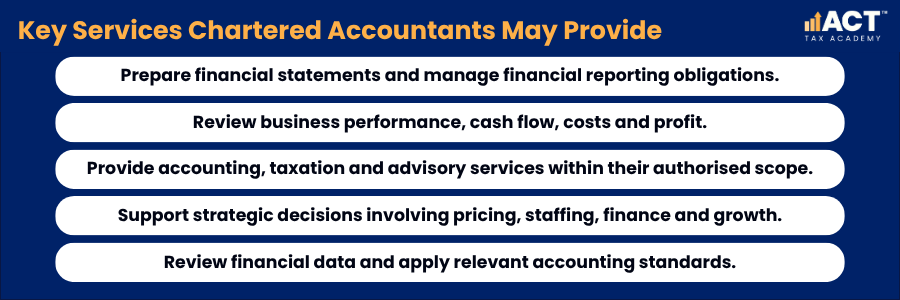
Chartered Accountants work across public practice, the private sector, government, banking, finance, industry and not-for-profit organisations. Their responsibilities may include preparing financial statements, managing reporting obligations, reviewing business performance and helping an organisation solve problems involving finance, risk and operations.
Within a small business setting, a Chartered Accountant may provide accounting, taxation and advisory services. The exact scope will vary depending on the accountant’s professional competence, registration, experience and the services agreed with the client. Their work may include financial reporting, preparing financial statements, applying accounting standards and reviewing financial data from accounting software.
Taxation and Compliance Support
Some Chartered Accountants provide taxation services, including preparing tax returns, reviewing tax positions and advising on business obligations. However, the Chartered Accountant designation does not authorise a person to provide tax agent services for a fee or other reward unless the person or practice is appropriately registered with the Tax Practitioners Board. This distinction is important when you engage an accountant for tax work. Confirm that the financial professional is registered for the services being provided and has experience relevant to your business structure, industry and reporting needs.
Management Accounting and Business Advice
Management accounting focuses on internal information that helps owners and managers understand costs, profit, cash flow and performance. A Chartered Accountant may review budgets, margins and financial results to support decisions about staffing, pricing, finance or growth. This form of business advice can improve strategic decision-making because it connects accounting information with the organisation’s plans. It is particularly useful when management needs more than historical reports and wants to understand what the numbers mean for future operations.
The Bookkeeper’s Role in Financial Management
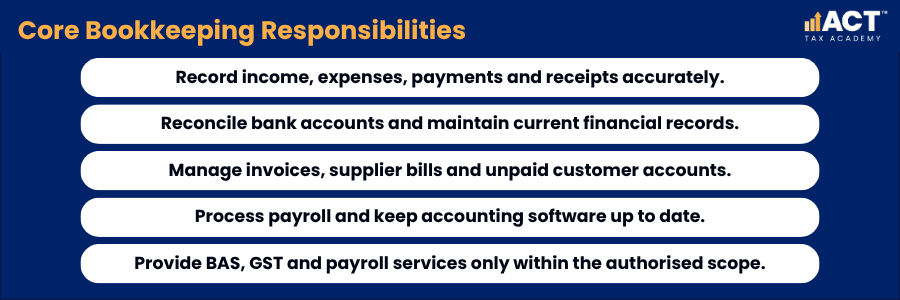
A bookkeeper manages the regular processing and organisation of financial records. This may include entering income and expenses, reconciling bank accounts, maintaining invoices, recording supplier bills, processing payroll and keeping accounting software up to date. Accurate bookkeeping supports the whole accounting function because financial statements and tax reports depend on reliable source information. When the records are incomplete or incorrectly classified, the accountant may need to spend additional time identifying and correcting problems.
Day-to-Day Transaction Processing
Bookkeepers usually work with the financial activity that occurs each day, week or month. They ensure that payments, receipts, invoices and other transactions are recorded consistently and supported by appropriate documents. This regular attention gives business owners a clearer view of cash flow, unpaid customer accounts and upcoming expenses. It also reduces the risk of reaching a reporting deadline with months of unprocessed financial data.
BAS, GST and Payroll Responsibilities
Some bookkeepers provide Business Activity Statement (BAS), Goods and Services Tax (GST) and payroll support. Choosing between simplified and full GST reporting methods will depend on the business’s turnover, transaction volume and cash flow needs. A bookkeeper providing BAS services for a fee or other reward must be appropriately registered with the Tax Practitioners Board as a BAS agent or tax agent, unless an exemption applies. Routine data entry or bank reconciliation that does not require interpreting or applying a BAS provision is not generally a BAS service.
A bookkeeper’s scope should be explained clearly before work begins. You should understand whether the service covers transaction processing only or also includes BAS preparation and lodgement responsibilities, payroll administration, reporting and communication with your accountant.
Signs That a Small Business Needs a Bookkeeper
A business may need a bookkeeper when the owner can no longer maintain complete and current records without taking time away from customers, staff or operations. Delayed reconciliations, missing invoices and unreliable reports are common signs that the bookkeeping process needs more attention. Bookkeeping support may also be appropriate when payroll becomes more complex, transaction numbers increase or the accounting software is not being used consistently. A regular process can improve financial control and give the owner more confidence in the figures available throughout the year.
A bookkeeper can establish a regular process for transactions, reconciliations and supporting financial records. Bookkeeping support can also save time as transaction volumes, payroll and company administration increase.
Signs That a Small Business Needs a Chartered Accountant
A small business may need a Chartered Accountant when a matter requires deeper accounting knowledge, formal financial reporting or advice about a significant financial decision. This often occurs when the business grows, takes on debt, changes its structure or experiences financial pressure.
The need may also arise when owners cannot explain changes in profit, cash flow or costs from the reports available. A Chartered Accountant can review the financial information, identify relevant factors and explain the options in clear business terms. The accountant may support strategic decision-making, prepare reports for finance applications or provide financial controller services suited to the organisation rather than the processes used by large firms.
Business Structure and Tax Decisions
Choosing or changing a business structure can affect reporting, tax, administration and the way money is taken from the business. These decisions require more than accurate transaction processing because they involve assessing the circumstances, objectives and obligations of the owners. A suitably qualified accountant can explain the accounting considerations, while an appropriately registered tax agent can advise on how taxation law applies to the proposed business structure. Legal advice may also be required so the owner can make an informed decision based on their circumstances rather than cost or convenience alone.
Using a Bookkeeper and Chartered Accountant Together
Many small businesses benefit from using both professionals. The bookkeeper maintains the accounting records and routine reporting, while the Chartered Accountant reviews the wider financial position and supports financial reporting, management accounting and major business decisions. Tax agent services must be handled by an appropriately registered practitioner.
A coordinated relationship can also reduce duplicated work. When the accounting software is maintained correctly and the financial records are supported by clear documents, the accountant can focus more time on analysis and business advice instead of correcting basic data. The arrangement may include regular bookkeeping, management reporting, tax support, finance reviews and stronger financial control. Clearly define who manages transactions, payroll, BAS, financial statements and tax reporting so each financial professional works within their qualifications, TPB registration conditions and authorised scope of services.
Choosing the Right Financial Professional
Select a bookkeeper or accountant according to the work your business needs completed. Qualifications matter, but industry experience, communication, professional indemnity insurance, security processes and the ability to explain financial information clearly are also important. Ask about the provider’s training, registration, ongoing professional development and experience with businesses like yours. For Chartered Accountants, you may also wish to confirm Chartered Accountant membership and whether the services are provided through public practice. Confirm the scope, fees, reporting responsibilities and whether the work falls within the provider’s professional competence.
Build Practical Bookkeeping Skills
Understanding where bookkeeping ends and higher-level accounting begins helps you manage financial work more effectively. Strong bookkeeping gives your accountant reliable information, supports clearer reporting and helps you understand when a matter may require support from someone working in chartered accountancy or when further study may be needed to become a Chartered Accountant. This is particularly important when dealing with areas such as work-from-home tax deduction rules, where detailed records and accurate interpretation of eligibility criteria are essential.
If you are ready to move from theory to practical application, the ACT Tax Academy Bookkeeping Online Course provides structured online training designed specifically for Australian small business owners and aspiring bookkeepers. You will learn how to set up and manage GST, prepare BAS, use Xero effectively, and implement compliant bookkeeping systems with confidence.