How Business Trusts Affect Your BAS, PAYG and Payroll Reporting Obligations
How business trusts affect your BAS, PAYG and payroll reporting obligations depends on how the trust is established, what business activities it carries out and whether it employs staff. A business trust can create useful separation between business assets and individual beneficiaries, but the trustee must still meet the trust’s reporting and legal obligations. Understanding what a trust is in business can help you keep records accurate and avoid mixing personal and business transactions. A trust is a legal arrangement created through a formal trust deed, with a trustee holding and managing assets on behalf of beneficiaries.
Responsibility for Managing a Business Trust
A trust is a legal arrangement rather than a separate legal person in the traditional sense. The trustee is legally responsible for managing the trust’s business operations, entering contracts, incurring debt and meeting its tax and reporting obligations. The trustee may be a person or a corporate trustee. A corporate trustee is a company appointed to control the trust’s operations, which may provide clearer administration and some asset protection benefits when the structure is set up and managed correctly. A trustee holds and manages the trust’s business assets, property and funds for the benefit of beneficiaries under the trust deed.
BAS Reporting for a Business Trust
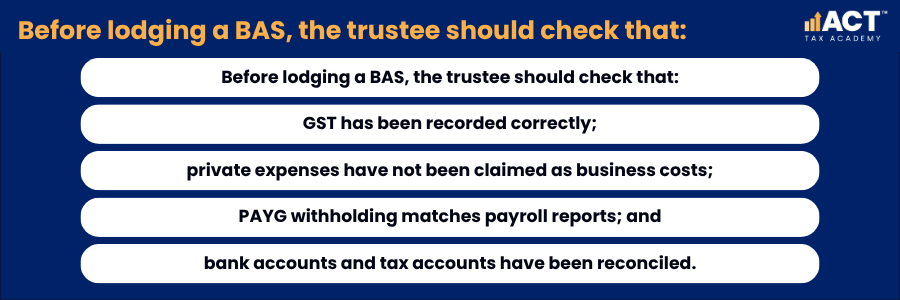
A trust registered for Goods and Services Tax (GST) generally reports its GST obligations through a Business Activity Statement (BAS). Its BAS may include GST on sales, GST credits on eligible purchases and Pay As You Go (PAYG) withholding, but the trust itself is not liable to pay PAYG instalments. A trust should have its own Tax File Number (TFN) and may be entitled to an Australian Business Number (ABN) when it carries on an enterprise. Using the trust’s correct registration details, bank accounts and accounting records helps ensure that business profits, expenses, assets and liabilities are recorded under the correct structure.
Keeping trust bank accounts, business records and personal transactions separate helps ensure income, expenses, profits and liabilities are reported under the correct entity. The trustee must also complete formal yearly administrative tasks, including maintaining financial records, lodging tax returns and recording distributions.
PAYG Withholding and PAYG Instalment Responsibilities
PAYG withholding applies when the trustee must withhold tax from wages or other payments covered by the PAYG withholding rules. The trustee must register when required, calculate and report the correct amounts, and pay the withheld amounts to the ATO by the applicable due dates. PAYG instalments are advance payments towards an expected income tax liability, but a trust does not pay them in its own right. Beneficiaries, or the trustee when assessed on their behalf, may instead pay instalments based on their share of the trust’s instalment income, while the trustee manages distributions and lodges the trust tax return when required.
Payroll Reporting Under a Trust Structure
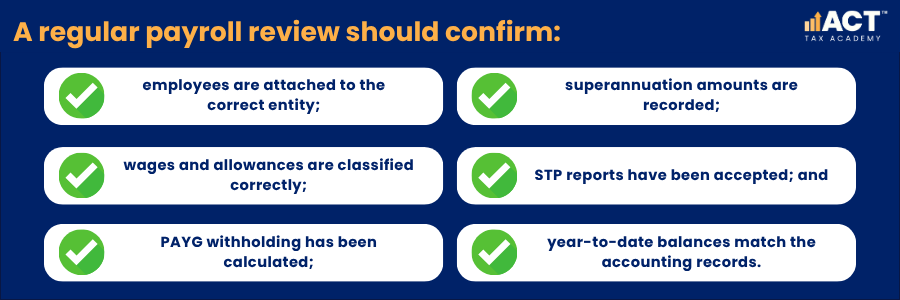
If a discretionary trust, unit trust or family trust employs staff, payroll must use the correct trust and employer registration details. From 1 July 2026, the trustee must generally report salaries and wages, PAYG withholding, qualifying earnings and superannuation liability information using an STP compliance framework on or before payday, and ensure super contributions reach eligible employees’ funds within seven business days after payday. Problems often occur when wages are processed under the wrong legal structure or when a trustee manages several businesses. Clear payroll records help confirm which entity is responsible for each employee and payment.
Build Practical Bookkeeping Skills
Accurate trust reporting starts with understanding the business structure, maintaining separate records and reviewing BAS, PAYG and payroll accounts regularly, especially where a trust uses a bucket company for distributions. Where the trust deed, tax treatment or trustee responsibilities are unclear, professional advice may be needed before the trust distributes income or lodges reports. If you are ready to move from theory to practical application, the ACT Tax Academy Bookkeeping Online Course provides structured online training designed specifically for Australian small business owners and aspiring bookkeepers. You will learn how to set up and manage GST, prepare BAS, use Xero effectively, and implement compliant bookkeeping systems with confidence.