Managing GST and PAYG Instalment Threshold Changes: How to Adjust Your Bookkeeping Settings Mid‑Year
Managing GST and PAYG Instalment Threshold Changes: How to Adjust Your Bookkeeping Settings Mid-Year means checking whether your tax settings still match your current business income and tax position. If your income changes during the financial year, your bookkeeping records may need an update so your Goods and Services Tax (GST) and Pay as You Go (PAYG) instalments are reported correctly. This is important because many business owners only review tax settings when they prepare a tax return. By then, GST may have been charged incorrectly, PAYG instalments may not match current income, or more money may be payable than expected.
Why Mid-Year Threshold Changes Matter
GST and PAYG instalment thresholds affect how your business reports and pays tax during the income year. If your business grows, slows down, or changes the type of income it earns after 1 July, your bookkeeping settings may no longer be accurate. GST applies to many goods and services sold in Australia once a business reaches the applicable threshold. PAYG instalments are different because they are payments made during the year towards expected income tax.
Checking GST Registration Settings
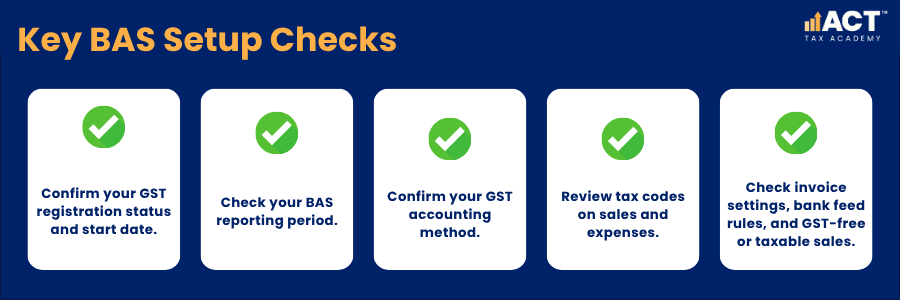
Your GST settings should be reviewed each month if your business is not registered for GST and your current or projected GST turnover is close to, reaches, or exceeds the registration threshold. For most businesses, the GST registration threshold is $75,000, while non-profit organisations must register when their GST turnover is $150,000 or more. GST turnover is not the same as taxable income. GST turnover is generally your gross business income, excluding GST, and does not include certain amounts such as sales of capital assets or sales made because you are closing or reducing your business.
Reviewing PAYG Instalments When Income Changes
PAYG instalments should be reviewed when business or investment income is likely to be higher or lower than expected. The Australian Taxation Office (ATO) may calculate PAYG instalments using information from your most recent assessed tax return, adjusted for expected income growth where applicable. Your current income year may look different, so the instalment amount or rate may need review. Good bookkeeping records make this review easier. Current income, wages, deductions, superannuation contributions, and other income all help you decide whether the instalment amount still fits your position.

When an Instalment Change May Be Needed
You may need to vary PAYG instalments if your expected income tax has changed. This could happen if income has dropped, expenses have increased, a contract has ended, or profit is higher than expected. Before changing an instalment, estimate the tax on your instalment income for the year. Instalment income is your gross business and investment income, excluding GST, and the aim is to make PAYG instalments match the likely tax result as closely as possible.
Updating Bookkeeping Settings Mid-Year
The best way to update bookkeeping settings is to make careful changes and keep a record of each one. Note what changed, why it changed, and the date the change applies from. Avoid changing old transactions unless they were incorrect. Changing earlier records without checking them can affect lodged BAS amounts, GST claims, income tax reports, and account balances.

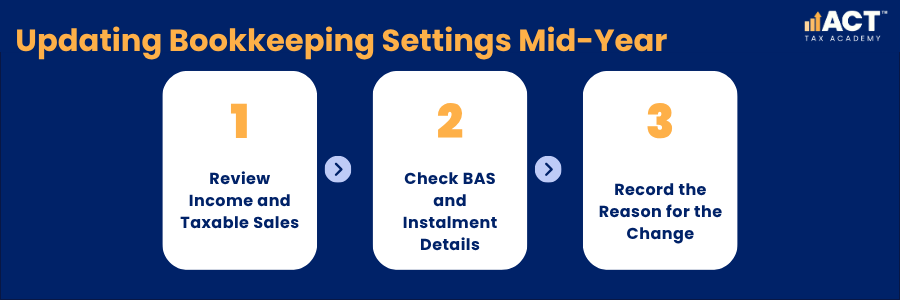
Step 1: Review Income and Taxable Sales
Start with a profit and loss report for the current financial year. Compare actual income with expected income and check whether taxable sales, GST-free sales, capital asset sales, or other income have changed. For tax purposes, separate business income from wages, salary, allowances, and investments. This makes it easier to see what affects GST and what affects income tax.
Step 2: Check BAS and Instalment Details
Compare the latest BAS or instalment notice with your bookkeeping records. Confirm that GST, PAYG withholding, and PAYG instalments are shown in the correct places. PAYG withholding is the tax an employer deducts from employee wages and pays to the ATO. PAYG instalments are separate payments towards your own expected income tax.
Step 3: Record the Reason for the Change
Keep a simple note in your bookkeeping file. Include the threshold reviewed, the date, the details checked, and any professional advice received. This helps if someone needs to review the decision later. It also gives your accountant or bookkeeper a clear record of what was determined.
Build Practical Bookkeeping Skills
Mid-year threshold changes are easier to manage when your bookkeeping records are current and your GST, PAYG, income, wages, deductions, and superannuation details are recorded correctly. Regular checks help you stay organised, avoid repeated errors, and prepare for BAS and tax return obligations with less stress.
If you are ready to move from theory to practical application, the ACT Tax Academy Bookkeeping Online Course provides structured online training designed specifically for Australian small business owners and aspiring bookkeepers. You will learn how to set up and manage GST, prepare BAS, use Xero effectively, and implement compliant bookkeeping systems with confidence.