Monthly “Tax Tips from Your Bookkeeper”: Simple Process Changes That Reduce Stress at Year‑End
Monthly “Tax Tips from Your Bookkeeper”: Simple Process Changes That Reduce Stress at Year-End helps small business owners reduce tax time pressure by keeping records up to date during the year. Most year-end stress comes from missing receipts, unclear expenses, unreconciled bank accounts, and records that have not been reviewed often enough. For Australian businesses, a monthly process can make your tax return, activity statements, and income tax obligations easier to manage. It also gives your accountant or bookkeeper clearer information before small issues become harder to fix.
Why Monthly Tax Tips Make Year-End Easier
Monthly tax tips help because they turn tax planning into a regular task. When you review income, expenses, documents, and your tax position during the financial year, you are better prepared for lodgment. This article provides general information only. For advice that applies to your business, speak with a registered tax agent, registered Business Activity Statement (BAS) agent, or another qualified adviser. The Tax Practitioners Board regulates registered tax and BAS agents.
Keep Your Tax Records Current
Your tax records should not be left until June. A short monthly review can show whether income, deductions, Goods and Services Tax (GST), payroll, and superannuation records are complete. For example, a sole trader who checks income and expenses each month is less likely to miss deductible costs. A business with employees can also check pay records, super fund payments, and activity statements before key dates.
Use Your Bookkeeper to Spot Issues Early
A bookkeeper can help identify missing receipts, duplicated expenses, unusual fees, or transactions that include personal use. This gives you time to correct records while the details are still clear. Your accountant can then focus on your tax return, tax planning, and any items that need closer review. This makes the process easier for both the business owner and the adviser.
Organise Receipts, Documents, and Bank Account Details
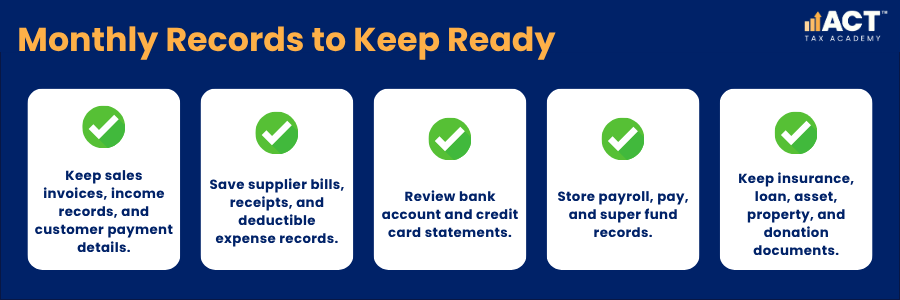
Good records help show what money came in, what money went out, and whether an expense may be claimed. Your records should support your income, deductions, tax deductible expenses, and any refund or payment position. Keep your bank account details, receipts, supplier invoices, insurance documents, donation receipts, loan records, and asset purchase documents in one place. This helps your bookkeeper match transactions to the correct category.
Separate Business Costs from Personal Use
Business and personal use should be separated where possible. If one cost has both business and private use, keep a note showing the business portion. For example, home office expenses may be worked out using the fixed rate method or actual cost method, depending on your circumstances and records. The fixed rate method uses a set hourly rate, while the actual cost method uses records of the real costs you paid.
Keep Notes for Transactions That Are Not Clear
Some expenses are not clear from the bank description alone. A short note such as “client meeting” or “software used for business” can help your bookkeeper understand the purpose of the cost. This is useful for business expenses, home office costs, travel, equipment, professional fees, and investment-related costs. Clear notes reduce guessing and help show whether the cost relates to earning business income.
Review Deductions Before the Tax Return Is Prepared
Tax deductions are easier to claim when the evidence is complete. If you wait until your own tax return is being prepared, you may forget costs that could have been reviewed earlier. A monthly deductions review can help identify expenses you may be able to claim, such as office supplies, software, accountant fees, insurance, interest, and business-related services. To claim a deduction, the expense must relate to earning assessable income, must not be private in nature, and must be supported by records.
Check Costs That May Need Special Treatment
Not every business cost is claimed in the same way. Some expenses may be claimed in full, some may need to be split between business and personal use, and some asset purchases may need to be claimed over time. For example, a laptop used partly for business and partly for personal use may need a reasonable business-use percentage. An investment property may also involve rent, interest, repairs, capital gains, and other property records.
Record Investment Income and Capital Gains Early
Investment income should be recorded during the year, so it is not missed at tax time. This may include interest, dividends, trust distributions, rent, or other assessable income. Capital Gains Tax (CGT) may apply when an asset is sold or otherwise disposed of, including shares, property, crypto assets, or some business assets. CGT is part of income tax, so early record-keeping helps your accountant review the correct tax position.
Keep Payroll, Super, and Activity Statements Up to Date
Payroll records affect employee pay, super fund payments, Single Touch Payroll (STP) reporting, and income tax reporting. A monthly review helps confirm that pay, leave, superannuation, and withholding amounts are recorded correctly. Activity statements also need accurate GST, Pay As You Go (PAYG) withholding, and other tax details. If your bookkeeping records are not up to date, activity statements can take longer to prepare and are more likely to contain errors.

Match Payroll Reports to Payments
Payroll reports should match the money paid from the business bank account. Differences may point to missed pay runs, incorrect employee details, or wrong allocations. This check can also help identify super fund payment issues before they lead to super guarantee charge obligations or other compliance problems. For employee earnings paid up to 30 June 2026, super generally follows the quarterly due date rules; from 1 July 2026, Payday Super will require super guarantee contributions to be paid each payday.
Review Employee and Contractor Details
Employee and contractor records should be reviewed when work arrangements change. This includes Tax File Number (TFN) details, pay rates, super fund information, and contractor invoices. If a person moves from occasional project work to regular business hours, ask your accountant or registered tax agent for advice. The tax and super rules may depend on the real working arrangement, not just the wording on an invoice or contract.
Plan for Tax Payments Instead of Assuming a Refund
A tax refund is not guaranteed, and many businesses need to plan for tax payments. Monthly bookkeeping helps you estimate income tax, GST, superannuation, and other obligations before they become urgent. This matters when your income changes during the year. Reviewing taxable income and expenses can help you set aside money for tax and avoid relying on a refund.
Check Personal Tax Items That May Apply
Some taxpayers have personal tax items that affect the final result. These may include the Medicare levy surcharge, private health insurance details, investment income, HELP debt, or other entitlements. Small business owners should not assume their business records tell the full personal tax story. Your accountant may need both business and personal documents to prepare an accurate tax return.
Use Monthly Reviews for Practical Tax Planning
Tax planning is most useful before the financial year ends. It can help you understand your likely tax position, upcoming payments, and whether you need to adjust your cash flow. This does not mean claiming expenses without evidence. It means using clear records and professional advice to make informed decisions.
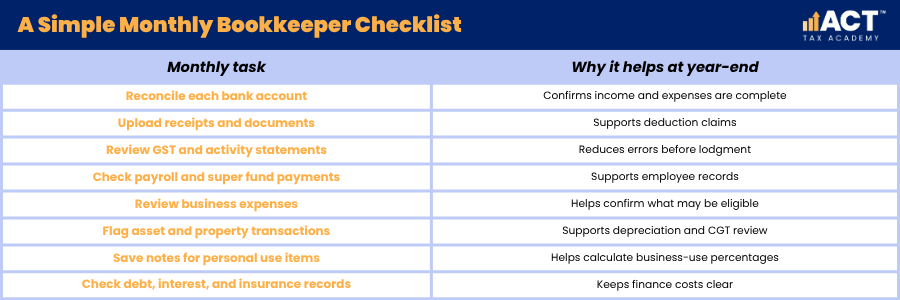
A Simple Monthly Bookkeeper Checklist
A monthly checklist gives you and your bookkeeper a clear process to follow. It also helps make sure important income, expense, payroll, and tax records are reviewed before year-end. Use this checklist as a starting point. Your accountant or bookkeeper may adjust it for your business structure, industry, and reporting obligations.
Build Practical Bookkeeping Skills
Year-end tax stress usually reduces when business records are reviewed throughout the financial year. By keeping receipts, checking deductions, reviewing payroll, updating activity statements, and asking for advice early, you can make tax time more organised and easier to manage.
If you are ready to move from theory to practical application, the ACT Tax Academy Bookkeeping Online Course provides structured online training designed specifically for Australian small business owners and aspiring bookkeepers. You will learn how to set up and manage GST, prepare BAS, use Xero effectively, and implement compliant bookkeeping systems with confidence.