2026 Tax Deduction Updates for Australian Small Businesses: What’s Changed and What You Can Still Claim
2026 Tax Deduction Updates for Australian Small Businesses: What’s Changed and What You Can Still Claim explains the latest rules, common deductions, and records you need before tax time. For small business owners, the main challenge is knowing which tax deductions you can claim, and which claims need extra care. A tax deduction reduces your taxable income, which may help you pay less tax depending on your individual circumstances. It is not the same as a tax credit or guaranteed tax refund, so accurate records and written evidence still matter.
What Does Tax Deductible Mean?
Tax deductible means an expense can usually be subtracted from your assessable income when working out your income tax. In simple terms, allowable deductions reduce taxable income and may lower your tax bill. Tax deductions work by reducing income, not by refunding the full amount you spend. This means you should only incur expenses your business genuinely needs, rather than spending money just to claim deductions.
Business Expenses Need a Clear Link to Income
Tax deductible expenses must relate to earning business income. Personal expenses, private use, and commuting costs are generally not deductible. If a cost has both business and personal use, only the business portion can be claimed. This commonly applies to car expenses, a mobile phone, internet, office furniture, and home office expenses.
The $20,000 Instant Asset Write-Off Still Applies
Eligible small businesses with aggregated turnover of less than $10 million that use the simplified depreciation rules can still claim a deduction for eligible assets costing less than $20,000 in the 2025–26 financial year. The asset must be first used or installed ready for use by 30 June 2026. The threshold applies per asset, not to total expenses for the year, and the full cost of the asset must be less than $20,000 even if you only claim the business-use portion. Assets costing $20,000 or more usually need to be placed in the small business pool and depreciated over time.
Everyday Items You May Be Able to Claim
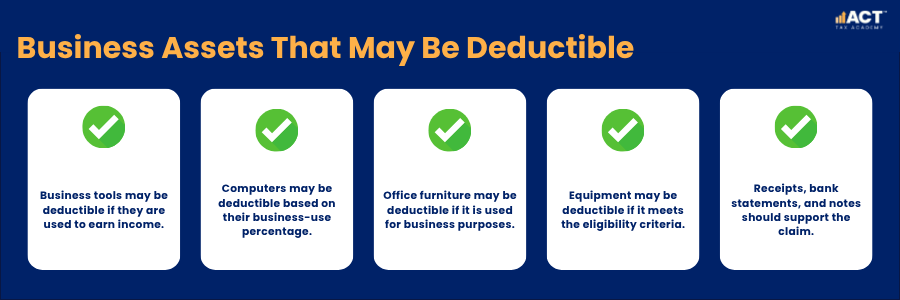
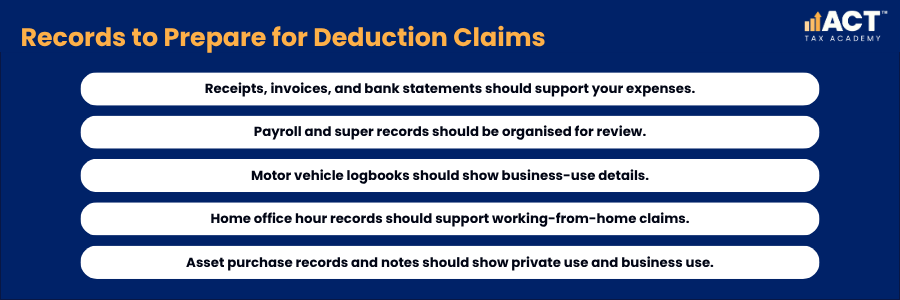
Small businesses may be able to claim deductions for business tools, computers, office furniture, equipment, and other tax-deductible items. The eligibility criteria depend on the asset, cost, timing, and business-use percentage. For example, if a laptop is used 80% for business and 20% for private use, only the 80% business portion is deductible. Keep receipts, bank statements, and notes showing how you calculated the claim.
ATO Interest Charges Are No Longer Deductible
General Interest Charge (GIC) and Shortfall Interest Charge (SIC) incurred on or after 1 July 2025 on Australian Taxation Office (ATO) debts are no longer deductible. This is an important tax laws change for businesses that pay tax late or receive amended assessments. Late payments can now create a higher after-tax cost because these charges no longer reduce your taxable income. A registered tax agent or tax professional can help you review due dates, understand payment options, and communicate with the ATO where needed.
Why Payment Timing Matters
GIC can apply when tax is not paid by the due date. SIC can apply when a tax shortfall is identified later. This means late Business Activity Statement (BAS) amounts, Pay as You Go (PAYG) instalments, PAYG withholding, and income tax payments can affect cash flow. Good bookkeeping helps you stay prepared before tax time.
Common Deductions You Can Claim
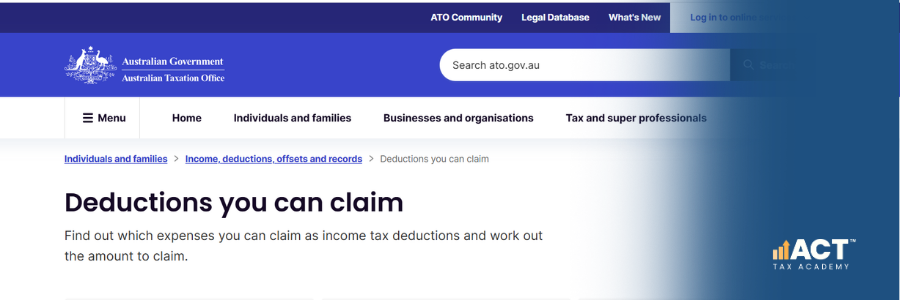
Many common deductions are still available where the expense is connected to earning assessable income. These may include accounting fees, software, rent, insurance, advertising, contractor costs, training, bank fees, and other work-related expenses. You must have good records showing what you paid, why it relates to the business, and whether there was any personal use. Bank statements alone are helpful but may not be enough without receipts or invoices.
Travel, Car and Work Costs
Travel expenses may be deductible when travel is directly connected to business activities. This can include accommodation, parking, fares, and meals for overnight work travel, although Fringe Benefits Tax (FBT) may apply if the business pays for or reimburses employee travel expenses. Car expenses need careful record keeping because vehicles are often used privately as well as for work. Logbooks, receipts, and digital records help support the business-use percentage.
Clothing and Work Items
Occupation specific clothing, work uniforms, and protective clothing may be deductible when they meet the rules. Conventional clothing is usually not deductible, even if you wear it only for work. For example, safety boots may be deductible, while ordinary black pants generally are not. Keep receipts and written evidence explaining the work connection.
Home Office Expenses and the Revised Fixed Rate Method
Home office expenses remain claimable where you work from home and incur extra running costs. The revised fixed rate method uses 70 cents per hour for eligible working-from-home expenses in the 2025–26 income year. There are two methods for working out working-from-home running expenses: the fixed rate method and the actual cost method. Some home-based businesses may also need to consider occupancy expenses, depending on the business structure, home use, records, and individual circumstances.
What You Need to Record
The revised fixed rate method covers certain running costs such as electricity, gas, phone, internet, stationery, and computer consumables, so you cannot claim a separate deduction for those same expenses. You still need accurate records of hours worked from home. The actual cost method may suit businesses with detailed records. You may need receipts, bills, calculations, and notes separating business use from private use.
Claims That Need Extra Care
Some expenses may seem deductible but are not always claimable through a small business tax return. Mortgage interest on a home used partly for business, investment property costs, union fees, personal super contributions, and donations to a favourite charity may need separate treatment, and home-based business claims can also affect Capital Gains Tax (CGT). These items may still be relevant to an individual tax return, but they should not be mixed into business expenses without checking the rules. A tax agent can explain what applies to your circumstances.
Personal Services Income Can Affect the Outcome
Personal Services Income (PSI) is income produced mainly from your personal skills or efforts as an individual. PSI rules can apply even when the income is earned through a company, so a Pty Ltd structure does not automatically allow income to be retained or split for tax purposes. If PSI may apply, review the rules before deciding how much to pay as salary, director fees, or dividends. This helps prevent a payment strategy from being based on an incorrect tax assumption.
Build Practical Bookkeeping Skills
The 2026 deduction rules reward small businesses that understand what is deductible, keep good records, and review claims before lodging. When you know how to claim expenses correctly, you can reduce your taxable income with more confidence and avoid paying more tax than necessary. If you are ready to move from theory to practical application, the ACT Tax Academy Bookkeeping Online Course provides structured online training designed specifically for Australian small business owners and aspiring bookkeepers. You will learn how to set up and manage GST, prepare BAS, use Xero effectively, and implement compliant bookkeeping systems with confidence.