Tracking Mixed-Use Home Office Expenses for Sole Traders and Companies
Tracking mixed-use home office expenses for sole traders and companies is critical if you want to maximise home office tax deductions without attracting unnecessary attention from the Australian Tax Office. When parts of your home are used for both business purposes and personal use, the way you track and apportion home office expenses will directly affect how much you are able to claim. Done well, claiming home office costs can reduce your taxable income and improve cash flow at tax time in a safe, defensible way.
What Counts as Mixed Use Home Office Expenses
Mixed-use home office expenses are costs that relate to areas or services used for both private and business purposes, such as a lounge room where you sometimes work, or shared internet bills. Only the work related portion of these expenses is generally able to be claimed as home office deductions. The key issue is to fairly separate personal use from business purposes.
A dedicated home office that is readily suitable for work and used mainly for employment duties or business activity will usually support higher home office tax deductions than a space used casually. A room that is clearly set up with home office furniture, an office chair, office plant and home office equipment is easier to justify as a place of business. In contrast, working on a laptop at the dining table or lounge room occasionally will usually mean a smaller claim.
Why Does Structure Matter for Home Office Deductions
For a sole trader business owner, the home office is usually part of their principal place of residence, and home office expenses flow through to their individual tax return as business income and expenses. This means both running expenses and, in some cases, occupancy expenses like mortgage interest and land taxes may be relevant. The way these are calculated must reflect the actual expenses and real business use.
For a company, the employer and the person working from home are separate, so the company may reimburse working from home expenses or pay a small licence or rent for the space. This has different tax consequences to a sole trader, especially where the home becomes a recognised place of business. In more complex setups, a registered tax agent can provide personalised tax advice to help choose the safest and most efficient approach.
How Do Sole Traders Claim Occupancy Expenses Fairly
Sole traders may be able to claim occupancy expenses such as mortgage interest, rent, council rates, land taxes and house insurance premiums where the home is used as a genuine place of business. A common method is to use a floor-area calculation to work out the work related proportion of these home expenses. This involves comparing the area of the dedicated home office to the total floor area of the home, then adjusting for the time used for business during the financial year.
If a room is only partly used as a home office, you then reduce the claim to reflect personal use. For example, if a study is used 70% for business and 30% for personal activities like online learning or hobbies, you would only apply 70% of the floor-area percentage to your occupancy expenses. Getting this right helps you claim occupancy expenses confidently while keeping your main residence position clear for future tax events.
How Should Sole Traders Track Home Office Running Expenses
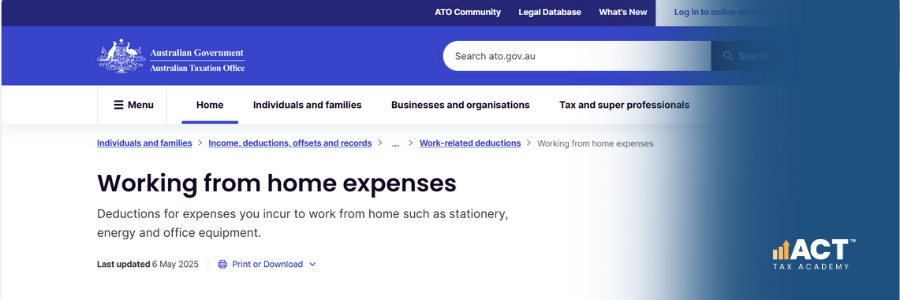
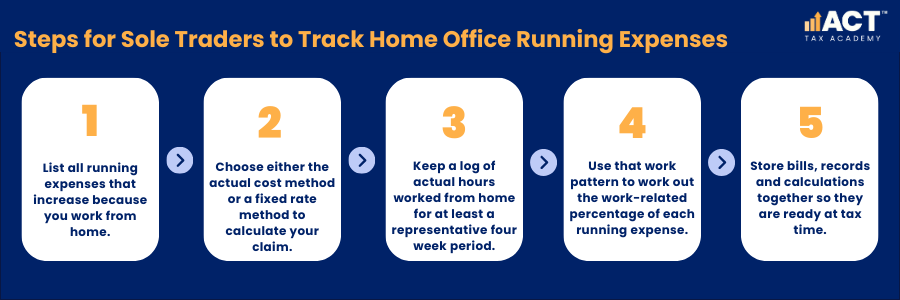
Home office running expenses include electricity, gas, cleaning, internet expenses, mobile phone expenses, phone expenses, computer consumables and similar additional running expenses. These costs often increase when you work from home regularly because of extra heating, cooling, lighting and data expenses. To claim deductions accurately, you should link these expenses to actual hours worked and your work related proportion of usage.
You can use the actual cost method by calculating the actual additional cost incurred. This requires detailed evidence, such as a four-week representative diary of usage (e.g., data used or kilowatts consumed) to calculate the work-related portion of your bills. For the actual cost method, you can use a representative four-week diary to show your usual pattern of work use for expenses like internet and electricity. However, you must still be able to show how you calculated the work-related portion for the whole year. The more clearly you can identify work related calls and data use, the stronger your claim.
What Is the Fixed Rate Method and Revised Fixed Rate Method
The fixed rate method (currently 70 cents per hour for the 2024–25 income year) allows you to claim most working from home expenses using a simple hourly rate instead of tracking every individual bill. Under these methods, you keep a record of actual hours worked from home and multiply by the relevant rate to cover certain running expenses. This can be simpler for many people who find tracking actual expenses too time-consuming.
To use this method, you must keep a record of your actual hours worked for the entire financial year (e.g., a timesheet, roster, or diary). Estimates or a four-week representative diary are no longer accepted for tracking hours under the fixed rate method. You also need to take care that you do not double count by also claiming the same additional expenses under the actual cost method. A short discussion with a registered tax agent can help you decide whether a fixed rate or actual expenses approach is better for your situation this financial year.
How Do Companies Handle Mixed Use Home Office Expenses
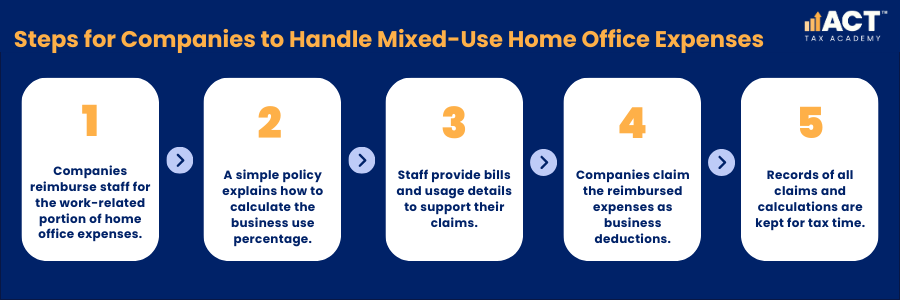
Companies usually deal with mixed-use home office expenses through reimbursement policies or set allowances for staff and directors. In practice, the person working from home pays the bills for internet, phone and energy and then seeks reimbursement for the work related portion. The company treats these as deductible office expenses or work related expenses as long as there is a clear link to business purposes.
To support this, many small companies set up a simple policy explaining how to calculate the work related proportion of internet bills, phone expenses and energy expenses. Staff may be asked to provide a brief note or percentage showing how they separated personal use from employment duties. This structure helps the company claim expenses properly and makes it easier to prepare the tax return online or with professional support.
When Might a Company Pay Rent for a Directors Home Office
Sometimes a company will pay rent or a licence fee to a director or shareholder whose home is used as a principal place of business. In this case, the company claims the rent as an expense, and the owner may be able to claim tax deductions for a share of mortgage interest, house insurance premiums, land taxes and other occupancy expenses linked to the rented area. This is more common where the home has a clearly defined business zone with visitors or staff.
Because these arrangements can affect long-term outcomes and involve depreciating assets and other tax rules, it is wise to obtain tailored tax advice before setting them up. Matters like whether the area is readily suitable as a place of business, how much of the home is involved and what happens on sale all need careful thought. A registered tax agent can help you document a practical, evidence-based approach.
What Records Should You Keep for Mixed Use Home Offices
To safely claim home office expenses and claim deductions, you need consistent records that show the link between expenses and business use. This includes bills, invoices, payment confirmations and any worksheets or logs used to work out your work related proportion. Both sole traders and companies benefit from maintaining a clear paper trail for at least five years after lodging the tax return.
Helpful records include floor plans or simple sketches of your dedicated home office, lists of office equipment and home office furniture such as an office chair, desk and light fittings, and details of any depreciating assets. For running expenses, logs of actual hours worked and notes on internet costs, data expenses, mobile phone use and electricity can make a big difference. The more systematic your records, the easier it is to answer questions if the Australian Tax Office seeks more detail.
How Do You Handle Phone Internet and Data Expenses
Internet bills, mobile phone plans and data expenses are typical mixed-use items because both business and personal use run through the same service. To claim tax deductions, you need a reasonable method for working out the work related proportion. A common approach is to review itemised phone accounts or usage reports for a representative four week period and compare work related calls or data with total usage.
Once you identify work related calls and data use, you apply that percentage to your annual phone expenses and internet expenses. For example, if 60% of your calls in the test period are work related calls, you might apply 60% to your annual mobile phone expenses as the business portion. You can use similar logic for data and internet usage, adjusting when your work pattern changes.
How Should You Track Home Office Equipment and Furniture
Larger home office equipment and office furniture items such as desks, office chair, filing cabinets, printers and light fittings are usually treated as depreciating assets. Instead of claiming the full cost upfront, you often claim depreciation over the effective life of the asset or access simplified rules for small expenses and low-cost assets. In many cases, only the work related portion of the decline in value is deductible.
Keeping a simple asset register listing the purchase date, cost, expected life and work related proportion for each item will help at tax time. You can also note when equipment is replaced or shifted from business use to personal use. This record makes it easier to claim expenses correctly and avoids forgetting valuable deductions in a busy year.
How Can You Design a Simple Tracking System That Actually Works
The best tracking system for mixed-use home office costs is one you can maintain consistently. Many business owners use a basic spreadsheet or accounting software with separate categories for home office running expenses, occupancy expenses, home office equipment and other work related expenses. You can then attach scanned bills, tax invoices and bank statements to each entry.
It can help to set a monthly reminder to upload bills, note actual hours worked from home and check that your work related proportion still makes sense. Simple habits like filming a quick walkthrough of your dedicated home office at the start of the financial year or keeping before-and-after photos when you change your workspace can also support your position. With a clear system, you are better placed to claim tax deductions you are genuinely entitled to.

Conclusion
If you regularly work from home or run a small business from your home, now is the time to map out your home office, list your key expenses and decide whether the actual cost method or the fixed rate method (70 cents per hour) best suits your situation. Start by identifying which expenses are purely business, which are mixed-use and which are entirely private. Then choose a simple strategy to measure actual hours, usage and floor area for this financial year.
From there, set up a basic record-keeping system so that every tax time you can confidently claim home office expenses, claim occupancy expenses where appropriate and claim depreciation on relevant assets without guesswork. If you feel unsure about any of these steps, speaking with a registered tax agent can help you align with current rules, protect your position with the Australian Tax Office and make the most of your home office tax deductions.