
Automating PAYG Withholding Calculations with the Fortnightly Tax Table
Automating PAYG withholding calculations with the fortnightly tax table is one of the fastest ways for Australian employers to reduce payroll errors and stay compliant. By embedding the ATO tax tables into your payroll system, you can calculate the correct amount of tax to withhold in seconds instead of manually scanning spreadsheets. For busy ACT businesses, that means fewer late nights on payroll and more time focused on clients.
Manual PAYG withholding calculations quickly become risky when tax rates or thresholds change. Each keystroke error can lead to under-withholding, ATO penalties, and frustrated employees. Automation removes this risk by standardising how PAYG is calculated from the fortnightly tax table every pay cycle, giving you peace of mind.
How Does the Fortnightly Tax Table Work for PAYG Withholding?
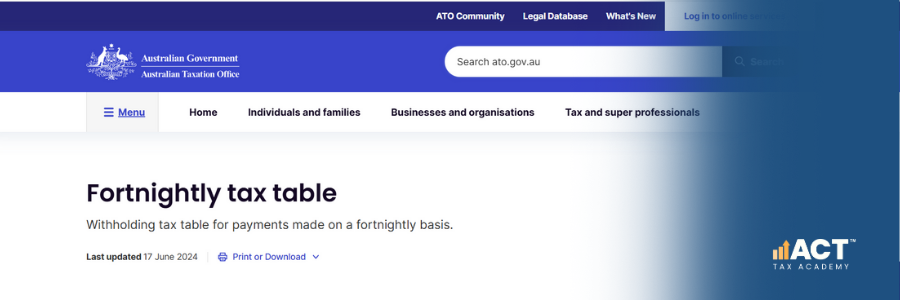
The ATO tax tables show, for each earnings range, the corresponding withholding amounts for employees with or without the tax-free threshold. Employers look up the employee’s normal fortnightly earnings, find the nearest lower figure, and withhold the withholding amounts specified for that band. These amounts ensure that over the financial year, most employees cover their income tax liability through regular PAYG deductions.
The fortnightly tax table applies to payments made from 1 July 2024 and is updated when tax rates change. Separate ATO tax tables also cover special scenarios like leave loading, back payments, or payments to performing artists, labour hire workers, and other payees. Using outdated following tax tables can systematically under-withhold or over-withhold across your workforce.
Why Is Manual PAYG Calculation Risky?
Manual PAYG withholding calculations expose employers to human error, especially when staff are rushed or unfamiliar with the fortnightly tax table. Even a single transposed number can compound overpay runs, creating significant under-withholding or over-withholding. When multiplied across multiple employees and workers, this becomes a material compliance risk.
Recent research shows that 48% of businesses still rely on manual input for payroll, even though automated software reduces admin time significantly. This pressure is magnified by skills shortages with many businesses struggling to find payroll professionals who understand withholding declarations and compliance requirements. For employers determined to calculate PAYG correctly, automation provides the most reliable pathway.
How Does Automating PAYG Withholding Calculations Work?
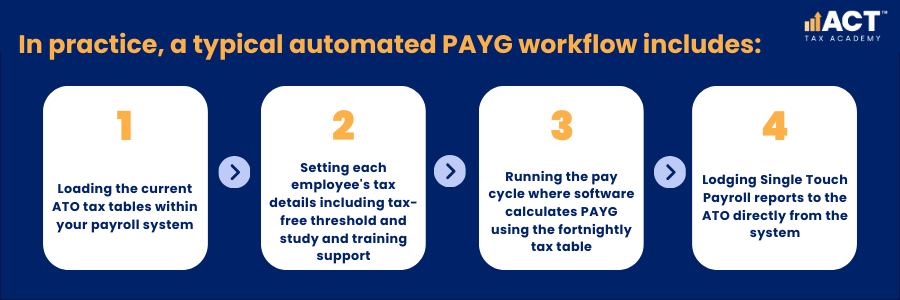
Automating PAYG withholding means configuring your payroll system to use the ATO tax tables and related schedules for every pay cycle. Once set up, the system calculates the correct amount of tax to withhold automatically as soon as you enter the employee’s gross salary and tax status. Gross pay, tax, and net pay are calculated in one step with built-in rounding handled consistently.
Modern payroll systems update tax tables centrally when the ATO publishes new withholding amounts and tax rates. This ensures all employees are taxed using correct tax rates without manual re-coding in spreadsheets. The same system also calculates superannuation contributions, study and training support loan deductions, Medicare levy adjustments, and allowances.
What Are the Benefits of Automated Payroll?
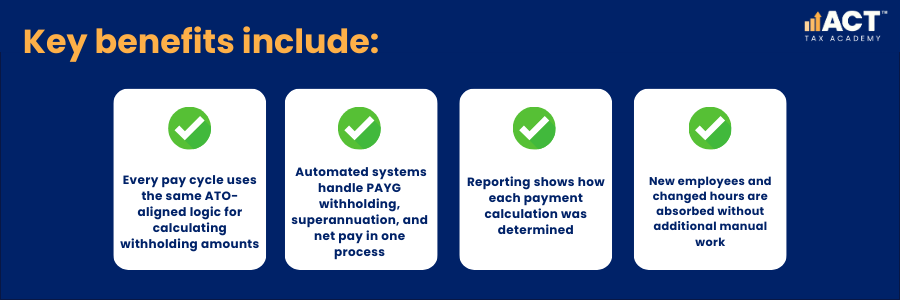
Linking your automated payroll to the ATO tax tables delivers immediate accuracy because every calculation mirrors published withholding amounts. That alignment reduces chances of PAYG discrepancies being flagged through ATO data-matching. For your workers, it means payslips showing the correct amount of tax withheld based on fortnightly earnings and tax-free threshold status.
Beyond accuracy, automation saves significant time. Payroll systems process payments for multiple employees in minutes versus manually checking each line. This saving is particularly valuable for small and medium businesses without dedicated teams who must meet strict ATO deadlines.
How Do Different PAYG Calculation Approaches Compare?
Employers can choose several methods to calculate and determine PAYG withholding, but not all offer the same accuracy, speed, or compliance control. The table below compares the main approaches used by Australian businesses for employee payments and wage calculations.
Australian businesses increasingly choose integrated payroll systems for combined efficiency and built-in compliance features. These systems include automatic updates when ATO tax tables change, plus Single Touch Payroll reporting and superannuation in one platform.
What Does Best-Practice Implementation Look Like?
Best-practice starts with selecting payroll software that clearly uses the latest ATO tax tables for PAYG withholding calculations. Employers then configure pay calendars and employee tax profiles, so each pay run correctly references the fortnightly tax table. Testing sample pay runs against the ATO calculator validates setup alignment with ATO expectations.
Strong internal controls matter. This includes restricting tax setting changes, keeping update records when new ATO tax tables apply, and reconciling PAYG against your Business Activity Statement each period. Automated payroll ensures you meet responsibility consistently and determine accurate outcomes.
How Can ACT Businesses Get Support?
ACT businesses juggling growth and evolving tax rules benefit from specialist support when setting up automated PAYG processes. A registered tax or Business Activity Statement agent can confirm your payroll configuration correctly interprets the ATO fortnightly tax table for employees and payment types. This is especially valuable with complex arrangements like multiple awards or bonuses affecting taxable income.
The ATO provides public guidance through tax table resources and calculator tools, useful reference points when using payroll software. Combining these with payroll provider support helps you understand how your system implements PAYG automation in line with ATO rules. This blend delivers robust results for ACT employers.

Conclusion
Employers must use the following tax tables to determine how much tax to deduct from salary and employee wages. The fortnightly tax table works alongside monthly tax tables and other tax tables so you can match the correct table to your pay cycle and work out the right withholding amounts. Getting this wrong repeatedly can trigger ATO reviews and costly remediation for your business.
The fortnightly tax table sets out the correct amount to withhold based on the employee’s total fortnightly earnings, their tax-free threshold status, and any relevant tax offsets or other taxable income. It also links with rules that cover Medicare levy, Medicare levy surcharge and any Medicare levy variation declaration your employees may lodge. This framework helps you handle different situations such as labour hire workers payments as well as standard employee wages, so PAYG withholding stays accurate and consistent.