
How to Set Up a Company Structure for Your Small Business in Australia
Setting up a company structure for your small business in Australia requires understanding how to separate your personal assets from your business operations while managing legal obligations effectively. Many small business owners feel overwhelmed by the different structures available, and the compliance requirements involved, but making the right choice early can protect your finances and set your business up for long-term success.
What Is a Company Structure and How Does It Protect Your Personal Assets?
A company structure creates a separate legal entity registered through Australian Securities and Investments Commission (ASIC) that sits apart from you as the owner. This separation means your personal assets receive protection if the business faces debt or legal claims against it. Unlike sole traders, who hold unlimited liability, company owners benefit from limited liability, meaning creditors cannot pursue personal savings or property if the company runs into trouble.
When you own a company, the business can incur debt, be sued, and enter into contracts as a separate entity. Directors and shareholders are generally not personally liable for these debts unless they have personally guaranteed them. This legal protection is one of the biggest advantages of forming a company rather than operating as a sole trader, where you and your business are considered one and the same in the eyes of the law.
Key Differences Between Company Structures and Other Business Structures
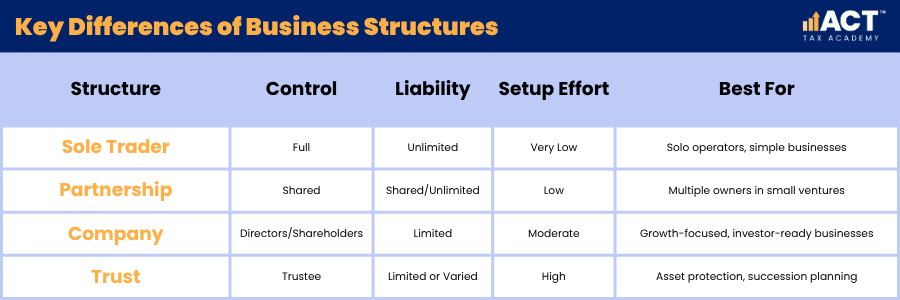
Australia offers several business structure options, each with different levels of control, liability, and costs. Understanding these differences helps you determine which structure suits your goals, ownership plans, and risk tolerance moving forward.
Sole trader structures give you complete control and easy setup, but you remain personally responsible for all debts and legal obligations. A partnership allows multiple owners to share control and responsibility, yet partners can still face unlimited liability for company debts. A trust structure provides asset protection and flexibility with income distribution, though it involves higher setup costs and complexity.
A proprietary company (private company) is ideal for most small businesses because it limits your personal liability, allows multiple shareholders, and creates a professional image. A public company can raise capital from the general public but requires much stricter compliance and oversight, making it less suitable for typical small businesses. Understanding these alternatives helps you appreciate why a company structure often makes sense for growing businesses that want both protection and professional credibility.
Should Your Small Business Form a Company Structure?
Not every small business needs to become a company right away. A company structure makes the most sense when you want protection for your personal assets, plan to have multiple owners or investors, or expect significant income growth. If you operate as a solo business with minimal risk exposure, remaining a sole trader might keep costs and administrative burden lower.
Consider forming a company if your annual sales are substantial, you employ staff regularly, you operate in a high-risk industry, or you have significant personal assets you want to protect. The ongoing costs include an annual review fee to ASIC, annual company tax returns, and compliance obligations around record-keeping and director responsibilities. Weighing these costs against the benefits of liability protection and professional standing helps you make the right decision for your situation.
How to Set Up a Company Structure: Step-by-Step Guide
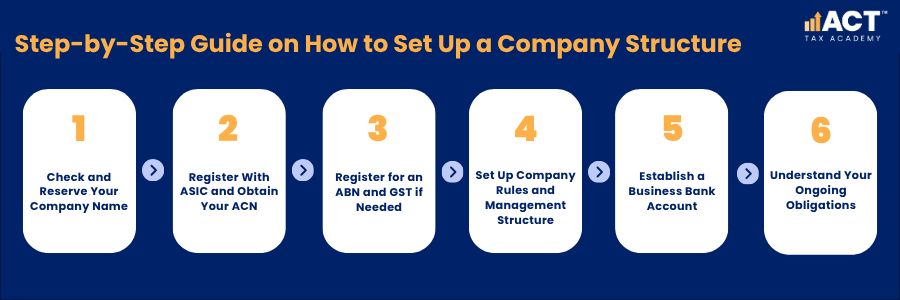
Setting up a company involves six key steps that guide you from choosing your business name through to understanding your ongoing responsibilities. We’ve broken down this process to make it straightforward and manageable, so you can feel confident as you move forward.
Step 1: Check and Reserve Your Company Name
Choose a unique business name or use your company’s legal name. Check availability through ASIC and reserve it to prevent someone else registering it first. You’ll need an Australian company address for registration purposes.
Step 2: Register With ASIC and Obtain Your ACN
Register your company with ASIC to receive an Australian Company Number (ACN). This process takes a few days and forms the official registration of your separate legal entity. Once registered, you have a company that can own property, enter contracts, and conduct business independently.
Step 3: Register for an ABN and GST if Needed
Every company must obtain an Australian Business Number (ABN) from the Australian Taxation Office. If you expect turnover above the registration threshold of $75,000, you must also register for Goods and Services Tax (GST). An ABN takes a few minutes to set up online and is essential for paying staff and managing tax obligations.
Step 4: Set Up Company Rules and Management Structure
Decide whether your company will operate under replaceable rules or create its own constitution outlining how decisions are made. Appoint at least one director who must be an Australian resident and define the rights and responsibilities of all company directors and shareholders.
Step 5: Establish a Business Bank Account
Open a dedicated bank account in your company’s name to keep business money separate from personal finances. This separation is essential for compliance, makes accounting easier, and shows regulators you treat your company as a genuine separate entity.
Step 6: Understand Your Ongoing Obligations
Companies must maintain records of meetings, decisions, and finances. You’ll lodge an annual company tax return, hold annual company meetings with shareholders, and pay an annual review fee to ASIC. Directors have legal responsibilities to ensure compliance, and failing to meet these obligations can result in personal penalties.
What Are the Tax Benefits of Operating as a Company?
A company pays tax at a flat rate of 25% on profits, which may be more favourable than personal income tax rates as your business grows. The corporate tax rate remains fixed regardless of how much income your company earns, providing predictability and potential savings compared to progressive personal tax rates. Profits can be retained within the company for investments, distributed to shareholders, or reinvested in growth.
Many small business owners also appreciate the flexibility a company structure offers for managing income through salary and dividends. You can plan how to take money from the company in the most tax-effective way. Money retained in your company can fund expansion, purchase equipment, or create financial reserves without triggering personal tax obligations.

Conclusion
Setting up a company structure for your small business in Australia is an important decision that protects your personal assets while positioning your business for growth. With clear steps and professional guidance, you can confidently establish a company that meets your goals and handles compliance requirements smoothly. Start by reviewing your business circumstances, consider the benefits of limited liability and tax planning, and take the first step by checking your preferred company name with ASIC today.