What Determines Your Business Tax Refund? Key Factors Every Australian Small Business Owner Should Know
What Determines Your Business Tax Refund? Key Factors Every Australian Small Business Owner Should Know comes down to how much tax you have already paid, your taxable income, and the tax offsets and deductions you are entitled to claim. When small business owners ask “how much tax return will I get?”, the real answer depends on how these moving parts work together across the full financial year. Understanding these drivers helps you move from guessing your refund to planning for a better refund with confidence.
Your business structure, annual income, total income from wages or business, and even your residency status for tax purposes all affect your Australian income tax outcome. The ATO looks at your income, expenses, and any tax already withheld by an employer or paid through instalments before it issues your notice of assessment. Knowing how income tax is calculated gives you more control over whether you end up with a refund, tax payable, or a neutral position.
What Core Factors Directly Determine Your Business Tax Refund?
Your business tax refund is essentially the difference between the total tax paid during the year and your final income tax payable based on your taxable income. If your tax paid through PAYG instalments or amounts withheld is higher than your total tax for the year, you are entitled to a refund; if it is lower, you will owe the ATO money. This is why two businesses with the same profit can have very different refund outcomes depending on how much tax has already been paid.
When you wonder “how much tax” or “how much tax return will I get”, remember it is not just about income, but also about expenses, tax offsets, and other factors that reduce your tax. The ATO will also look at any outstanding tax obligations or other government debts and may use part of your refund to reduce those balances. Your tax account with the ATO, including previous years’ adjustments, can quietly affect your final refund amount.
How Does Your Business Structure Influence Your Refund?
Your business structure shapes how your income tax is calculated and how your tax return is lodged. Sole traders include business income in their individual tax return, while companies lodge a separate company tax return and receive any tax refund into the company account. Partnerships and trusts usually distribute income to partners or beneficiaries, who then include that income in their own returns and receive any refund personally.
Because each structure faces different tax rates and rules, it also changes your marginal tax rate and the way tax offsets apply. For example, a company may pay either 25% (for base rate entities with turnover under $50 million and 80% or less passive income) or 30%, while an individual’s rate increases as their gross annual income rises. As profits grow, reviewing your structure with a registered tax agent can help manage tax payable and support a more consistent refund pattern across years.
Why Do Income, Turnover and Profit Levels Matter?
Your gross annual income and business profit form the starting point for your Australian income tax calculation. Total income can include business income, wages, fringe benefits, and other amounts, and these combine to set your marginal tax rate. Higher income often means a higher rate and more tax payable, but it can also mean you have paid more during the year through withholding or instalments, which might lead to a larger tax refund if your estimate was too high.
Turnover also matters for small business tax concessions that can reduce tax and improve refund outcomes. If your annual income and turnover fall within certain thresholds, you may access concessions that lower your taxable income or provide tax offsets. Keeping accurate records of all forms of income helps ensure your tax return calculator or simple tax calculator estimates are closer to your final notice.s for every dollar your income sits above the lower threshold, until the full 2 per cent rate applies. This keeps the change smooth so that a small increase in income does not cause a sudden large increase in the levy.

How Do Deductions and Business Expenses Affect Your Refund?
Tax deductions reduce your taxable income and can make a big difference to your refund. For small business owners, deductions can cover eligible business expenses such as operating costs, professional services, and certain motor vehicle or home‑based expenses that relate directly to earning income. The more accurately you track your business expenses, the better your chance of a higher refund, as long as the claims are valid and properly supported.
To claim deductions, you need complete records such as invoices, receipts, and other information that shows the nature of the expense and how it relates to your income. If you over‑claim or lack evidence, you risk adjustments that increase tax payable and reduce your refund. Working with a tax agent to clarify what you can claim can help you avoid mistakes and still save money by not leaving legitimate deductions unclaimed.
What Role Do Small Business Offsets and Concessions Play?
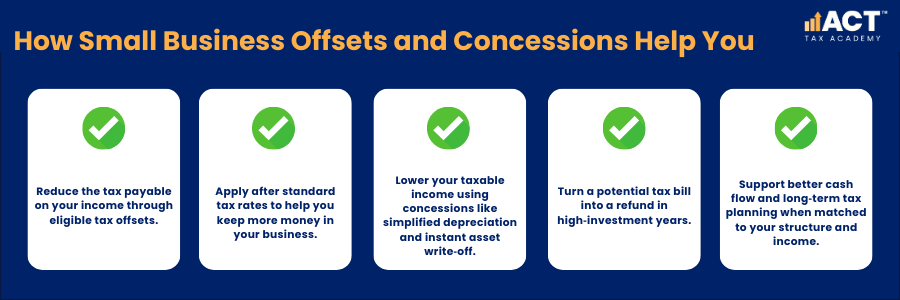
Tax offsets directly reduce the tax payable on your income and can improve your refund. For example, eligible sole traders, partners, and trust beneficiaries may qualify for the small business income tax offset of up to 16% (capped at $1,000) when their aggregated turnover is less than $5 million. These offsets are applied after calculating your tax based on the standard tax rates and can help you keep more of your money in your business.
Other small business concessions, such as simplified depreciation or the $20,000 instant asset write‑off (available until 30 June 2026 for businesses with turnover under $10 million), can reduce your taxable income in the year of purchase. This can change your estimated tax and may turn a potential bill into a refund, especially in years when you invest heavily in equipment or technology. Understanding which concessions apply to your structure and income can improve both your cash flow and long‑term planning.
How Do Prior Tax Paid, Instalments and Withholding Affect Your Refund?
The total tax you have already paid during the financial year is one of the biggest drivers of your refund. This includes amounts withheld by an employer from wages, PAYG instalments paid by your business, and any other voluntary payments you make to the ATO. When these credits are added up and compared to your final tax payable, they determine whether you receive a tax refund or need to pay more.
If you consistently overpay through instalments, you may see a regular refund but also risk tying up money that could have supported your cash flow. If you underpay, you may owe a lump sum when you lodge your tax return. Reviewing your estimated tax and instalment rate each year with a registered tax agent can help you keep your total tax closer to your actual position and avoid big surprises.
How Can Tax Losses Influence Your Tax Outcome?
If your allowable deductions and expenses are higher than your income, your business may record a tax loss. In most cases, this loss does not create an immediate cash refund but can be carried forward to reduce taxable income in future profitable years. By lowering future tax payable, these losses effectively act as a buffer that helps you pay less tax when income improves.
For some company structures, certain rules may allow current‑year losses to offset past years’ tax in limited circumstances, which can lead to a refund in those years. Whether you are eligible will depend on factors such as your structure, turnover, and ownership tests. Keeping accurate records of losses and discussing them with your tax agent ensures they are used in the best possible way over time.
How Do Debts, Levies and Compliance Checks Impact Your Refund?
Even if your tax return shows a refund, ATO systems will first check your account for existing debts. If you owe previous income tax, GST, PAYG, or other government amounts, the ATO can use your refund to reduce those debts before sending any balance to you. This means your calculator results or instant estimate may not match the actual amount paid into your account.
The Medicare levy and Medicare levy surcharge can also affect your final tax payable. If your income is above certain thresholds and you do not have appropriate private health insurance, the surcharge may apply and reduce your refund. Compliance checks, such as extra questions about large deductions or unusual adjustments, can delay your refund while the ATO reviews your form and any additional information it requests.
Why Is Record‑Keeping and Documentation So Critical for Your Refund?
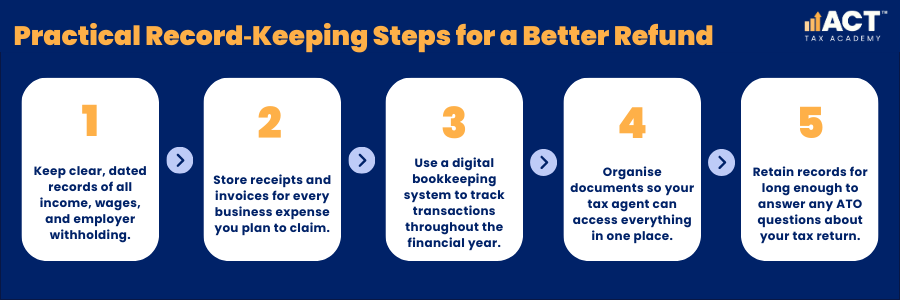
Good record‑keeping is one of the simplest ways to increase your chance of a better refund and a smooth process when you lodge your tax return. Clear records of income, wages, employer withholding, and business expenses allow you to calculate your taxable income accurately and support all the deductions and offsets you claim. This reduces the risk of errors that could lead to adjustments, interest, or penalties.
Digital bookkeeping systems and scanned receipts can make it easier to keep track of every dollar without digging through paper at the end of the financial year. If the ATO questions items in your return, having everything ready in one place lets your tax agent respond quickly and confidently. Strong documentation builds trust with the ATO and supports fair outcomes for Australian residents running small businesses.
How Quickly Will You Receive Your Business Tax Refund?
Once you lodge your tax return, most straightforward small business and individual returns that are lodged online are processed within a relatively short time. If your account details and other information are up to date and there are no complex issues, you can usually expect your refund to be paid directly into your nominated bank account. The ATO relies heavily on accurate details in your form, so checking everything before you submit can prevent delays.
Refunds can take longer where there are outstanding lodgements, missing bank account details, or extra checks needed to confirm deductions and income. If the ATO needs more information, it will send a notice or contact you for clarification before finalising your return. Keeping your ATO online services access active and your contact details current helps you stay on top of any follow‑up requests.
How Can Tax Calculators and Tools Help You Plan?
Many small business owners use a tax calculator or simple tax calculator to get an instant estimate of their likely refund or tax payable. Online tools and tax return calculators can give you a quick snapshot based on your annual income, expected deductions, and residency status. They are most helpful early in the financial year when you want to see how decisions on wages, dividends, or asset purchases might affect your current financial year tax outcome.
However, calculator results are only as accurate as the details you enter and usually cannot account for all other factors that apply to your situation. They may not fully capture tax offsets, fringe benefits, private health insurance impacts, or complex business structures. The ATO website offers guidance and free information, but for personalised advice that fits your business, working with a registered tax agent is still the most reliable way to calculate your position and understand what you are truly entitled to claim.

Conclusion: Turning Your Tax Refund into a Practical Planning Tool
Your business tax refund is not a random bonus; it is the result of how your income, deductions, tax offsets, and tax paid interact over the full year. When you understand how total income, expenses, and tax rates come together, questions like “how much tax return will I get?” become easier to answer with real numbers, not guesswork. This insight helps you manage cash flow, plan asset purchases, and make smarter choices about when and how you lodge your tax return.
A simple next step is to review your income, expenses, and estimated tax for the current financial year using a calculator as a starting point and then refine the numbers with an experienced tax agent. By keeping your records complete, checking your account details, and staying aware of small business concessions, you give yourself the best chance of a smoother process and a fair refund. With the right support and clear information, your tax position becomes another tool to help your business grow, rather than just a form you complete once a year.