
How Accrual and Cash Accounting Affect Business Reports
Accrual vs cash accounting affects when your business records income and expenses and, as a result, how your financial reports look. The main difference is payment timing: cash accounting records transactions when money changes hands, while accrual accounting records revenue and expenses when they are earned or incurred.
Cash and Accrual Accounting Record Transactions Differently
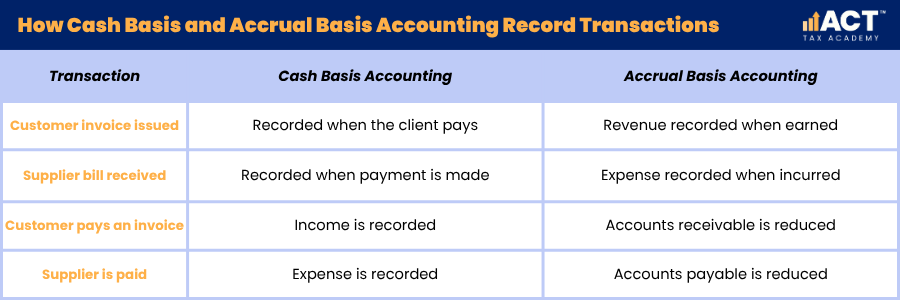
Cash accounting records income when you receive payment and expenses when money leaves the business. This cash basis approach focuses on completed cash transactions, so it can be straightforward for some small businesses with simple transactions and immediate payments. Accrual accounting records revenue when it is earned and records expenses when they are incurred, regardless of when the customer pays or the business makes payment. This accrual basis can provide an accurate view of activity within the same period, particularly when a business uses credit terms or regularly sends invoices before receiving money.
Cash Accounting Focuses on Money Received and Paid
Under the cash accounting method, you record income when money enters the business and record expenses when money leaves it. If you issue an invoice in June but the customer pays in July, the cash method generally places the income in July. This can make the cash basis method easier to follow because activity often corresponds closely with movements in the business bank account. However, it does not always provide a complete picture of work already completed or bills that remain unpaid.
Cash Reports Can Be Easier to Interpret
The cash basis may suit businesses where customers make immediate payments and suppliers are paid quickly. Sole proprietors and other small businesses with relatively simple transactions may also find cash reports easy to use for everyday monitoring. The method still requires consistent bookkeeping. Bank transactions need to be reconciled correctly so that transfers, loan payments and other financial transactions are not mistakenly treated as ordinary revenue or expenses.
Cash Profit Is Different from Available Cash
A cash-based income statement can show whether recorded income exceeded recorded expenses during a period, but that result is not the same as your bank account balance. Some movements of money may relate to loans, assets or transfers rather than business income or operating expenses. This distinction is important when reviewing financial health. A business can have cash in the bank while also having upcoming payments that reduce the amount genuinely available for day-to-day operations.
Accrual Accounting Reflects Activity When It Occurs
Accrual accounting records revenue when the business earns it rather than waiting until the client pays. In the same way, accrual accounting records expenses when the business becomes responsible for them rather than when payment is made. This accrual method can provide a more accurate depiction of business performance when invoices, supplier bills and payment dates fall across different reporting periods. It helps connect revenue and expenses to the activity that created them.
Accounts Receivable Shows Outstanding Customer Payments
Accounts receivable represents amounts customers owe for sales that have already been recorded. If a business makes credit sales and gives customers 30-day credit terms, accrual accounting can recognise the revenue before the business receives payment. For example, if a business completes $15,000 of work in June and the customer pays in July, accrual accounting records the revenue in June. The amount remains in accounts receivable until the customer pays.
Accounts Payable Shows Amounts the Business Owes
Accounts payable represents supplier bills and other amounts the business has incurred but has not yet paid. These amounts form part of the business’s financial position even though cash has not yet left the bank account. A balance sheet that includes accounts payable can help you see upcoming commitments more clearly. A healthy bank balance may look less comfortable once unpaid supplier invoices and other short-term obligations are considered.
The Accounting Method Changes Reported Profit
Cash and accrual accounting can produce different profit figures for the same reporting period because the two methods recognise transactions at different times. This does not necessarily mean one set of financial reports is wrong; each method is showing the information using a different timing basis. Suppose a business completes $20,000 of work in one month but receives payment the following month. Cash basis accounting records the income when payment arrives, while accrual basis accounting records the revenue when the work is earned.
Expenses Can Move Between Reporting Periods
The same principle applies to expenses. If a supplier provides services in June and the business pays the bill in July, the cash accounting method generally records the expense in July while the accrual system records it in June. This timing can significantly affect reported business performance around month-end or the end of a financial year. Comparing reports without first checking their accounting basis can therefore lead to incorrect conclusions.
Accrual Reports Can Give a Broader View of Financial Performance
Accrual based accounting can give business owners a broader view because it includes transactions that have occurred even when payment has not been completed. This makes it easier to see income earned, expenses incurred, accounts receivable and accounts payable together. The accrual basis also supports the matching principle, where related revenue and expenses are recognised within the same period where appropriate. In practical terms, this can help you understand whether the work completed during a month or quarter actually generated a profit.
Longer Payment Cycles Make Timing More Important
The difference becomes more noticeable for businesses that offer credit terms, carry significant unpaid invoices or undertake long term contracts. The longer the gap between performing work and receiving payment, the more different cash and accrual reports can appear. For these businesses, accrual accounting records can provide useful information about financial performance, while cash flow reports remain essential for understanding whether enough money is available to meet upcoming payments.
Cash Flow and Profit Need to Be Reviewed Together
Profit measures financial performance over a period, while cash flow shows how money moves into and out of the business. A profitable business can still experience cash flow pressure when customers take a long time to pay or major expenses need to be paid before income is collected. For example, an accrual income statement could show strong revenue because substantial work has been completed, while the bank account remains low because customers have not yet paid. Reviewing both types of financial data provides a more accurate picture than relying on one figure alone.
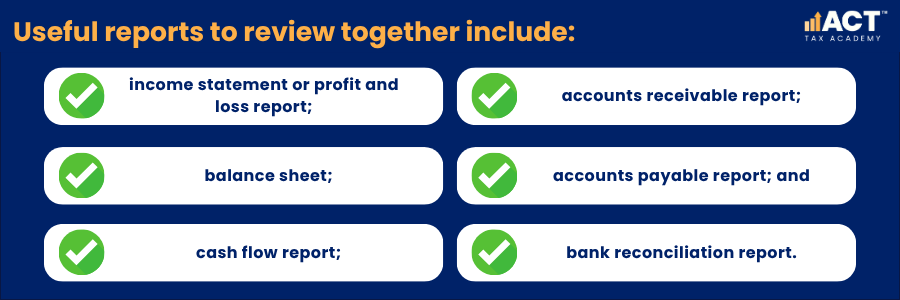
Together, these financial reports help you understand both business performance and the timing of money entering and leaving the business.
Accounting Software Makes Both Methods Easier to Manage
Modern accounting software can record invoices, bills, payments and other financial transactions in one system. Depending on the reporting settings, you may be able to view information using either a cash basis or accrual basis without entering the same transaction twice. Good software does not replace accurate bookkeeping. Transactions still need to be coded correctly, invoices and bills need appropriate dates, and bank accounts need regular reconciliation before the reports can provide reliable financial data.
Consistency Supports More Useful Reports
Using the same accounting method when comparing reporting periods is important. Switching between cash and accrual views without recognising the difference can make revenue, expenses and profit appear to rise or fall when the change is actually caused by payment timing. Consistent reporting also makes it easier to compare one month, quarter or fiscal year with another. This can support better budgeting, cash planning and business decisions.
Accounting Choices Can Affect Tax and GST Reporting
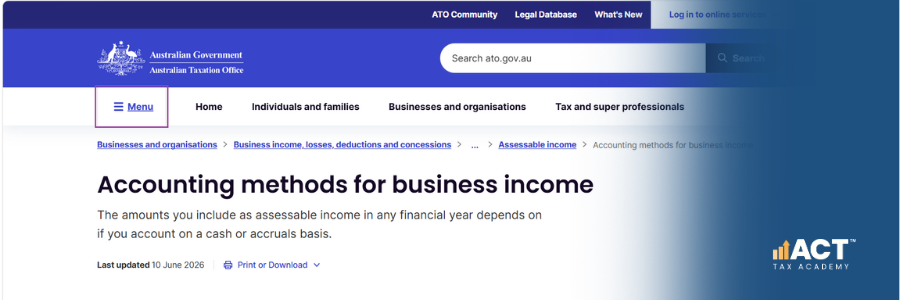
The accounting choice used for management reporting should not automatically be treated as the method that applies for every tax purpose. For assessable business income, the Australian Taxation Office (ATO) uses the cash basis or accruals basis: under the cash basis, income is generally reported when payment is received, while under the accruals basis, income is generally reported when it is earned. The ATO generally states that a business should only report assessable income on a cash basis when its business income is principally a result of the owners own labour, and transactions within a financial year need to be accounted for using the same method.
This is particularly important for bookkeeping and tax preparation because changing a reporting setting does not by itself change the method that applies for tax purposes. GST accounting is separate from the cash and accruals methods used for assessable business income. Businesses with aggregated turnover of less than $10 million, or businesses that use cash accounting for income tax, can generally use either the cash or non-cash method for GST; under the cash method, GST is generally reported in the Business Activity Statement (BAS) period in which payment is received or made. If you are unsure which accounting method applies for tax prep or GST reporting, check with a registered tax agent or BAS agent as appropriate before making changes.

Build Practical Bookkeeping Skills
Understanding how accrual and cash accounting affect business reports helps you interpret your numbers with greater confidence. When you understand the main difference between the two methods, you can read your income statement, balance sheet, accounts receivable, accounts payable and cash flow information in the right context and make better-informed business decisions. If you are ready to move from theory to practical application, the ACT Tax Academy Bookkeeping Online Course provides structured online training designed specifically for Australian small business owners and aspiring bookkeepers. You will learn how to set up and manage GST, prepare BAS, use Xero effectively, and implement compliant bookkeeping systems with confidence.