Step‑by‑Step: Setting Up a Small Business Depreciation Pool in Xero or QuickBooks Using the Simplified Rules
Step-by-Step: Setting Up a Small Business Depreciation Pool in Xero or QuickBooks Using the Simplified Rules helps small business owners record higher cost assets, apply the simplified depreciation rules, and prepare clearer year-end tax records. The main difficulty is knowing which assets can be immediately deducted and which assets need to be added to the small business pool.
For many eligible businesses, simplified depreciation can make depreciation for small business easier to manage. Instead of calculating separate depreciation deductions for most depreciating assets under the general depreciation rules, a small business entity can use simplified calculations and keep a tax depreciation schedule that is easier to review.
How the Simplified Depreciation Rules Work
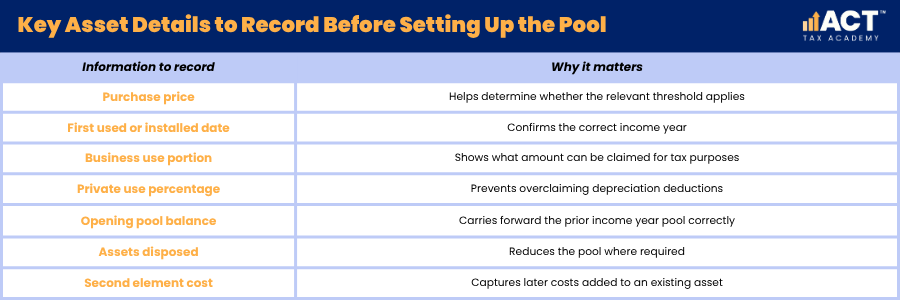
The simplified depreciation rules allow eligible small business entities to claim deductions for depreciating assets in a more practical way. For eligible small businesses using the simplified depreciation rules, assets costing less than $20,000 and first used or installed ready for use in the relevant income year may qualify for an immediate deduction. Assets costing $20,000 or more are generally added to the small business pool. A depreciating asset is an asset that loses value over time, such as equipment, tools, computers, vehicles, or machinery used for business purposes. The business use portion is the amount used for taxable purposes, and only that portion can be claimed as a tax deduction.
Instant Asset Write Off and the Small Business Pool
The instant asset write-off applies when an eligible asset costs less than the relevant threshold and is first used or installed ready for use during the relevant income year. If the simplified depreciation rules apply, the business may be able to instantly write off the business portion of the purchase price. The small business pool is used for depreciating assets costing the same as, or more than, the relevant instant asset write-off threshold. These assets are pooled together so the business can generally claim depreciation at 15% in the income year the asset is allocated to the pool and 30% in each later income year.
Why Timing Matters for Depreciating Assets
The asset must usually be first used or installed ready for use before the business can claim depreciation. This means the purchase date alone is not always enough for tax purposes. For example, if a business buys machinery in June but it is not installed ready for use until July, the deduction may fall into the next financial year. This is why your records should show both the purchase date and the first used or installed date.
Check the Eligibility Criteria Before Setting Up the Pool
Before using the simplified depreciation rules, confirm that the business meets the eligibility criteria. A small business entity generally needs aggregated turnover of less than $10 million and must apply the simplified depreciation rules consistently to most depreciating assets. Aggregated turnover means the business turnover plus the turnover of connected business entities and affiliates. This matters because depreciation rules for small businesses are not based only on what appears in one bank account or one bookkeeping file.
Prepare the Asset Information Before Using Xero or QuickBooks
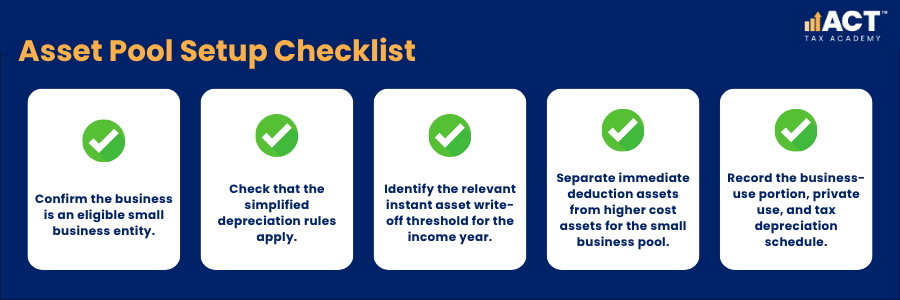
A clean asset list makes the software setup much easier. Include the purchase price, date acquired, date first used or installed ready, business use portion, GST treatment, and whether the asset is for business purposes only or has private use. This step also helps your accountant or bookkeeper check previous income years and the prior income year opening pool balance. If the business used temporary full expensing, the backing business investment incentive, or other depreciation incentives in earlier years, those records should be reviewed before adding new assets. Only one depreciation incentive can apply to an asset, so earlier treatment can affect the opening pool balance.
Setting Up the Small Business Pool in Xero
Xero can help manage small business depreciation by allowing fixed assets and tax depreciation pools to be recorded in the accounting file. This is useful when the business wants its asset records, depreciation deductions, and tax depreciation schedule to stay connected. The key is to set up the pool carefully before relying on reports. Xero can support the process, but the eligibility, business portion, asset write off threshold, and asset dates still need to be checked by the person preparing the records.
Step 1: Review the Fixed Asset Settings
Start by checking the fixed asset area and confirming that the asset categories are appropriate. Common categories include motor vehicles, plant and equipment, office equipment, and computer equipment. Then check whether tax depreciation reporting is available and properly configured. This helps separate accounting depreciation from depreciation deductions claimed for tax purposes.
Step 2: Create the Small Business Pool
Create a pool using a clear name such as “Small Business Pool – Tax”. This reduces confusion between the tax pool and ordinary bookkeeping accounts. In Xero’s fixed asset pool settings, select the Small Business Pool option where the file is using Australian tax reporting for fixed assets. Do not manually change the treatment unless you have confirmed the correct depreciation rules for the income year.
Step 3: Add Eligible Assets to the Pool
Add eligible assets that do not qualify for an immediate deduction because they cost $20,000 or more under the current threshold, assuming the simplified depreciation rules apply. Include the purchase price, business use portion, and the date the asset was first used or installed ready for use. If an asset has private use, only add the business portion to the pool. For example, if a vehicle is used 80% for business and 20% privately, the business can only deduct the business portion for taxable purposes.
Step 4: Check the Depreciation Report
Once assets are entered, run the depreciation report and compare it with your tax depreciation schedule. Look closely at first-year additions, the opening pool balance, assets disposed, and any second element cost incurred during the year. A second element cost is a later cost connected to an existing depreciating asset, such as an improvement or major upgrade. If the improvement relates to an asset already in the small business pool, the business-use portion is generally added to the pool as a cost addition amount.
Setting Up the Small Business Pool in QuickBooks
QuickBooks can record fixed assets, accumulated depreciation, and depreciation journals, but the simplified depreciation calculations are usually managed in a separate schedule. This approach keeps the bookkeeping file clean while allowing the accountant or bookkeeper to apply the small business depreciation rules correctly.
The best practice is to use QuickBooks for the accounting entries and maintain a separate pool worksheet for tax purposes. This helps avoid mixing accounting depreciation with tax depreciation, especially when the business has multiple assets.
Step 1: Create Fixed Asset Accounts
Create fixed asset accounts for each main asset type, such as motor vehicles, equipment, and office assets. Also create accounts for accumulated depreciation and depreciation expense. Clear account names help small business owners understand what has been capitalised and what has been expensed. This is especially important when reviewing whether an item should be treated as an instant asset deduction or added to the pool.
Step 2: Keep a Separate Pool Schedule
Use a separate tax depreciation schedule to track the opening pool balance, new assets, assets disposed, depreciation deductions, and closing balance. This schedule should show whether the business is using the simplified depreciation rules and which assets have been included. This is also where you can note any assets specifically excluded from the simplified rules. Some assets may need different treatment, so they should not be added to the pool automatically.
Step 3: Record the Year-End Depreciation Journal
After calculating the pool deduction, record a journal in QuickBooks. Debit depreciation expense and credit accumulated depreciation. Use a clear memo, such as “Small business pool depreciation for 30 June”. Attach the tax depreciation schedule so the calculation can be checked when preparing the tax return.
How the Pool Supports Cash Flow and Year-End Planning
The simplified rules can support cash flow by allowing eligible businesses to claim deductions sooner than they might under the general depreciation rules. This can reduce taxable income, although the final tax outcome depends on the business structure, profit, timing, and other deductions. It is important not to buy assets only to chase a deduction. A tax deduction reduces assessable income, but the business still spends cash on the asset.
When the Pool Can Boost Cash Flow
The pool may boost cash flow when the asset is genuinely needed, and the business can claim depreciation earlier. For example, equipment that helps improve operations may also provide a deduction under the simplified rules. The benefit is strongest when the asset is used mainly for business purposes and the business has enough assessable income to use the deduction. If the business has low profit or a loss, the timing benefit may be limited.
When to Get Advice Before Claiming
Get advice before claiming if the business has connected entities, unusual assets, finance arrangements, or mixed business and private use. Advice is also useful where the business has used temporary full expensing or other incentives in previous income years. You should also review the rules if the business owns assets connected to investment activities. Property investors may need different treatment, particularly where the asset is not used in carrying on a small business.

Build Practical Bookkeeping Skills
Setting up a small business depreciation pool works best when the bookkeeping records and tax records tell the same story. By checking eligibility, separating instant asset write off items from higher cost assets, recording the business portion, and keeping a clear tax depreciation schedule, small business owners can reduce year-end confusion and prepare more reliable records.
If you are ready to move from theory to practical application, the ACT Tax Academy Bookkeeping Online Course provides structured online training designed specifically for Australian small business owners and aspiring bookkeepers. You will learn how to set up and manage GST, prepare BAS, use Xero effectively, and implement compliant bookkeeping systems with confidence.