
How to Use the NSW Long Service Leave (LSL) Calculator for Accurate Payroll Processing
Using the NSW LSL Calculator for accurate payroll processing helps you calculate long service leave correctly and reduce the risk of underpayments or disputes with your team. It is built around the Long Service Leave Act 1955 (NSW) and current NSW Industrial Relations guidance, so it follows the same rules that apply to most employees in New South Wales. When you pair the long service leave calculator with accurate employment records, your business gains peace of mind about long service leave entitlements.
Long service leave is different from annual leave because it is based on continuous service with the same employer over many years, not just a yearly accrual. Many full-time, part-time and casual workers in NSW can accrue long service leave, but coverage depends on whether the Long Service Leave Act 1955 applies or whether another source such as an award, enterprise agreement, public-sector instrument, local government award, Commonwealth arrangement or portable scheme provides the entitlement. Getting this right protects both your staff and your small businesses when employment ends or when an employee is taking LSL.
What Does the NSW Long Service Leave Calculator Do?
The NSW long service leave calculator helps you work out how much long service leave an employee has earned based on continuous service with the same employer. It brings together the specific rules in the Long Service Leave Act and the Service Leave Act 1955 so you can estimate long service leave entitlements in weeks and then convert them into a dollar figure.
The calculator is most useful for workers covered by the Long Service Leave Act 1955 (NSW). It may not be the right tool where long service leave comes from an award, enterprise agreement, pre-modernised award, public-sector or local-government instrument, Commonwealth employment, or a portable scheme. It can be used for employees who are still working as well as those whose employment ends and may have a pro rata entitlement.
Why Is Accurate Long Service Leave Calculation So Important?
Accurate long service leave calculation matters because long service leave entitlements are a legal requirement, not an optional extra. If you underpay or miscalculate long service for an employee, you may need to back pay them and correct your payroll records, and you also risk Single Touch Payroll (STP) non‑compliance penalties if payroll reporting is not accurate and timely.
Mistakes with long service leave usually come from misreading the Long Service Leave Act, mis‑entering dates or not understanding which periods count as service for accrual purposes. Small businesses are particularly exposed if they do not cross check their payroll system against the NSW calculator from time to time, just as they are if they fail to understand their BAS lodgement obligations as Australian businesses.
What Information Should You Gather Before Using the NSW Calculator?
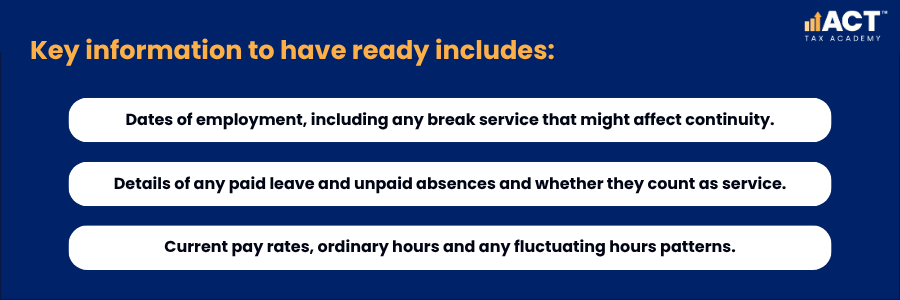
To use the NSW calculator confidently, you need accurate employment records for each employee, including superannuation payment histories so you can avoid needing to lodge a Super Guarantee Charge (SGC) statement for missed or late super. The more detail you have about service, breaks and pay, the easier it is to calculate long service leave correctly.
At a minimum, you should know the employee’s start date, current role, hours pattern and ordinary pay, along with how these flow through to your BAS so you can lodge your BAS as a business owner correctly. You should also understand any periods that might affect continuity or count as service differently, such as parental leave, unpaid leave or zero hour weeks.
How Do You Access and Navigate the NSW LSL Calculator?
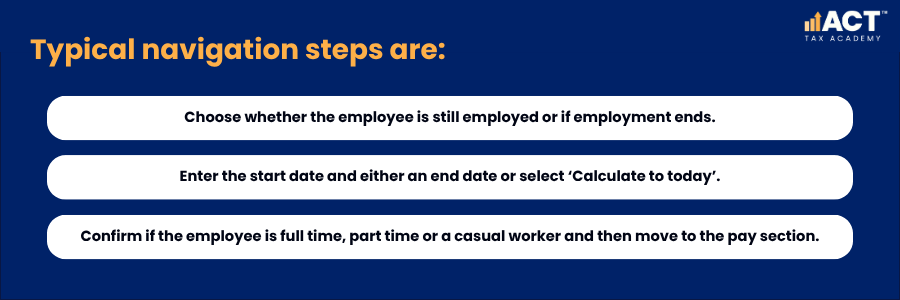
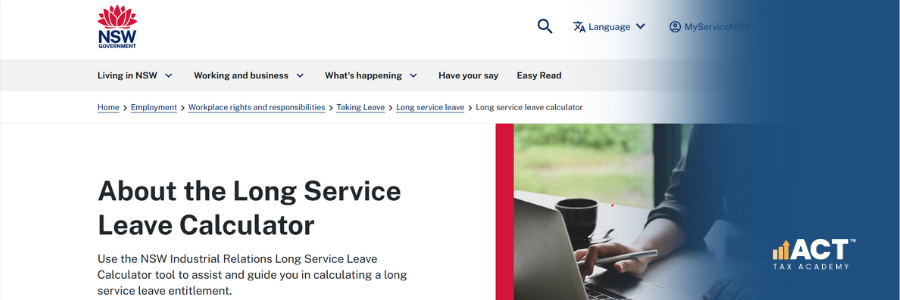
You can access the NSW LSL calculator online through the New South Wales government website and related NSW Industrial Relations pages, just as you might use online tools for GST calculation for Australian businesses when working out indirect tax. Once open, the calculator walks you through a series of questions to determine long service leave under the NSW Act.
The screens are arranged to collect information in the same way you think about an employee’s history, starting with dates, then work pattern, then pay. Each step includes brief guidance so you can see which periods count as service and which may break continuous service.
How Does the Calculator Work Out Continuous Service and Years of Service?
The calculator uses the dates you provide to work out years of service, while checking if any breaks continuous service under the long service leave act. It looks at all the time the employee has been with the same employer, including earlier casual service, as long as there has been no break service that resets the clock.
Absences due to illness or injury count as service under current NSW guidance. Unpaid parental leave generally does not break continuous service, but it usually does not count as service unless the worker’s terms of employment specifically provide that it does. For casual workers, periods without work need to be assessed against the worker’s ordinary pattern of service.
For workers paid wholly by a fixed ordinary time rate, compare the worker’s ordinary remuneration at the prescribed date with the higher 5-year average ordinary remuneration. For workers remunerated otherwise than wholly by a fixed ordinary time rate, calculate the average weekly wage over 12 months and over 5 years, then use the higher result, excluding overtime and other penalty components.
How Does the Calculator Convert Service into Long Service Leave Entitlements?
Once years of service are calculated, the calculator applies the specific rules in the Service Leave Act 1955 and Long Service Leave Act to work out how much long service leave the employee has earned. For most employees, long service leave builds up gradually, reaching a full entitlement after a set number of years and allowing for pro rata long service in certain circumstances from an earlier point.
The calculator helps you see both full entitlement and pro rata entitlement when employment ends due to reasons allowed by the Act, such as illness, incapacity or a pressing necessity. In those specific circumstances, an employee with between five and ten years of service may receive a pro rata payment even though they have not reached the full long service period.
How Does the Calculator Handle Ordinary Hours, Average Weekly Hours and Pay?
After working out the entitlement in weeks, the long service leave calculator turns that entitlement into a dollar figure using ordinary pay. For employees with fixed hours, ordinary hours and pay rates are usually clear, and the amount is paid based on their normal weekly hours.
For employees with variable hours or fluctuating hours, such as casual employees and some part time employees, you may need to use calculating average weekly hours instead of just the last roster. The calculator may ask about typical hours worked over a period so it can determine ordinary remuneration and work out an average weekly pay that is fair to the employee.
How Should You Use the Calculator Results In Your Payroll System?
Once the calculator shows the weeks of long service leave and the estimated payment, you can use that information to adjust your payroll records. For ongoing staff, you can update their accrued LSL balance and plan any paid LSL they may take in the future.
If employment ends, you can use the weeks figure and dollar amount from the calculator as the basis for the LSL payout in the final pay. It is important to cross check these results with your payroll system’s LSL accrual setup so the figures line up over time.
How Do Breaks, Leave and Misconduct Affect Long Service Leave?
Not every break in work automatically breaks continuous service, but some gaps can affect continuity or reduce the total service that counts. Paid leave, many types of parental leave and public holidays usually count as service, while some forms of unpaid leave might not count or could pause accrual.
In some cases, serious and willful misconduct or willful misconduct may affect an employee’s pro rata eligibility if employment ends before the full long service leave period is reached. The long service leave act and NSW legislation set out specific rules about when pro rata long service is available and when it is not.
How Does the Calculator Handle Ordinary Hours, Average Weekly Hours and Pay?
After working out the entitlement in weeks, the long service leave calculator turns that entitlement into a dollar figure using ordinary pay. For employees with fixed hours, ordinary hours and pay rates are usually clear, and the amount is paid based on their normal weekly hours.
For employees with variable hours or fluctuating hours, such as casual employees and some part time employees, you may need to use calculating average weekly hours instead of just the last roster. The calculator may ask about typical hours worked over a period so it can determine ordinary remuneration and work out an average weekly pay that is fair to the employee.
How Should You Use the Calculator Results In Your Payroll System?
Once the calculator shows the weeks of long service leave and the estimated payment, you can use that information to adjust your payroll records. For ongoing staff, you can update their accrued LSL balance and plan any paid LSL they may take in the future.
If employment ends, you can use the weeks figure and dollar amount from the calculator as the basis for the LSL payout in the final pay. It is important to cross check these results with your payroll system’s LSL accrual setup so the figures line up over time.
How Do Breaks, Leave and Misconduct Affect Long Service Leave?
Not every break in work automatically breaks continuous service, but some gaps can affect continuity or reduce the total service that counts. Paid leave, many types of parental leave and public holidays usually count as service, while some forms of unpaid leave might not count or could pause accrual.
In some cases, serious and willful misconduct or willful misconduct may affect an employee’s pro rata eligibility if employment ends before the full long service leave period is reached. The long service leave act and NSW legislation set out specific rules about when pro rata long service is available and when it is not.

How Can ACT Tax Academy Help You Use the NSW LSL Calculator Confidently?
Our team supports small businesses in New South Wales to use the NSW LSL calculator and manage long service leave in a clear and practical way. We help you set up LSL accrual correctly, maintain accurate employment records and make sure your leave entitlements are paid on time and in full; while also helping you avoid BAS lodgement mistakes for compliance across your broader tax obligations.
We can also work with your payroll software to align LSL accrual rules, ordinary pay settings and average weekly hours methods with the calculator and the NSW Act. This reduces the risk of underpayments and gives your team confidence that long service leave is being handled properly.