What Is Corporate Liquidation in Australia? A Practical Guide for Small Business Owners
Corporate liquidation in Australia is the formal winding up process where a company’s affairs are finalised, company assets are sold, and the proceeds are used to repay creditors. If your company is under financial pressure or unable to meet its financial obligations, understanding corporate liquidation in Australia helps you take control and avoid further risk.
Many small business owners delay action because liquidation sounds complex or final. In reality, the liquidation process is a structured legal pathway under the Corporations Act that ensures creditors are treated fairly and the company is formally dissolved in an orderly way.
What Is the Liquidation Meaning in Accounting?
The liquidation meaning in accounting refers to the process of closing a company, selling assets, and using those funds to pay creditors before the company is wound up. It applies when a company fails or when solvent companies choose to close voluntarily.
Once liquidation begins, control shifts from company directors to an appointed liquidator (in insolvent liquidations, the liquidator must be registered). The liquidator manages the company’s financial affairs, investigates the company’s affairs, and oversees the distribution of available funds to the company’s creditors.
When Does a Company Enter Liquidation?
A company enters liquidation when it cannot pay creditors as debts fall due, meaning it is an insolvent company. This situation is often described as insolvent liquidation.
Warning signs include:
- Ongoing cash flow shortages
- Outstanding debts to suppliers
- Unpaid wages or retrenchment payments
- A statutory demand from a creditor
- Mounting tax obligations where the company owes the ATO
If a company continues trading while unable to pay all the debts, company directors risk insolvent trading and may be held personally liable. Seeking professional advice early reduces the risk of personal liability and further legal proceedings.
What Are the Types of Corporate Liquidation in Australia?
There are three main types of company liquidation in Australia. Each applies in different circumstances.
Creditors Voluntary Liquidation
Creditors voluntary liquidation is the most common form of insolvent liquidation for small businesses. Company directors decide the company cannot repay creditors and appoint a registered liquidator.
A creditors’ meeting may be held if approvals are needed. Many decisions can also be made via written proposals without a meeting, and creditors can request a meeting (including to consider replacing the liquidator). This approach allows directors to act before court liquidation becomes necessary.

Members Voluntary Liquidation
Members voluntary liquidation applies to solvent companies that can pay all the debts in full within 12 months. Company members resolve to wind up the company, usually for retirement, restructuring, or where two or more companies are being simplified into one, and careful planning around small business CGT concessions can significantly improve after‑tax outcomes when assets are sold or transferred.
This is a voluntary liquidation, not triggered by insolvency, and the company is formally dissolved after debts are cleared.
Court Liquidation
Court liquidation, sometimes called court-ordered winding up, occurs when a creditor applies to the court because the company owes money and has failed to comply with a statutory demand. If the court grants the order, liquidation proceedings commence and a liquidator is appointed.
In urgent cases, a provisional liquidator may be appointed before the full hearing to protect company assets.
What Happens When Liquidation Commences?
When liquidation commences, company directors lose control and the registered liquidator takes over the winding up process. The focus shifts to protecting and realising company assets for the benefit of creditors.
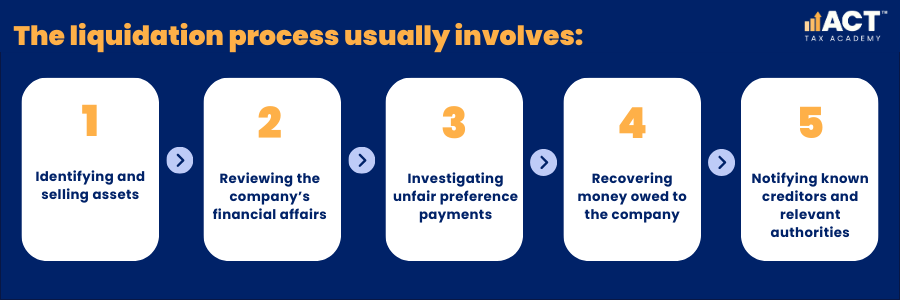
An initial report is provided to creditors outlining the company’s position. The liquidator may also examine transactions with a related entity and review any unfair preference payments made before the company entered liquidation.
How Are Company’s Debts Paid During Liquidation?
Distribution depends on the asset pool (secured vs ‘available’ assets) and statutory priorities. Generally, liquidation costs/expenses are paid first from available assets, then priority employee claims, then unsecured creditors. Secured creditors are typically paid from their secured assets, but employee priority can apply to circulating security interests.
If there are insufficient funds, unsecured creditors may receive only a portion of what is owed, or nothing at all. The liquidator’s role is to ensure available money is distributed fairly.
What Are Secured and Unsecured Creditors?
Secured creditors hold a security interest over specific company assets. This means they have a legal right to claim or sell that asset to recover the company’s debts.
Unsecured creditors do not have security over assets. These may include suppliers, contractors, and sometimes the ATO. Other unsecured creditors are paid only after secured creditors and priority claims have been addressed.
Understanding this distinction is important if your company owes multiple parties.
What Are Directors’ Risks During Insolvent Liquidation?
Company directors must prevent insolvent trading. If they allow the company to incur further debts when it cannot pay creditors, they may be held personally liable.
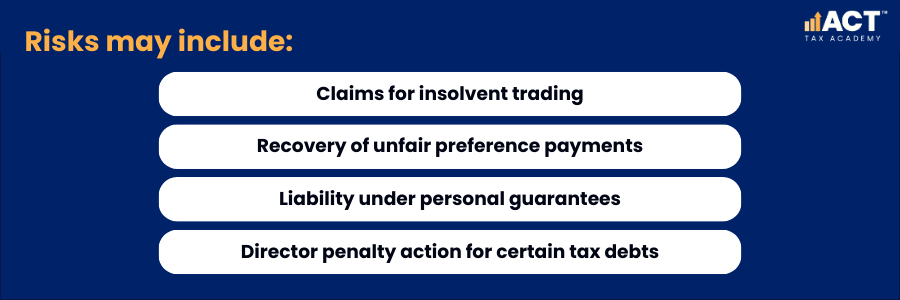
Directors can become personally liable for company debts if they fail to meet their legal responsibilities. This may happen if they allow the company to trade while insolvent or do not act in the company’s best interests. Taking professional advice early provides clarity and protection.
What Is the Simplified Liquidation Process?
Simplified liquidation is a faster and less complex form of creditors’ voluntary liquidation for eligible companies with debts under $1 million. It reduces some steps (e.g., no creditor meetings) and mandatory reporting, while the liquidator still retains powers and duties to administer the winding up under the simplified rules.
Simplified liquidation is only available if eligibility criteria are met (including liabilities under $1 million and other requirements) and the liquidator adopts it within the required timeframe. Creditors can also prevent adoption if the statutory threshold objecting is met. It is designed to lower costs and speed up the process for straightforward cases.
How Long Do Liquidation Proceedings Take?
The timeframe for liquidation proceedings depends on the complexity of the company’s affairs. Straightforward matters may conclude within 12 months, while complex matters involving asset recovery or legal proceedings can take up to five years.
Factors that extend the process include disputes over security interest claims, recovery of unfair preference payments, or investigations into related entity transactions.
Once completed, the company is dissolved and removed from the register.
What About Employees and Retrenchment?
Employees are given priority in the winding up process. Unpaid wages, leave entitlements, and retrenchment payments are paid before other unsecured creditors.
Where insufficient funds exist, eligible employees may claim under the Fair Entitlements Guarantee (FEG) scheme (e.g., capped wages, leave, notice and redundancy). Unpaid super is not covered by FEG. The liquidator coordinates these claims as part of finalising the company’s financial affairs.
Can You Start Again After Company Liquidation?
If your company entered liquidation, you could generally start a new company unless you are disqualified as a director. However, strict rules apply to prevent phoenix companies, where assets are transferred to avoid paying creditors.
You must not transfer assets for less than true/market value or make ‘creditor‑defeating dispositions’ designed to prevent, hinder or significantly delay assets becoming available to creditors. Transparency and compliance are essential.
Conclusion: Taking Clear and Practical Steps
Corporate liquidation in Australia is a structured winding up process designed to deal with an insolvent company in a fair and orderly way. While it can be confronting, understanding how the liquidation process works helps you make practical decisions and protect yourself from unnecessary risk.
If your company owes money, has received a statutory demand, or is struggling to meet financial obligations, early professional advice makes a significant difference. We can review your position, explain your options including voluntary liquidation or voluntary administration, and guide you through each step with clarity.
Taking action early helps you manage risk, reduce stress, and move forward with confidence, whether that means restructuring or formally closing the company.