
Salary Packaging 101: How Australian Small Businesses and Employees Can Benefit
Salary Packaging 101: How Australian Small Businesses and Employees Can Benefit is about using a smart salary package so employees can reduce their taxable income, and employers can offer better benefits without dramatically increasing wages. When a salary packaging arrangement is designed well, part of an employee’s pre-tax salary is swapped for certain benefits of similar value instead of being paid fully as cash. This can mean less tax overall, more money in the employee’s home pay, and a stronger way for a small business to attract and keep good people.
In a high cost‑of‑living environment, both employers and employees are looking for practical ways to manage income and expenses without getting into trouble with the tax man. Salary packaging work focuses on using pre-tax income for certain expenses, instead of waiting to spend after tax income on the same items. When everyone understands the tax implications, salary sacrifice can support better financial wellbeing while still keeping the employer compliant with the Australian Taxation Office and other rules.
What Is Salary Packaging and How Does It Work
Salary packaging is a formal arrangement where an employee agrees to give up part of their future salary or wages in exchange for certain benefits of similar value. In simple terms, instead of all your income being paid as cash salary that adds to your taxable income, some of it is directed to things like super fund contributions, a car, or other benefits. When an arrangement reduces your taxable income in the right way, you may pay less income tax and sometimes less Medicare levy or Medicare levy surcharge.
For a salary packaging arrangement to work properly, it must be in place before the employee earns the income that is being sacrificed. Once the employee agrees to salary sacrifice a portion of their pay, they cannot later choose to take that pre-tax salary back as cash. The employer then provides certain benefits and may need to account for fringe benefits tax or claim FBT exemption if the benefits are exempt benefits.
Why Can Salary Packaging Mean Less Tax and More Money in Your Pocket
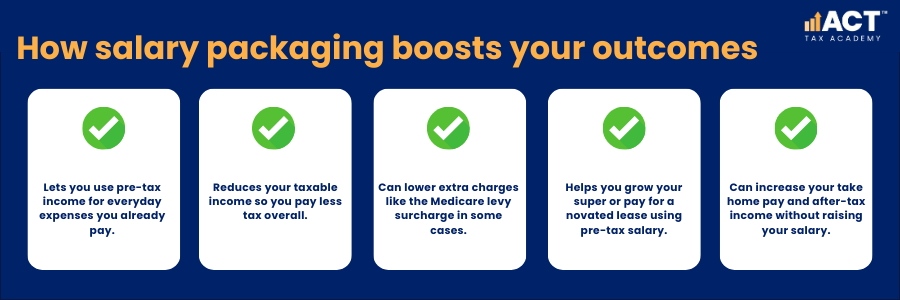
The main reason salary packaging can help you pay less tax is that you use pre-tax income to cover certain expenses, instead of waiting to spend after tax income. When your taxable income is lower, your marginal tax rate may apply to a smaller amount of income, which can reduce your overall tax bill. If your taxable income drops, you may also reduce extra charges like the Medicare levy surcharge or move into a lower band for some tax offsets and government benefits.
For many employees, the salary package benefits come from using pre-tax income for regular personal expenses they would have paid anyway, such as extra super fund contributions, loan repayments on a novated lease, or other benefits within the rules. Some employers, especially not for profit organisations, can offer salary package options that let staff pay certain expenses with tax free dollars up to set limits. The overall effect is that your take home pay and after-tax income can improve even if your total salary cost to the employer stays the same.
How Does Fringe Benefits Tax Fit into Salary Packaging
Fringe benefits tax is a tax that many employers may need to pay when they provide certain benefits to employees or their associates in place of salary. When a company offers things like a motor vehicle, meal entertainment, or other benefits, the employer might have to pay FBT on those fringe benefits unless they qualify as exempt benefits. If the employer has to pay FBT, that cost needs to be weighed against the tax savings the employee gets from using pre-tax income.
Most employers want to design salary packaging, so they do not pay FBT unnecessarily, or they keep it as low as possible. This is why they often focus on benefits with an FBT exemption, or items where the tax fbt is reduced by employee contributions or by the type of expense. If an employer has to pay FBT but cannot recover that cost, the arrangement might not be worthwhile for the business, even if the employee is happy with more money in their home pay.
What Can Usually Be Included In A Salary Package
What you can include in a salary package depends on your employer, your industry, and the rules that apply. Many employers allow salary sacrifice into a super fund, because employer’s contributions to super are a common way to use pre-tax income. Some salary packaging arrangements also include a motor vehicle under a novated lease, work‑related devices, and certain expenses for staff of not-for-profit organisations.
In some cases, a package may cover personal expenses such as mortgage repayments, rent, school fees, relocation costs, or even some credit card expenses and credit card payments, where the rules and employer policy allow it. Not for profit organisations and some health or charity employers may be able to provide tax free benefits for certain expenses, up to specific caps, which can greatly increase the tax savings for employees. Because each employer’s account and policy is different, employees should always ask what benefits are available before planning their own salary package.

How Does Salary Packaging Affect Your Take Home Pay And Tax Position
Salary packaging can change several parts of your overall tax position, not just your income tax. When your taxable income is lower because of salary sacrifice, you may pay less income tax and sometimes less Medicare levy and Medicare levy surcharge. This can mean more money in your take home pay, even though your official salary on paper has gone down.
However, some benefits provided in a salary package are reported as fringe benefits and may affect tests for tax offsets, government benefits, or child support payments. Reported fringe benefits can be counted as income when some agencies look at whether you get certain benefits, even if those amounts are not taxed the same way as wages. This is why it is important to look at the total picture, including any impact on child support payments, government benefits, or other entitlements, not just the immediate tax savings.
How Can Small Businesses in Australia Set Up Salary Packaging in a Practical Way
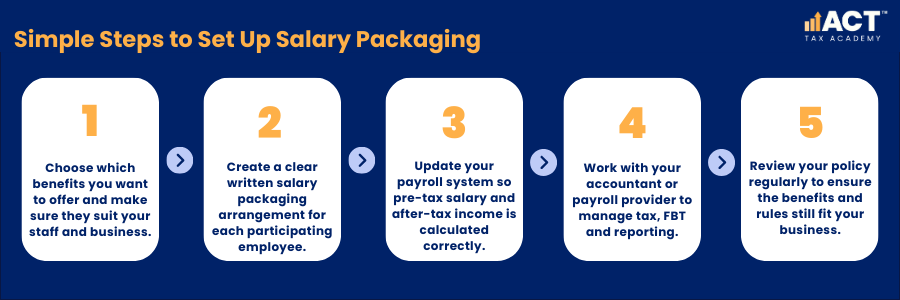
For small businesses, the first step is to decide which benefits they want to offer and to make sure those benefits suit their staff and business model. A clear written policy describes how salary packaging works in that workplace, which benefits are available, and whether any limits apply. This helps both the employer and employees understand what they can package and what they need to pay.
Next, the employer should work with their payroll provider or accountant to update systems so pre-tax salary and after-tax income is calculated correctly. This includes making sure employer’s contributions to super, any novated lease payments, and other benefits are correctly recorded. Most employers also want to confirm whether they may need to pay fringe benefits tax on any part of the package and whether they can claim any relief or FBT exemption.
What Are Some Practical Examples Of Salary Packaging In Action
A common example is an employee who chooses to salary sacrifice part of their pay into their super fund. By moving a portion of pre-tax salary into super, the employee reduces their taxable income, which may lower the tax they pay now while growing their retirement savings. In this case, the employer treats the extra amount as employer’s contributions, and the employee sees less income taxed in their own name.
Another example is an employee who enters a novated lease for a new car through their employer. The employee agrees to give up some of their pre-tax income to cover lease payments and running expenses on the motor vehicle, and the employer manages the payments to the finance company. Depending on the details, this can reduce the employee’s tax bill and help them manage car expenses more smoothly, although the employer needs to consider any requirement to pay FBT.
What Are the Main Risks and Mistakes to Avoid with Salary Packaging
One of the biggest risks is setting up a package without really understanding how it affects your total tax position. If you focus only on the idea of paying less tax on salary and ignore things like fringe benefits reporting, government benefits, or child support payments, you may get surprises later. Another common mistake is trying to package personal expenses that create more tax or FBT than they save.
Employers can run into trouble if they offer benefits without checking whether they will need to pay fringe benefits tax or how to report those benefits. If a company has to pay FBT but has not budgeted for it, the salary packaging arrangement might harm profit instead of helping. Employees also need to remember that some arrangements may lead to less income showing on their payslip even if the overall package is better value, which can cause confusion if it is not explained clearly.
How Can ACT Tax Academy Support Small Businesses and Employees with Salary Packaging
For small businesses in the ACT, having a friendly, professional team to guide salary packaging decisions can make a big difference. Our services focus on helping employers design clear, practical packages that are easy for employees to understand and for payroll teams to manage. We explain how salary packaging work in everyday language so your team can see how it affects their pay, tax, and long‑term goals.
We also help employees and business owners look at their full tax picture, including income, expenses, fringe benefits, and any links to government benefits or child support payments. That way, decisions about salary sacrifice, novated leases, and other benefits are based on general information plus tailored advice for your situation. Our goal is to help you save where you can, stay onside with the Australian Taxation Office, and feel confident that your salary package is working for you, not against you.

Conclusion
Salary Packaging 101: How Australian Small Businesses and Employees Can Benefit is really about using your pre-tax income in a smarter way so both employer and employee gain value. When you structure a salary packaging arrangement properly, you can reduce your taxable income, manage certain expenses more smoothly, and keep your take home pay healthier over time. The key is to balance tax savings with real‑life needs like mortgage repayments, car costs, school fees, and future goals.
If you are an employer, review your current benefits and think about where salary packaging could support your team without adding unnecessary risk or cost. If you are an employee, consider how salary sacrifice into super, a car, or other benefits might fit your goals, and make sure you understand the full tax implications before you commit. When you are ready to examine your options, our team at ACT Tax Academy is here to walk you through the details, answer your questions, and help you design a package that fits your business and your life.