Leveraging the ATO’s Latest Tax Estimation Tools to Improve BAS Projections
Leveraging the ATO’s latest tax estimation tools to improve BAS projections can dramatically reduce cash flow surprises for your business. When you combine these tools with structured bookkeeping, your BAS becomes a predictable part of your financial year planning.
For small and medium businesses, BAS underestimation often leads to unexpected GST and PAYG bills and penalties. Using ATO calculation worksheets through the quarter helps you see upcoming tax obligations early, so you can put money aside instead of scrambling on lodgment day.
What ATO Tax Estimation Tools Can Help with BAS Projections?
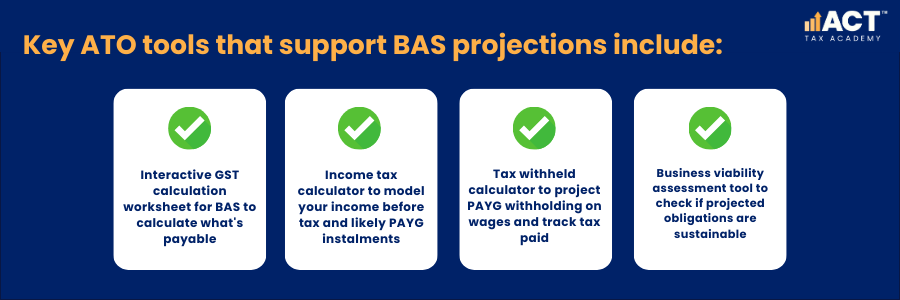
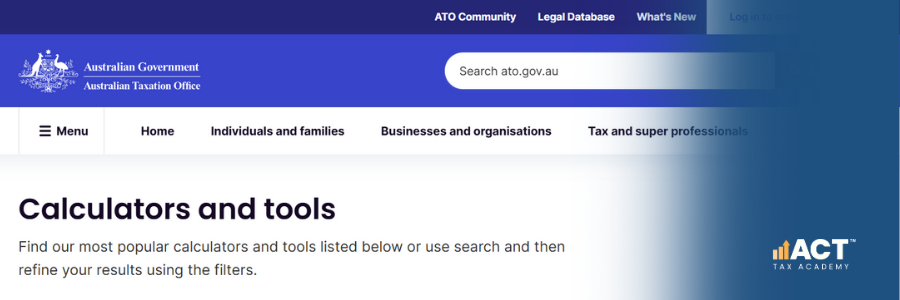
The ATO provides calculators that help you estimate GST, PAYG and income tax so your BAS projections are based on real numbers. The interactive GST calculation worksheet for BAS, income tax calculator and tax withheld calculator model future obligations and help you understand how much tax you’ll need to pay when you lodge your tax return.
The GST calculation worksheet works out your GST details before you complete your BAS, even without accounting software. The income tax calculator estimates quarterly PAYG instalments, which are key components of most BAS forms.
How do the ATO’s GST Calculation Tools Improve BAS Accuracy?
The ATO’s GST calculation worksheet breaks GST reporting into clear steps that link directly to your account, making it easier to reconcile your trial balance. By entering total sales, purchases and expenses, you receive calculated figures that transfer to your BAS form.
This method reduces common errors such as double-counting GST and misclassifying use. When using the worksheet, you’ll calculate a more reliable estimate of what you owe.
Why do Income Tax Calculators Matter for BAS Planning?
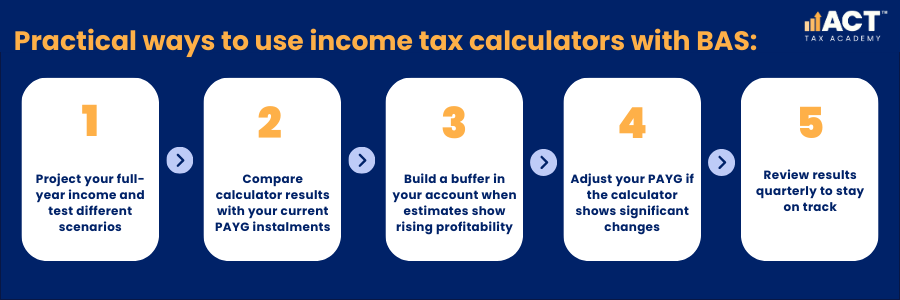
While BAS focuses on GST and PAYG, your income tax position drives how much tax payable you may face. The income tax calculator estimates your year-to-date taxable income using current tax rates and relevant tax offsets.
For many businesses, PAYG instalments become the largest payments on the BAS. By forecasting your income before tax each quarter, you can anticipate whether instalments will increase and plan accordingly.
How Can the Tax Withheld Calculator Strengthen PAYG Withholding Projections?
The tax withheld calculator helps employers work out how much PAYG withholding to deduct from wages using current tax rates. The ATO app includes a simplified version ideal for small employers.
When used consistently, the calculator gives a reliable estimate of total tax withheld you will report and pay with your BAS. It reduces the risk of under-withholding, which can affect cash flow at tax time.
How Do These Tools Fit into a Quarterly BAS Forecast Workflow?
The most powerful way to use ATO estimation tools is to build them into a quarterly BAS forecast routine. A simple workflow involves running a mid-quarter checkpoint and end-of-quarter pre-lodgment review using the GST worksheet, income tax calculator and tax withheld calculator.
By forecasting your BAS two or three weeks before the due date, you have time to adjust spending or negotiate plans. This quarterly rhythm transforms how business owners manage their tax estimate.
How do ATO Tools Compare with Third-Party BAS Calculators?
While the ATO tools set the compliance baseline and are free, third-party calculators provide forecasting features. These tools automate GST and tax projections using live bank feeds and accounting data.
However, these tools must align with ATO methods to avoid discrepancies. Many business owners get best results using accounting software for daily tracking, then confirming figures with ATO worksheets..
How Can ACT Tax Academy Help You Implement These Tools?
The biggest barrier to getting value from ATO tools is turning them into a simple, repeatable process your team can follow. ACT Tax Academy works with businesses across the ACT to design BAS workflows that integrate your accounting software and ATO calculators into one checklist.
Our team can review your BAS history, identify patterns of under- or over-estimation, and set up templates using the latest ATO tools. This means less time calculating and more confidence your business can fund obligations.

Conclusion
Getting started is as simple as downloading the ATO GST calculation worksheet, bookmarking the tax withheld and income tax calculator, and running a forward-looking BAS estimate using an estimated tax return calculator to see how much tax you’ll pay. Even one proactive projection shifts BAS from anxiety into a planned obligation.
The next step is to combine these tools with tailored advice from a registered tax agent. Booking a BAS session with ACT Tax Academy allows you to set up a practical workflow and align your GST and tax estimates with the ATO’s latest guidance. Our team can help you understand tax deductions you can claim, calculate your estimated tax refund, and ensure your tax purposes are optimised.