
Company Director Responsibilities: Financial and Compliance Obligations in Australia
Company director responsibilities: financial and compliance obligations in Australia are some of the most important points to address for anyone in a director role. Every director, whether in a proprietary company or a public company, must take an active part in managing the company’s financial position and meeting their legal obligations under the Corporations Act. Staying on top of these duties helps protect directors—and the company itself—from unwanted risks and negative outcomes.
What Are the Financial and Compliance Obligations for Company Directors in Australia?
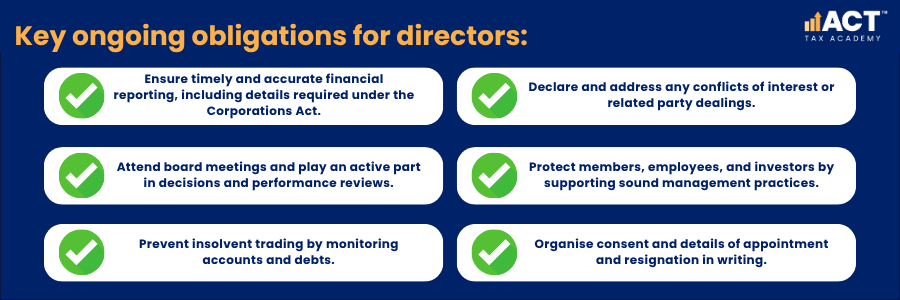
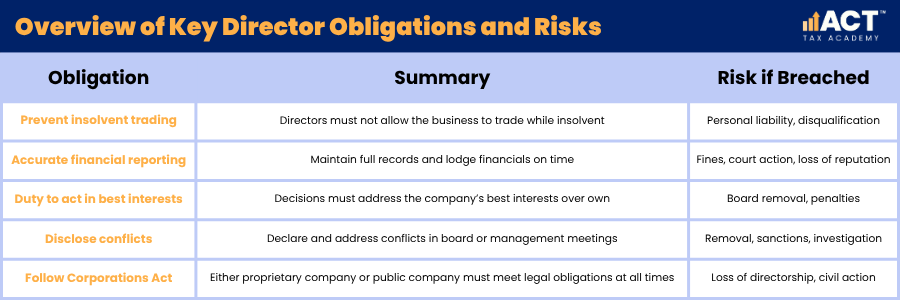
Directors have a duty to actively manage the company’s financial position, ensuring records are kept up to date and statutory obligations are satisfied. Under the Corporations Act, directors must exercise care and diligence, act in good faith, and avoid giving advantage to their own interests over those of the company. This includes making sure that the company does not enter into insolvent trading, keeping clear records, and promptly addressing conflicts of interest.
A director must also be familiar with the company’s constitution and other laws that affect their responsibilities. For example, many decisions require the consent of the board, and a director may need to disclose personal circumstances that could affect company performance. Only an individual can be appointed as a director, and their duties apply regardless of whether they are leading a proprietary company or a public company.
Why It’s Critical to Manage Director Obligations Proactively
If a director fails to meet their obligations, they can be held personally liable for company debts, disqualified from future roles, or see their professional reputation suffer. A lack of oversight in a person’s position as director can lead to accidental breaches—just as failing to monitor cash flows can unexpectedly tip a company into liquidation or voluntary administration.
For every company, acting in good faith, with proper consideration for compliance and best interests, protects both the business and those responsible for its management. Directors also owe duties to a wide range of stakeholders, including employees, shareholders, and creditors.
The Importance of a Governance and Compliance Culture
A strong governance culture helps support directors in fulfilling their duties and helps protect the company against preventable risks. Directors should establish regular processes for reviewing financial reporting, engaging with the company secretary, and accessing professional advice on complex matters. Education and ongoing training ensure directors have the skills to manage—rather than simply oversee—the company’s affairs.
Open communication also encourages employees and officers to report potential compliance issues before they become serious. Directors who routinely undertake these steps create an atmosphere of diligence, confidence, and resilience.

How Poor Management of Financial and Reporting Duties Impacts Companies
Inadequate record-keeping, delayed reporting, and lack of director oversight are some of the leading reasons companies enter liquidation or face regulatory action. Failure to monitor or act on the company’s financial position—or ignoring warnings from advisers or the company secretary—can lead a company into insolvent trading. Every director, regardless of company size, must ensure procedures are in place to prevent insolvent trading and understand that they can be personally liable if these duties are breached.
A proprietary company or public company that cannot pay its debts as they become due can quickly find itself in voluntary administration or liquidation. At this stage, directors lose their powers to act independently and must provide access to all company records for investigation. help prevent disputes if future questions about fund decisions arise. Trustees should develop systems that make it easy to separate annual from permanent records and ensure everything is up to date.

Practical Protections and Support for Directors
Directors are protected when decisions are made in good faith, with care and diligence, and proper advantage is not given to their own interests. The business judgment rule under the Corporations Act offers this support, provided that actions are backed by a reasonable degree of information and consideration. Access to professional advice—especially from the company secretary or external advisers—helps directors stay within the law.
Directors’ and officers’ insurance is also useful but does not replace the need for directors to exercise judgment, diligence, and proper oversight. Every director remains responsible for decisions made under their name.
Steps to reduce compliance risk:
- Maintain regular dialogue with qualified advisers
- Keep full and accurate company records
- Seek new skills, education, and updates as regulations change
- Keep a focus on the company’s best interests at every step
Monitoring Trends and Seeking Expert Support
Regulators take an active part in monitoring compliance. ASIC, the ATO, and larger companies are increasing their focus on transparency and timely action from boards. Directors now more than ever need support and education to manage their position, especially at times of business uncertainty.
Today, the best approach is a balance of confidence and caution. Directors should lead by example, use clear communication and make full use of the support available through professional networks, the company secretary, and considered training programs.
Tips for directors:
Ask for professional advice before major business decisions trustees and members the highest level of security and guidance for managing their own super savings.
- Define responsibilities clearly within the board and communicate to all officers
- Review company performance and solvency frequently
- Record all director decisions and discussions in writing
- Encourage new directors to seek education and training
Conclusion
Company directors in Australia play a key role in guiding the company and protecting everyone involved—from members and employees to shareholders and investors. Proactively managing financial and compliance responsibilities, keeping good records, and seeking advice ensures a director’s position is strong, secure, and respected.
Schedule regular compliance check-ins and invest in ongoing director education. Taking these actions provides better outcomes for the company’s future and safeguards all involved in its management.