Tracking Work-From-Home Expenses: Fixed Rate vs Actual Cost in Your Books
Tracking work-from-home expenses: fixed rate vs actual cost in your books often feels daunting for Australian business owners striving to balance accurate record keeping with maximised home tax deductions. Choosing between the fixed rate method and actual cost method affects not just your current tax return but also your ongoing bookkeeping, cash flow and compliance with the Australian Taxation Office.
The Challenge of Choosing a Method
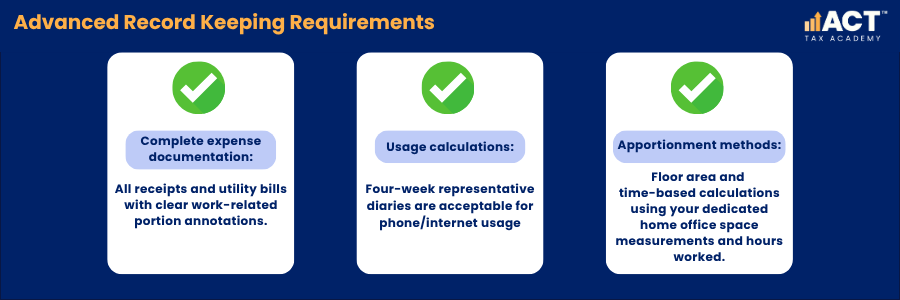
Understanding the differences between the fixed rate method and actual cost method is vital. The Australian Taxation Office has tightened its record keeping requirements, meaning for the fixed rate, estimates are no longer acceptable and you must record actual hours for the whole year. Under the actual cost method, you may still use a 4-week representative diary for apportioning phone and internet usage.
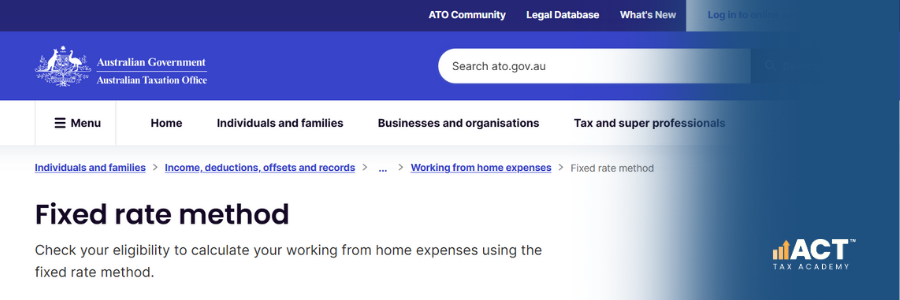
The fixed rate method uses a revised fixed rate of 70 cents per hour for 2024–25 (67c for 2022–23 and 2023–24) to cover a broad range of home office expenses. The actual cost method lets you claim the precise work-related portion of all expenses, from utility bills to office furniture, but demands comprehensive detailed records. The fixed rate requires all-hour logs for the year; the actual method requires complete expense documentation and reasonable apportionment, not necessarily hourly logs for every claim.
Selecting the wrong method or failing to meet record keeping requirements can result in denied home tax deductions, amended tax returns or penalties.
Fixed Rate Method: Simplicity with Defined Coverage
The fixed rate method provides a straightforward way to claim working from home expenses at 70 cents per hour for all hours worked at home in the income year.
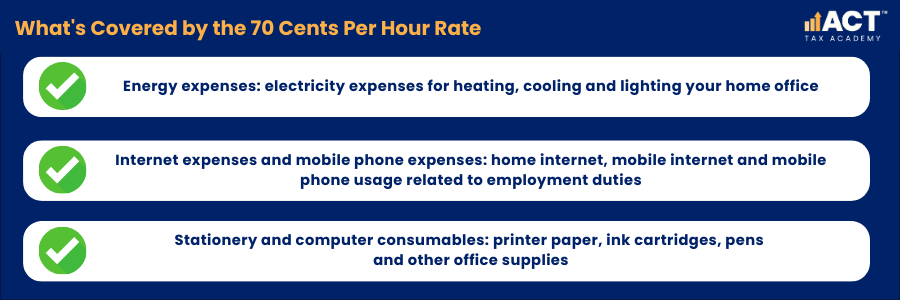
Important: If you use the fixed rate, you cannot also claim separate deductions for phone, internet, or electricity — these are already included
Separate Deductions Allowed
You may still claim separately for certain high-value items. The decline in value of office equipment and home office furniture costing over $300, such as computers or an office chair, can be claimed as depreciating assets using their effective life. Equipment under $300 qualifies for immediate deductions in the year of purchase, whilst repairs and maintenance costs for office equipment remain claimable as additional expenses.
Record Keeping Essentials
Contemporary record keeping forms the foundation of any successful fixed rate method claim. You must maintain a record of all hours worked from home for the entire income year and keep at least one bill or invoice for each type of running expense included in the rate (e.g. electricity, internet, phone) to show you incurred the cost. Purchase records for any items claimed outside the fixed rate coverage, including receipts and business use percentages, complete your documentation requirements.
Actual Cost Method: Precision and Potential for Greater Deductions
The actual cost method allows you to claim the work-related portion of every home expense, offering potential savings beyond the fixed rate but requiring more detailed records.
Comprehensive Expense Coverage
The actual method opens access to virtually all home office expenses through careful apportionment. Utility bills and other running expenses including electricity expenses, gas, water and cleaning expenses for a dedicated home office space can be claimed based on floor area and usage calculations. Internet expenses and mobile phone expenses are apportioned according to actual business usage, whilst stationery and computer consumables are claimed at actual cost rather than being limited to the fixed rate coverage.
Office equipment and home office furniture follow similar depreciation rules to the fixed rate method, with the value of depreciating assets calculated using effective life schedules. Occupancy expenses (rent, mortgage interest, council rates, insurance) are generally only claimable if part of your home is a “place of business.” Claiming these can reduce your CGT main residence exemption.
Deciding Which Method Suits You
Making the right choice depends on your personal circumstances, home office setup and willingness to maintain detailed records.
When the Fixed Rate Method Works Best
The revised fixed rate method proves ideal for several scenarios. Consistent work patterns make tracking all the hours worked from home straightforward, particularly when you maintain a regular usual pattern throughout the income year. Moderate home office costs mean your stationery and computer consumables; energy expenses and internet expenses align well with the 70 cents per hour coverage.
Business owners who prefer minimal administrative burden often choose this method, valuing simplified record keeping over potentially higher deductions. The fixed rate also suits those uncomfortable with complex apportionment calculations or lacking dedicated home office space for exclusive business use.
When the Actual Cost Method Delivers More Value
Significant home office investments justify the additional record keeping required for the actual method. Expensive office furniture, specialised equipment and substantial computer consumables often exceed the value provided by the hourly rate approach.
High running expenses make the actual cost method attractive when your utility bills, internet expenses and mobile phone expenses substantially exceed what 70 cents per hour would cover. A dedicated home office space used exclusively for employment duties unlocks additional deduction categories like cleaning expenses and potentially occupancy expenses, creating opportunities unavailable under the fixed rate method.
Comparative Calculation Process
Calculate potential deductions under both methods using actual figures from your current income year. For the fixed rate approach, multiply your total hours worked from home by 70 cents (for 2024–25), then add any separate deductions for depreciating assets or equipment under $300.
The actual cost calculation requires determining the work-related portion of each expense using appropriate apportionment methods, then totalling these actual expenses. You can use the ATO’s Home Office Expenses Calculator (covers 2013–14 to 2024–25) to compare methods.
Professional guidance from a qualified tax agent helps verify calculations and ensures compliance with current Australian Taxation Office requirements, particularly for complex situations involving occupancy expenses or substantial equipment depreciation.
Setting Up Compliant Systems
Whatever method you choose, establish reliable processes at the start of the income year. Digital record keeping using cloud-based tools can simplify both hour tracking and expense documentation, linking timesheets directly with bills and receipts for seamless organisation.
Monthly reviews of hours worked, and expenses help identify gaps early, preventing year-end scrambles to reconstruct missing detailed records. Organised storage of both physical and digital documentation, clearly labelled by expense type and income year, facilitates easy retrieval during potential Australian Taxation Office reviews.
Regular consultation with accounting professionals ensures your chosen approach remains optimal as personal circumstances change throughout the income year.

Conclusion
Choosing between the fixed rate method and actual cost method shapes your working from home tax strategy for the entire income year. The revised fixed rate offers simplicity and broad coverage of running expenses at 70 cents per hour, while the actual method provides flexibility and potential for higher home deduction amounts through detailed tracking of utility bills, office equipment, occupancy expenses and additional running expenses such as heating, cooling, water usage and specialised maintenance.
Comparing both methods with your actual hours worked and expenses, and seeking guidance from a tax agent, helps ensure your home office tax deductions are maximised and compliant, allowing you to focus on your business with confidence as your personal circumstances and expense categories may change year to year.