
Director ID and ASIC Compliance: What Bookkeepers Need to Track
Director ID and ASIC compliance represents critical obligations that bookkeepers must track to ensure their clients maintain proper corporate governance. With the Australian Securities and Investments Commission (ASIC) now actively pursuing enforcement action against directors who fail to obtain their required identification numbers, understanding these compliance requirements has become essential.
Why Director ID Compliance Matters for Your Bookkeeping Practice
The Director Identification Number system creates significant compliance obligations that directly impact your bookkeeping responsibilities. When directors fail to meet their identification requirements, the consequences extend beyond individual penalties to affect your client relationships and practice reputation. The Australian Business Registry Services (ABRS) administers this system to trace directors across all their appointments and prevent fraudulent director identities.
The Real Impact of Non-Compliance
ASIC’s recent enforcement actions demonstrate serious consequences when directors fail to comply with identification requirements. The organisation has prosecuted company directors for failing to obtain their required Director Identification Numbers, resulting in substantial penalties that affect business operations.
These enforcement actions particularly target newly appointed directors who haven’t obtained their unique identifier before taking up their positions. The system applies to existing directors, new company appointments, and directors of registered foreign companies.

Your Role in Director Compliance
As a bookkeeper, you serve as a crucial compliance checkpoint without overstepping professional boundaries. While you cannot apply for a Director ID on behalf of clients, you play an essential role in tracking compliance status and identifying potential issues.
Your responsibility involves maintaining accurate records of Director Identification information and monitoring compliance deadlines across your client portfolio. This includes ensuring that more than one director situations are properly managed and that each director’s unique number is correctly documented.
Creating Effective Tracking Systems for Director ID Compliance
Systematic tracking approaches ensure no client obligations slip through administrative gaps while maintaining the professional standards your clients expect. Developing comprehensive monitoring mechanisms protects both your clients and your practice from regulatory issues.
Establishing robust tracking begins with understanding the various scenarios that require Director ID compliance. These include company director appointments, registered Australian body positions, and roles within organisations that require director identification under Australian law.
Building Your Compliance Database
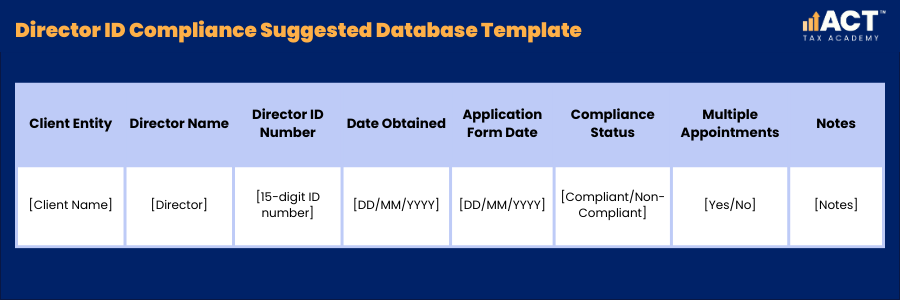
Your compliance database should capture essential director information across all client entities. Include fields for director name, Director Identification Number, date obtained, application form submission dates, and compliance status across multiple appointments.
Regular database updates ensure accuracy when directors change roles, companies undergo restructuring, or new entities are established. Schedule quarterly reviews to identify gaps in documentation and verify that all directors maintain valid identification numbers.
Track whether directors applied online through the ABRS website or submitted a paper application form. Note requirements for certified copies of identity documents and standard identity strength verification processes.
Monitoring New Director Appointments
Implement systematic monitoring for director appointments across your client base. This involves establishing clear communication protocols about planned director changes and creating workflows that verify Director ID compliance before appointments are finalised.
When clients notify you of planned appointments, immediately confirm whether the prospective director already holds a valid Director Identification Number. Provide support and guidance about the online application process if they need to apply for their unique identifier.
Document all director details including appointment dates, company entities involved, and confirmation that Director ID requirements have been satisfied. This creates a comprehensive audit trail for compliance purposes.

Supporting Clients Through the Compliance Process
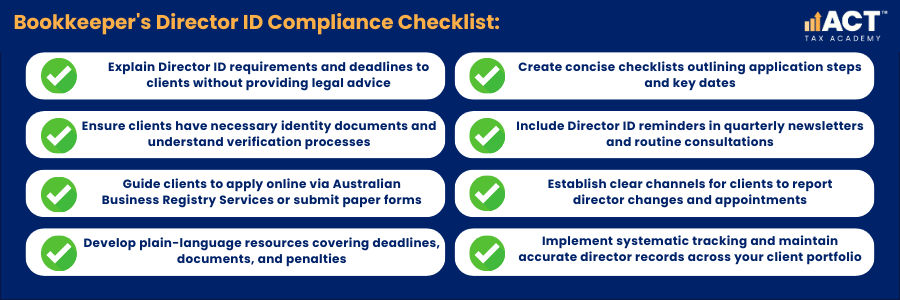
While bookkeepers cannot submit applications on behalf of clients, you can provide valuable support throughout the Director ID application process. This includes explaining requirements, helping clients understand deadlines, and ensuring they have access to necessary documentation.
Your role involves educating clients about Director Identification obligations without providing legal advice about compliance requirements. Focus on practical support that helps them understand the application process successfully. while creating opportunities for you to enhance your workplace culture and employee retention strategies.
Providing Guidance and Resources
Develop educational resources that explain Director ID requirements your clients can easily understand. These materials should cover application deadlines, required identity documents, penalties for non-compliance, and ongoing obligations once identification numbers are obtained.
Help clients understand they can apply online through the Australian Business Registry Services website or submit a paper application form if they prefer. Explain that they’ll need certified copies of identity documents and may require standard identity strength verification.
Create simple checklists that outline the application process, required documentation, and key deadlines. This practical support helps clients complete their applications successfully.
Ongoing Compliance Communication
Regular client communications about Director ID compliance help maintain awareness of these obligations throughout the year. Include Director ID reminders in quarterly client newsletters and during routine bookkeeping consultations. Remember that each person can only hold one Director ID number, even if they serve as their own director across multiple companies or act as a company secretary in various organisations.
Help clients understand that their Director ID confirms their identity across all appointments and allows regulators to trace director’s relationships between different entities, including Aboriginal and Torres Strait Islander corporations that require director identification.
Director ID compliance represents an ongoing responsibility that requires systematic tracking, proactive monitoring, and comprehensive record-keeping from bookkeepers. Take action today to review your current tracking systems and identify areas where enhanced Director ID compliance monitoring can better protect your clients from multiple Director IDs confusion and ensure they can access Director ID online services effectively.