Impact of Stage 3 Tax Cuts on PAYG Withholding and Cash Flow Planning
The Impact of Stage 3 Tax Cuts on PAYG Withholding and cash flow planning has created significant changes for Australian businesses since 1 July 2024. These comprehensive tax reforms have reduced withholding amounts across all income brackets, fundamentally altering how businesses manage their cash flow and payroll obligations.
Understanding the Stage 3 Tax Cuts and Their Business Impact
The revised Stage 3 tax cuts represent the most significant change to Australia’s personal income tax system in recent years. These changes directly impact how much tax businesses must withhold from their employees’ wages, creating a ripple effect throughout the economy.
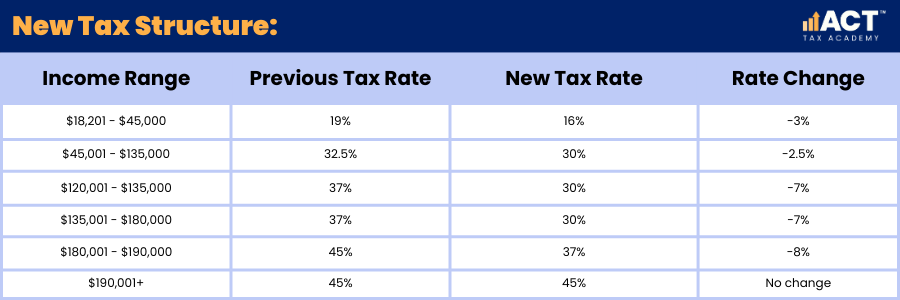
Benefits of the New Tax Structure
The new tax structure shows clear benefits across all income levels.
How PAYG Withholding Changes Affect Your Business
Your business now withholds less tax from employee wages, which means more money stays in your employees’ pockets each pay cycle. For middle income earners and workers across all income brackets, this translates to meaningful increases in take home pay each week. While this benefits your employees, it also means your business remits less PAYG withholding to the Australian Taxation Office (ATO) with each payroll cycle.
The immediate impact on your business operations includes reduced PAYG withholding amounts, which creates a temporary increase in your business bank account balance. However, this improvement requires careful management to avoid masking underlying trading issues or creating false impressions about your business’s actual performance.
Compliance Requirements and System Updates
Your payroll systems should have automatically updated to reflect the new withholding rates from 1 July 2024. The ATO requires all employers to use the correct PAYG withholding tables for salaries and wages from this date. If you haven’t noticed changes in your PAYG withholding amounts, you should verify that your payroll software has been properly updated.
The ATO has published updated withholding schedules and tax tables that include all 15 withholding schedules and 12 tax tables. These updates ensure accurate withholding calculations across different payment frequencies and employee classifications.
Strategic Cash Flow Planning Opportunities
The reduced PAYG withholding creates new cash flow planning opportunities that savvy business owners can use for growth and operational improvements. However, these opportunities require careful analysis and strategic implementation.
Immediate Cash Flow Benefits
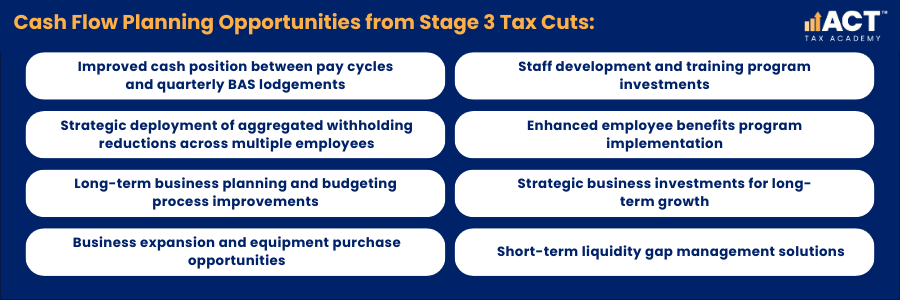
The decrease in PAYG withholding means your business retains more cash between pay cycles and quarterly Business Activity Statement (BAS) lodgements. This improved cash position provides breathing room for operational expenses and short-term investment opportunities.
Income earners across all brackets are seeing significant reductions in their tax liability, which means substantial reductions in your withholding obligations. For businesses with multiple employees, these individual reductions aggregate into significant cash flow improvements that can be strategically deployed.
Long-term Planning Considerations
The Stage 3 tax cuts represent permanent changes to Australia’s tax system, not temporary relief measures. This permanence allows you to incorporate these cash flow improvements into your long-term business planning and budgeting processes.
Business owners should adjust their cash flow forecasts to reflect the reduced PAYG withholding amounts while maintaining realistic expectations about their operational performance. The improved cash position should be viewed as an opportunity for strategic investment rather than a buffer for operational inefficiencies.
Investment and Growth Opportunities
The additional liquidity created by reduced withholding provides opportunities for business expansion, equipment purchases, or staff development initiatives. These improvements in cash flow timing can be particularly valuable for businesses that previously struggled with short-term liquidity gaps between revenue collection and tax obligations.
Some businesses may find opportunities to accelerate superannuation contributions or implement employee benefits programs that were previously cash flow prohibitive. The improved cash position also creates opportunities for strategic business investments that can drive long-term growth.
Adapting Your Payroll and Compliance Processes
Successfully understanding the Stage 3 tax cuts requires updating your payroll processes and ensuring ongoing compliance with evolving ATO requirements. These administrative changes are crucial for maintaining accurate records and avoiding compliance issues.
Payroll System Verification and Updates
Your payroll system should automatically reflect the new tax withholding rates, but verification is essential. Check that your software is calculating withholding amounts based on the updated tax tables that took effect on 1 July 2024. Any discrepancies between expected and actual withholding amounts should be addressed immediately.
The ATO provides comprehensive tax tables for weekly, fortnightly, and monthly pay cycles that your payroll system should reference. These tables ensure accurate withholding calculations across different employee payment arrangements and classifications.
Managing Transitional Challenges
Some businesses may experience temporary reconciliation challenges as they transition between old and new withholding amounts. Ensure your accounting records accurately reflect the timing of these changes and that your Business Activity Statement (BAS) lodgements align with actual withholding amounts.
The transition period may require additional attention to payroll reconciliations and employee pay slip accuracy. Employees may notice changes in their take home pay, so clear communication about the tax cuts can help address any questions or concerns.
Upcoming PAYG Withholding Cycle Changes
Beyond the Stage 3 tax cuts, significant changes to PAYG withholding cycles will take effect from 1 July 2025. Businesses with annual withholding amounts between $25,000 and $1 million will need to report and pay monthly instead of quarterly. This change will further impact cash flow management by requiring more frequent remittances to the ATO.
Large withholders with annual amounts exceeding $1 million will need to remit payments within six to eight days of each payroll event. These changes will require updated payroll systems and adjusted cash flow planning to accommodate more frequent payment obligations.
Managing the Cost-of-Living Benefits for Your Team
The Stage 3 tax cuts deliver meaningful cost of living relief to your employees while creating opportunities for you to enhance your workplace culture and employee retention strategies.
Supporting Employee Financial Wellbeing
Your employees are experiencing real improvements in their weekly pay packets, with many workers seeing substantial increases in their take home pay. This tax relief helps combat the ongoing cost of living pressures that have affected Australian families over recent years.
Low- and middle-income earners particularly benefit from these new tax cuts, with the threshold changes ensuring more money stays in their pockets each payday. This improvement in their financial position can translate to increased employee satisfaction and reduced financial stress in your workplace.
Strategic Workforce Planning
The additional money your employees are keeping can create opportunities for strategic workforce initiatives. You might consider how these improvements in employee take home pay could support discussions about professional development, workplace benefits, or team building activities.
These living tax cuts emerged from the federal budget as a direct response to the cost-of-living crisis affecting Australian families. The government designed these changes to provide immediate relief while managing concerns about the budget deficit and long-term fiscal responsibility. For your business, this means employees across all levels of taxable income are experiencing genuine improvements in their weekly pay, creating a more positive workplace environment.
The Stage 3 tax cuts provide immediate benefits to both employees and employers through reduced withholding obligations and improved cash flow positions. With proper planning and implementation, the Stage 3 tax cuts can become a valuable tool for driving business growth and operational excellence.