How to Reconcile ATO Notices of Assessment with Your Bookkeeping Records
Learning how to reconcile ATO Notices of Assessment with your bookkeeping records can save you from unexpected tax bills and costly discrepancies. Many Australian business owners struggle with mismatched figures between what the Australian Taxation Office expects and what their internal financial records show.
Understanding the What is Notice of Assessment
The reconciliation of your Notice of Assessment with bookkeeping records is more critical than many business owners realise. When discrepancies exist between your internal records and what the ATO shows, it creates a cascade of potential problems that can significantly impact your business operations.
Why Reconciliation Matters for Your Business
Your Notice of Assessment represents the ATO’s official summary of your Income Tax Return and serves as the final tax outcome for the relevant financial year. This document confirms your income tax position and determines whether you’ll receive a tax refund or need to pay tax. When your internal bookkeeping records don’t align with this assessment carefully, it signals potential issues that require immediate attention.
The Notice of Assessment shows your taxable income for the year, the tax payable on your taxable income, any tax credits applied during the income year, and the balance of tax payable or refundable. Understanding these components helps you verify that your financial records accurately reflect your true tax situation and ensures you’re claiming deductions correctly.
Common Consequences of Unreconciled Records
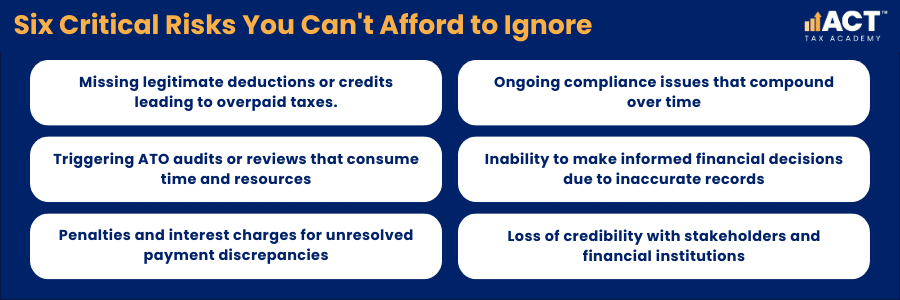
Businesses that fail to reconcile their records face several significant risks. When your bookkeeping doesn’t match your tax assessment, you might miss legitimate deductions or credits, resulting in overpaid taxes that could have been avoided. More seriously, discrepancies can trigger ATO audits or reviews, which consume valuable time and resources.
If you owe money according to your Notice of Assessment but your records suggest otherwise, this mismatch needs resolution before the due date specified on your payment advice. Failing to address these differences can lead to penalties, interest charges, and ongoing compliance issues that compound over time.
The Foundation for Financial Confidence
Proper reconciliation creates a solid foundation for all your financial decision-making. When your records align with your Notice of Assessment, you gain complete visibility into your true tax position and can make informed decisions about cash flow, investments, and business planning. This alignment also ensures you’re prepared for any future ATO inquiries and can respond confidently with supporting documentation.
Understanding What Your Notice of Assessment Contains
Before you can effectively reconcile your bookkeeping records, you need to understand exactly what information appears in your Notice of Assessment and how it relates to your tax obligations.
Key Components of Your Notice of Assessment
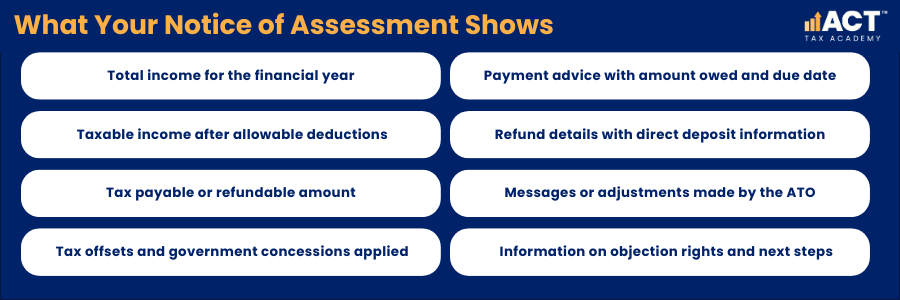
Your Notice of Assessment contains several critical pieces of information that directly impact your tax affairs. The document shows your total income for the financial year, including Australian sourced income from all sources such as employment, business operations, rental income, and investment returns. This total income figure should match the revenue figures in your bookkeeping system for the same period.
The assessment also displays your taxable income, which is your total income minus any allowable deductions you’ve claimed. This figure determines how much tax you’ll pay and forms the basis for calculating your final tax outcome. Any tax offsets you’re entitled to, such as the tax-free threshold or other government concessions, are clearly shown and reduce your final tax bill.
Payment and Refund Information
Your Notice of Assessment includes specific details about your tax position. If you’re due a refund, it will show the amount and provide information about when you can expect the direct deposit into your nominated bank account using the bank account details on file. If you have a tax bill to pay, the payment advice section outlines exactly how much you owe and the due date for payment.
For businesses experiencing financial difficulties or serious financial hardship, the Notice of Assessment may include information about payment arrangements or options to manage your tax debt over time. Understanding these details helps you plan your cash flow and ensures you meet your tax obligations on schedule.
Additional Information and Next Steps
Your Notice of Assessment may include messages from the ATO regarding specific aspects of your tax return or changes they’ve made during processing. These might relate to adjustments in your claimed deductions, corrections to your reported income, or requests for additional supporting documentation for future tax returns.
The document also provides information about your rights, including how to object to the assessment if you believe there’s an error in the ATO’s evaluation of your tax return. Understanding these rights and processes ensures you can take appropriate action if discrepancies arise between your records and the assessment.
Essential Steps for Effective Reconciliation
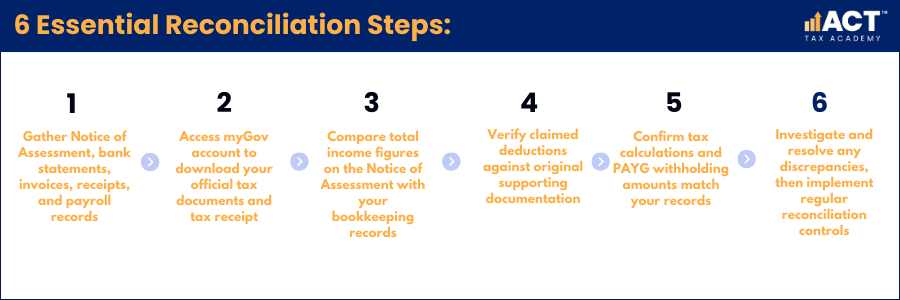
Reconciling your bookkeeping records with your Notice of Assessment requires a systematic approach that addresses both technical accuracy and proper documentation. Following these structured steps ensures you identify and resolve discrepancies before they become compliance issues.
Gathering Your Documentation
Start by collecting all relevant financial documents for the financial year in question. You’ll need your Notice of Assessment, complete bank statements, all invoices and receipts, payroll records, and any Business Activity Statement submissions. Additionally, gather supporting documentation such as payment summaries from employees, contractor payments, and any third-party information statements you received.
Access your myGov account to download your Notice of Assessment and tax receipt if you haven’t received physical copies. These documents are automatically sent to your myGov inbox when your tax return is processed, typically within two weeks of lodgement if you used online lodgement or worked with a registered tax agent.
Comparing Income Figures
Begin your reconciliation by comparing the total income figure on your Notice of Assessment with your bookkeeping records. The assessment includes all reported income for the tax year, including salary and wages, business revenue, rental income, and investment earnings such as dividends and bank account interest. Cross-reference these amounts with your accounting software’s income reports and bank statements to ensure every income source is captured accurately.
Pay particular attention to timing differences, as income may be recorded in your books during one period but reported to the ATO in another. For businesses operating on different reporting methods, ensure you understand how these timing differences affect the reconciliation process and document any legitimate variations.
Verifying Deduction Claims
Systematically review all deductions claimed on your tax return against your expense records and supporting documentation. Each claimed deduction should be traceable back to original receipts, invoices, or other substantiating documents. Look for any expenses that were recorded in your bookkeeping system but may not have been properly included in your tax return preparation.
Common areas where discrepancies occur include work-related expenses, depreciation calculations, charitable donations, and business-use portions of mixed-purpose assets. Ensure that any personal use components have been correctly excluded from business deductions, as the ATO closely scrutinises these areas during their review processes.
Reconciling Tax Calculations
Compare the tax calculations on your Notice of Assessment with your own calculations or those provided by your tax agent. Verify that the correct tax rates have been applied, especially if your business structure involves multiple tax entities or special concessions. Check that all applicable tax offsets and credits have been correctly applied and match your expectations based on your circumstances.
Review any PAYG Withholding amounts shown on the assessment against your records of tax instalments paid throughout the income year. These pre-payments should reduce your final tax bill, and any discrepancies need investigation to ensure you’re receiving proper credit for taxes already paid.
Addressing Identified Discrepancies
When you discover discrepancies between your records and the Notice of Assessment, investigate the root cause immediately. Common causes include data entry errors, missed transactions, incorrect categorisation of income or expenses, or timing differences between when transactions were recorded and when they were reported for tax purposes.
Document your findings and determine whether the error lies in your bookkeeping system, the tax return preparation, or potentially in the ATO’s processing. If you believe your Notice of Assessment contains errors, you have the right to request amendments or lodge an objection with the Administrative Appeals Tribunal if necessary. However, most discrepancies can be resolved by correcting your internal records or providing additional supporting documentation to clarify your position.
Implementing Ongoing Controls
Establish regular reconciliation procedures to prevent future discrepancies. Schedule monthly or quarterly reviews of your bookkeeping records to ensure accuracy and completeness before year-end tax return preparation begins. Implement controls around data entry, transaction coding, and approval processes to minimise errors at the source.
Consider working with a registered tax agent or tax professional who can provide ongoing support with your tax affairs and ensure your bookkeeping practices align with ATO requirements.
Your reconciliation process is an investment in your business’s financial integrity and regulatory compliance. Take action today by reviewing your current bookkeeping practices and implementing the controls necessary to ensure your records always align with your tax obligations.