
How Bookkeeping Advisory Services Support Better Business Decisions
Bookkeeping advisory services give businesses clearer financial insights so owners and managers can make better decisions about cash flow, costs, pricing, staffing and business growth. When financial records are incomplete, outdated or difficult to understand, it becomes harder to see where the business stands and what needs attention.
Bookkeeping Advisory Turns Financial Records into Practical Insights
Bookkeeping records show what has happened in your business, while advisory services help explain what those figures may mean for future decisions. This gives business owners access to useful insights rather than reports that are difficult to interpret or rarely used. A bookkeeping adviser can review financial information, identify changes and help you focus on the areas that matter most. Their role is to provide clear advice and guidance on your financial information while helping you remain involved in important business decisions.
Moving Beyond Transaction Processing
Day-to-day bookkeeping often covers essential administration, while advisory adds another layer of understanding. Common areas that may be reviewed include:
- bank reconciliations and transaction coding;
- accounts payable and accounts receivable;
- payroll, Single Touch Payroll (STP) and employee-related records;
- cash flow and upcoming commitments;
- profit and loss reporting; and
- budgets compared with actual results.
For example, a business may report strong sales while still experiencing cash flow pressure. Advisory support can help explore whether slower customer payments, higher operational costs or increased spending are contributing to the difference.
Accurate Financial Information Supports Better Management
Reliable financial information gives owners and managers a stronger basis for making decisions. When records are updated regularly and accounts are reconciled correctly, reporting can provide a clearer view of revenue, expenses, available cash and outstanding commitments. This transparency becomes particularly important when businesses are considering growth opportunities or managing changing costs. Instead of relying on assumptions, management can use current information to assess resources and understand the possible financial effect of a decision.

Financial Reports Become Easier to Use
A profit and loss report can show whether the business is generating a profit, while a balance sheet can help explain what the business owns and owes. Cash flow information provides another perspective by showing whether money is available to meet upcoming expenses. Advisory services bring these reports together in a practical way. The focus is on explaining what the information means for the business rather than expecting clients to interpret accounting reports without support.
Cash Flow Becomes Easier to Track and Manage
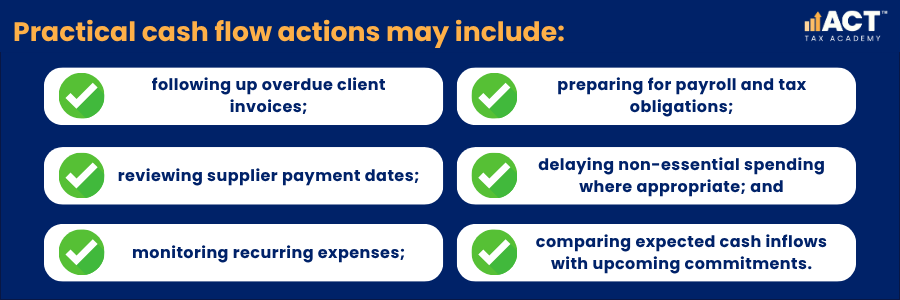
Cash flow is essential to everyday business management because making a profit does not always mean cash is immediately available. Bookkeeping advisory can help you track when money enters the business, when payments are due and where shortfalls may develop. Regular monitoring gives businesses an opportunity to address potential issues before they become more difficult to manage. It also helps owners understand which operational decisions may affect their available cash.
Advisory Provides Context Before Major Commitments
Consider a business planning to employ another team member. Looking only at current sales may not provide enough information to understand whether the business can comfortably manage the additional cost. An adviser can help management review wages, super guarantee contributions for each payday, operating expenses, customer payments and available cash before a decision is made. This support provides useful context while leaving the final decision with the business owner.
Advisory Helps Businesses Identify Important Financial Trends
Regular bookkeeping and reporting make it easier to identify trends that may otherwise go unnoticed. Businesses can track changes in expenses, customer payment behaviour, revenue and profit margins over time. These insights can support discussions about pricing, budgets, operational improvements and business growth. They can also help management identify areas of risk and determine where further advice, research or professional expertise may be needed.
Industry Changes Can Be Viewed in Business Context
Industry trends can affect different businesses in different ways. Rising supplier costs, changes in customer demand or higher employment expenses may all influence financial performance. Bookkeeping advisory helps you compare those broader changes with your own figures. This allows management to focus on what is actually happening within the business rather than acting on general opinions or assumptions.
Better Records Support Compliance and Reporting Responsibilities
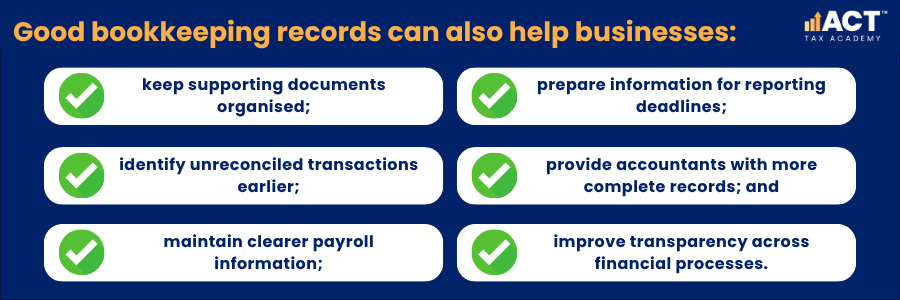
Reliable bookkeeping plays an important role in supporting Australian compliance requirements. Accurate records can make it easier to prepare information for Goods and Services Tax (GST), Business Activity Statements (BAS), payroll, Pay as You Go (PAYG) withholding and other tax, superannuation and reporting responsibilities. Advisory services can also help businesses understand what information should be maintained and when specialist advice may be required. Bookkeeping support does not replace advice from a registered tax or BAS agent where tax or BAS advice is required, or legal or audit expertise, but it can provide a stronger foundation for working with professional advisers.
Advisory Supports More Confident Business Growth
Business growth often creates additional financial responsibilities. More clients, employees, suppliers or projects can increase the amount of information that needs to be managed and make financial administration more demanding. Bookkeeping advisory can support growth by helping businesses maintain clear systems and review the financial effect of expansion. The value comes from having accurate information, practical guidance and ongoing support as operations become more complex.
Planning Decisions with Greater Care
Before committing to a major purchase, expanding a service or increasing staff numbers, management can review the expected cost and available resources. This process does not guarantee success, but it can reduce the risk of making an important decision without sufficient financial understanding. A bookkeeping partner can also help identify what information should be prepared before a meeting with an accountant, lender or other adviser. This can make those discussions more focused and productive.
Choosing the Right Level of Advisory Support
Not every business needs the same level of advisory service. The right approach depends on business size, financial complexity, the skills available within the team and the decisions management needs to make. Some businesses may benefit from monthly reporting and cash flow reviews, while others may need more frequent support with payroll, accounts receivable, budgets or management reporting. The goal should be to provide useful information that supports better decisions rather than adding administration without practical value.
When considering bookkeeping advisory support, look for a service that can:
- provide guidance that reflects your actual business circumstances.
- explain financial information in clear language;
- provide reporting that is relevant to your business;
- identify issues that may need management attention;
- support your compliance processes without overstating guarantees;
- work effectively with your accountant or other advisers; and
- provide guidance that reflects your actual business circumstances.

Build Practical Bookkeeping Skills
Strong bookkeeping skills help business owners and bookkeeping professionals understand how accurate records connect with reporting, compliance and everyday management decisions. Building knowledge in GST, BAS, reconciliations, cash flow and accounting software can make it easier to maintain reliable records, identify issues and work effectively with professional advisers. If you are ready to move from theory to practical application, the ACT Tax Academy Bookkeeping Online Course provides structured online training designed specifically for Australian small business owners and aspiring bookkeepers. You will learn how to set up and manage GST, prepare BAS, use Xero effectively, and implement compliant bookkeeping systems with confidence.