Why Cash Flow Management Is Critical for Small‑Business Budgeting (Not Just Profit)
Why cash flow management is important for budgeting comes down to one practical issue: a business can be profitable on paper and still struggle to pay bills when they fall due. Cash flow management helps business owners understand when money is coming in, when cash outflows are expected and whether there is enough cash available to keep the business running smoothly. Profit remains an important measure of financial performance, but it does not show the full timing of customer payments, supplier payments, loan repayments and operating expenses. A clear cash flow plan gives you a more realistic view of your immediate cash needs and supports better financial decisions throughout the year.
Profit Does Not Always Mean Cash Is Available
An income statement shows revenue, expenses and profit over a period, while a cash flow statement focuses on actual cash inflows and cash outflows. This difference matters because income may be recorded before the money reaches your bank account, while expenses may need to be paid immediately. For example, a business may record strong monthly income but still experience cash shortages if customers take several weeks to pay. Effective cash flow management helps you look beyond profit and understand whether enough money is actually available to meet upcoming commitments.
Cash Flow Management Strengthens Business Budgeting
A cash flow budget connects expected income with expected expenses over a specific period. Instead of looking only at annual totals, you can see when cash is likely to enter the business and when it will need to leave. This makes budgeting and cash planning more useful for day-to-day business operations. When you manage cash flow alongside your broader financial planning, you can identify cash needs early, schedule payments more carefully and reduce the risk of unexpected pressure on your bank account.
Cash Flow Forecasting Helps Prevent Shortages
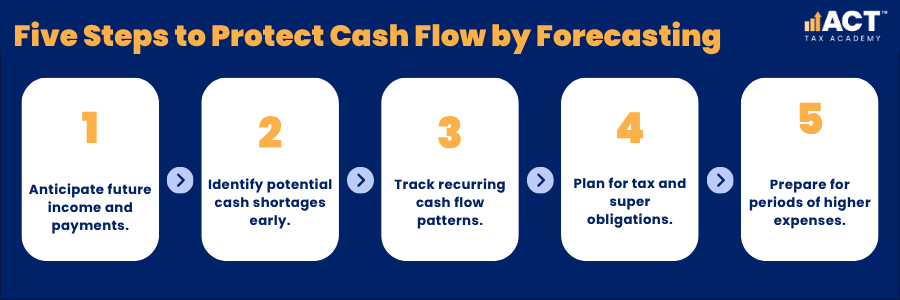
Cash flow forecasting estimates future income and future payments so you can identify potential gaps before they become cash flow problems. A forecast can include customer payments, fixed costs, supplier payments, debt payments, tax and super obligations, and planned purchases. Regular forecasting also helps business owners recognise cash flow patterns. If certain months consistently produce lower cash inflows or higher expenses, you can prepare for those periods instead of reacting after a cash shortage has already occurred.
Healthy Cash Flow Supports Financial Stability
Healthy cash flow gives a business more flexibility to meet normal operating expenses and respond to unexpected expenses. Maintaining liquidity means having enough accessible cash to cover short-term commitments without disrupting normal business operations. Cash flow stability is especially important during periods of slower trading, economic downturns or supply chain disruptions. Building cash reserves and maintaining a suitable cash reserve can strengthen financial resilience by giving the business more room to manage unexpected costs without immediately cutting essential spending.
Better Cash Management Improves Payment Planning
Good cash management helps you organise payment schedules around the timing of cash inflows. Understanding when customer payments are expected can help you plan supplier payments, loan repayments, super guarantee contributions and other recurring commitments more carefully. Clear payment terms can also support more reliable cash flow. When customers understand when invoices are due and your records show which amounts remain unpaid, you can follow up consistently and improve cash flow without relying only on higher sales.
Expense Tracking Gives You a Clearer Cash Position
Expense tracking is an important part of flow management because small, regular costs can affect your available cash over time. Monitoring both fixed costs and variable spending gives you a clearer picture of where money is going and whether current spending is consistent with your cash flow budget. Good bookkeeping supports this process by helping you keep accurate and complete business records. These records make it easier to review your financial statements, compare actual results with your cash flow forecasting and adjust your cash flow plan when business conditions change.

Working Capital Keeps Daily Operations Moving
Working capital is the money available to support short-term business operations after allowing for short-term obligations. Strong working capital management can help a business maintain liquidity, pay bills on time and continue smooth operations even when income and expenses do not occur at the same time. Inventory management can also affect working capital. Holding more stock than the business needs can tie up cash, while insufficient stock may affect sales, so business leaders need to balance operational needs with the amount of cash available.
Cash Flow Planning Supports Better Business Decisions
Reliable cash flow information helps business owners decide when the business can afford capital investments, expanding operations or other growth initiatives. A business with strong profit but limited available cash may need to delay a major purchase until its cash position improves. Cash flow planning also helps separate immediate cash needs from longer-term financial goals. This can support more careful decisions about strategic initiatives while helping the business avoid cash shortages that could affect everyday operations.
Rolling Forecasts Help Businesses Respond to Change
A cash flow forecast should not remain unchanged for an entire year. Rolling forecasts allow you to update expected income, expected expenses and payment timing as new information becomes available. Scenario planning can also support stronger contingency plans. For example, you can review what may happen if customer payments are delayed, operating expenses increase or sales are lower than expected, then decide what steps may help maintain financial stability.
Practical Steps to Maintain Cash Flow Stability
Effective cash flow management does not require a complicated system. The aim is to maintain an up-to-date understanding of what cash is available, what money is expected and what payments are approaching.
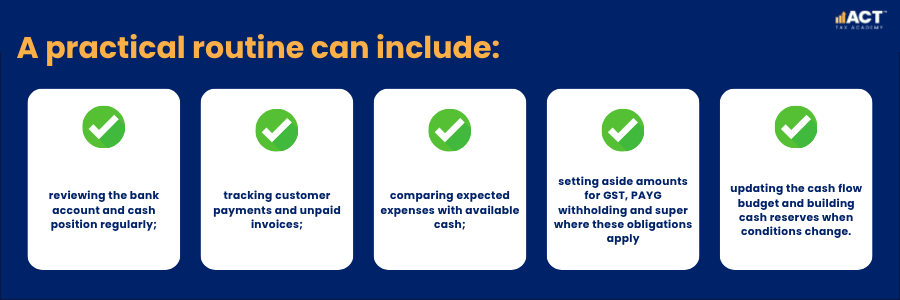
These habits provide business owners and finance teams with essential tools for managing financial risk. They can also support operational efficiency by reducing last-minute decisions caused by poor visibility over cash.
Cash Flow and Profit Work Best Together
Profit tells you whether the business is generating more income than expenses over time, while cash flow shows whether the business has enough money available when payments are due. Looking at both measures gives you a more complete picture of financial health. For sustainable growth, business owners need to monitor financial performance without losing sight of liquidity. A profitable business still needs effective cash flow management to meet obligations, respond to unexpected costs and make measured decisions about future opportunities.

Build Practical Bookkeeping Skills
Strong budgeting depends on more than reviewing profit at the end of the month or financial year. By combining cash flow management, cash flow forecasting, expense tracking and accurate financial records, you can make better financial decisions, maintain financial stability and keep your business running smoothly. If you are ready to move from theory to practical application, the ACT Tax Academy Bookkeeping Online Course provides structured online training designed specifically for Australian small business owners and aspiring bookkeepers. You will learn how to set up and manage GST, prepare BAS, use Xero effectively, and implement compliant bookkeeping systems with confidence.