Who Has to Pay the Medicare Levy? What Small‑Business Owners and Sole Traders Need to Know at Tax Time
Who has to pay Medicare levy is an important question for small-business owners and sole traders preparing their tax return, as Australian residents for tax purposes are generally subject to the Medicare levy based on their taxable income unless a reduction or exemption applies. The amount you pay depends on your income level and personal circumstances, while some taxpayers may qualify for a Medicare levy reduction or exemption. Understanding the difference between the Medicare levy and Medicare Levy Surcharge (MLS) can also help you prepare for tax time. Although both can form part of your tax bill, they have different income thresholds, exemption rules and private health insurance considerations.
Medicare Levy and How It Relates to Your Taxable Income
The Medicare levy helps fund Medicare, Australia’s public health system, which provides eligible people with access to free or subsidised treatment and other Medicare benefits. Most Australian taxpayers pay the Medicare levy through the income tax system, with the standard levy generally calculated at 2% of taxable income. For a sole trader, taxable income is not the same as total business revenue. Your assessable business income, allowable deductions and other relevant income and deductions contribute to your annual taxable income, which is then used to determine your income tax and Medicare levy position.t.
Medicare Levy Calculations for Sole Traders
A sole trader operates a business as an individual rather than through a separate company. This means business profit forms part of the individual’s tax position for the financial year. Accurate bookkeeping therefore matters well before you complete your tax return. Keeping reliable records of income and allowable business expenses helps establish the taxable income used for your tax calculations and reduces the risk of working from incomplete figures.
Medicare Levy Reductions for Lower-Income Taxpayers
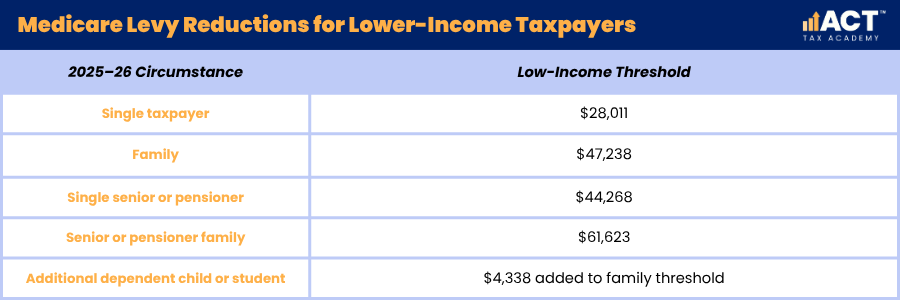
A Medicare levy reduction can apply when your taxable income is within the relevant low-income range. If your taxable income is at or below the applicable lower income threshold, you generally do not pay the Medicare levy, while taxable income above that threshold but within the phase-in range can result in a reduced Medicare levy. The income thresholds depend on personal circumstances and can differ for a single person, families, seniors and pensioners. Where you qualify for a family-based Medicare levy reduction, family income and the number of dependent children can affect the calculation because the family income threshold increases for each relevant dependent child or student.
Seniors, Pensioners and Family Circumstances
Different thresholds can apply to taxpayers who are entitled to the Seniors and Pensioners Tax Offset (SAPTO). Entitlement to an invalid or invalid carer tax offset for a child can also be relevant when determining eligibility for a family-based Medicare levy reduction. For taxpayers eligible for a family-based reduction, family taxable income generally reflects the combined taxable income of you and your spouse, or your taxable income if you are a sole parent. Because income thresholds can change between financial years, use current Australian Taxation Office (ATO) information rather than relying on figures from an earlier tax return.
Medicare Levy Exemptions Depend on Specific Circumstances
A Medicare levy exemption is available only when the relevant criteria are satisfied. The ATO exemption categories cover people who meet certain medical requirements, people who are foreign residents for tax purposes, and people who are not entitled to Medicare benefits and meet the applicable conditions. An exemption may apply for a full financial year or only part of it. Your residency status, Medicare eligibility and the period for which you meet the relevant conditions can therefore affect whether you pay the Medicare levy.
Medicare Entitlement and Supporting Information
If you claim a Medicare levy exemption because you were a temporary resident for Medicare purposes and were not entitled to Medicare benefits, you generally need a Medicare Entitlement Statement from Services Australia showing the period you were not entitled to Medicare. Being an Australian citizen, foreign resident or temporary resident does not by itself determine every person’s Medicare levy outcome because tax residency and Medicare eligibility involve separate considerations. If you believe an exemption applies, keep the documents relevant to your circumstances. Clear records make it easier to prepare your tax return and establish the period for which an exemption may be available.

Private Hospital Insurance and the Medicare Levy Surcharge
Private hospital insurance generally does not remove your obligation to pay the standard Medicare levy. Instead, an appropriate level of private patient hospital cover can affect whether taxpayers above the relevant income thresholds have to pay the separate Medicare Levy Surcharge (MLS). You may have to pay the MLS if your income for MLS purposes exceeds the relevant surcharge threshold and you, your spouse or your dependent children do not have an appropriate level of private patient hospital cover. The applicable MLS rate depends on income for MLS purposes and the relevant single or family tiers.
Private Health Cover Has Different Tax Consequences
Not every type of private health insurance provides an appropriate level of private patient hospital cover for MLS purposes. General treatment or extras cover alone is not private patient hospital cover; the hospital cover must be provided by a registered health insurer and satisfy the applicable requirements. This distinction matters for high income earners reviewing whether they may need to pay MLS. The Medicare levy and MLS should be considered separately rather than assuming private health cover automatically removes both charges.

Income and Family Circumstances Can Change the Result
Your annual income is only one part of determining your Medicare levy position. Family income, combined income, dependent children and other personal circumstances can affect applicable thresholds and whether a Medicare levy reduction is available. Income for MLS purposes includes taxable income and can also take account of reportable fringe benefits, reportable super contributions, total net investment losses and amounts on which family trust distribution tax has been paid, subject to the ATO’s applicable adjustments. As a result, the income used to determine whether you pay the MLS may differ from the taxable income shown on your tax return.
Changing Business Income Requires Careful Planning
Business income can vary considerably between financial years, particularly for sole traders. A stronger trading year may increase taxable income and move you above an income threshold that did not affect you previously. Regular bookkeeping gives you a clearer picture of business performance before tax time. Reviewing your income and expenses throughout the year can also help you plan for your likely income tax obligations rather than waiting until your tax return is prepared.
Preparing Your Records Before Tax Time
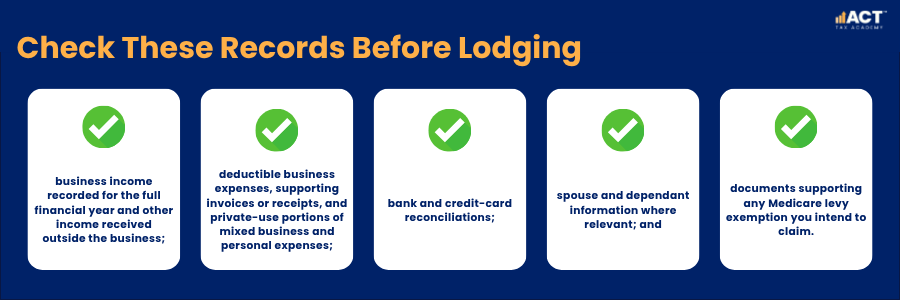
Good bookkeeping provides the foundation for determining your taxable income accurately. Before preparing your tax return, make sure your business income has been recorded, bank accounts have been reconciled, and allowable expenses have appropriate supporting records. You should also have relevant information about your spouse, dependent children, private hospital cover and Medicare entitlement available where these matters apply to you. Having these records organised helps your accountant or tax professional determine which rules and income thresholds are relevant to your circumstances.ce term or expenses the employee would not otherwise pay may not deliver a sustainable benefit.
Build Practical Bookkeeping Skills
If you are ready to move from theory to practical application, the ACT Tax Academy Bookkeeping Online Course provides structured online training designed specifically for Australian small business owners and aspiring bookkeepers. You will learn how to set up and manage GST, prepare BAS, use Xero effectively, and implement compliant bookkeeping systems with confidence.